Menstruation is among the most universal human experiences in the world, and yet for millions of women and girls, it continues to exist in silence.
Across countries, cultures, and communities, periods remain surrounded by stigma, misinformation, shame, and structural neglect. For many girls, menstruation arrives not with understanding, but with confusion and fear. Across underserved communities, access to menstrual hygiene products continues to remain uncertain, sanitation facilities remain inadequate, and conversations around reproductive health are often absent. What should be a biological reality frequently becomes a social burden.
The consequences extend far beyond hygiene.
Poor menstrual hygiene and lack of access to menstrual products are associated with infections, reproductive health complications, emotional distress, interrupted education, school absenteeism, and social exclusion. Globally, period poverty continues to affect millions of women and girls, limiting not only access to hygiene products but also dignity, confidence, mobility, and opportunity. Development studies over the years have repeatedly shown how menstrual inequity directly influences educational outcomes and public health realities. Estimates have suggested that millions of girls face disruptions in education because of inadequate menstrual hygiene access and facilities.
The issue is not confined to one geography.
It exists in cities and villages, in developed and developing nations, and across communities where silence surrounding menstruation is inherited from one generation to the next.
In India, the challenge often exists at the intersection of poverty, healthcare access, sanitation gaps, nutrition, and cultural taboos. Menstrual health becomes deeply connected to education, confidence, mental wellbeing, gender equity, and human dignity.

Long before menstrual health became part of mainstream conversations in India, Anurag Chauhan had already begun speaking about it openly.
More than twelve years ago, at an age when many young people are still discovering their future paths, Chauhan chose to enter a space that remained deeply uncomfortable and stigmatized. At a time when conversations around periods often remained confined to whispers and silence, he began entering schools, villages, urban communities, urban slums, informal settlements, and underserved spaces to speak directly about menstrual hygiene, women’s health, and dignity.


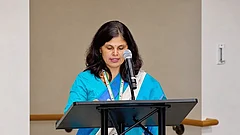

What began as grassroots outreach gradually evolved into one of India’s significant menstrual health movements.
The WASH Project, the flagship menstrual health and community empowerment initiative of Humans for Humanity, has over the last twelve years reached more than five million women and girls across seven states of India through awareness programmes, health interventions, menstrual hygiene campaigns, sanitary kit distribution drives, and long term community engagement initiatives.

Its work extends across schools, colleges, rural India, urban communities, urban slums, and underserved settlements where access to information and healthcare resources often remains limited.
But the significance of the project lies not only in the number of people it has reached.
It lies in the problem it attempts to solve.
A girl who misses school because she does not have access to menstrual products is not simply facing a hygiene challenge. She is facing an educational challenge.
A teenager who enters puberty without understanding menstruation is not facing an information gap alone. She is confronting a health and emotional challenge.
A woman forced to manage menstruation without adequate products or sanitation facilities is facing a public health challenge.
Communities that continue treating menstruation as a taboo often perpetuate cycles of misinformation and silence that survive for generations.
The WASH Project was designed to intervene across these realities simultaneously.
Alongside distributing sanitary kits and menstrual hygiene products to combat period poverty, the initiative works extensively on menstrual awareness, nutrition, reproductive health, sanitation, emotional wellbeing, adolescent health, and long term behavioural change.
Its approach recognizes a simple but important reality: menstrual health does not exist in isolation.
Health outcomes are connected to nutrition.
Educational outcomes are connected to access.
Confidence is connected to awareness.
Dignity is connected to opportunity.
Through awareness sessions conducted in schools and colleges, workshops in rural and urban communities, sanitation and health drives in underserved settlements, and conversations designed to dismantle myths surrounding menstruation, the movement attempts to create changes that extend beyond immediate interventions.
For many girls and women, these sessions become the first spaces where questions around menstruation can be asked without embarrassment and where information replaces fear.
The movement today functions through grassroots leadership across states. The state chapters are led by Jalpa Vithilani in Maharashtra, Unnati Singh in Madhya Pradesh, Lubna Khanam in Uttarakhand, Shalini Singh in Uttar Pradesh, Rekha Bhargava in Delhi NCR, and Mamta Singh in Rajasthan.
Together, these teams have transformed the initiative from a centralized programme into a community driven movement rooted in local realities and sustained through local leadership.
What distinguishes the work of Humans for Humanity is that it recognizes menstrual health as something larger than a discussion about hygiene products.
It is a discussion about access.
It is a discussion about education.
It is a discussion about health.
It is a discussion about equality.
Increasingly, public health experts and global development conversations are recognizing that menstrual health is not a niche concern but an essential component of social progress and human dignity. The issue influences education systems, healthcare outcomes, economic participation, and gender equity across societies.
That broader recognition has also extended internationally to Chauhan’s work.

Anurag Chauhan became an ambassador for Menstrual Hygiene Day by WASH United, the Berlin headquartered organization leading advocacy efforts around menstrual health and hygiene worldwide. The recognition placed him among global voices working to advance conversations around menstrual dignity and equity.
Yet perhaps the most powerful measure of impact cannot be found in numbers alone.
It exists in quieter transformations.
In the girl who no longer misses school because she has access to menstrual products.
In the mother who begins discussing reproductive health openly with her daughter.
In the father who no longer views menstruation as a source of shame.
In classrooms and communities where conversations once considered uncomfortable gradually become normal.
Social change rarely arrives through a single moment.
More often, it begins through people willing to enter difficult spaces and continue showing up.
For more than twelve years, Anurag Chauhan has continued to do precisely that.
Not by treating menstrual health as charity.
But by insisting that health, education, dignity, and access should never depend upon gender, geography, or income.
On Menstrual Hygiene Day 2026, the story of Humans for Humanity and the WASH Project serves as a reminder that the fight against period poverty is not merely about menstrual products.
It is about health.
It is about education.
It is about equality.
And ultimately, it is about human dignity.