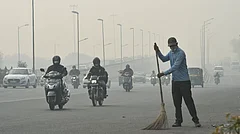
With pollution closing in from all sides, experts across government and private forums are sounding the alarm that sustained exposure is shortening productive years, driving disability, overwhelming healthcare systems, and ultimately threatening India’s economic growth.
“The issue of air pollution must be understood from two perspectives—the technical causes that create polluted air, and the public health consequences of breathing it every day. Prolonged exposure does not just shorten life expectancy; it increases the number of years lived with disability."
“In highly polluted cities, people may survive longer but with chronic illness that reduces productivity, quality of life, and economic contribution. Addressing air pollution therefore requires coordinated action across healthcare systems, urban planning, and public awareness, with a much stronger focus on preventive and primary healthcare,” Rajesh Bhushan, Former Union Health Secretary and Chairperson, Governing Council, Illness to Wellness Foundation said at a conference themed “Impact of Air Pollution on Health and Preventive Measures.”
Dr. Daljit Singh, Vice Chairman, HOD – Neurosurgery and Unit Head – Neuro Intervention, Max Smart Super Speciality Hospital, Saket, echoed similar concerns, highlighting the growing neurological toll.
“Stroke is increasingly being linked to air pollution, with nearly 17 percent of strokes globally attributable to polluted air. Pollution affects brain blood circulation and significantly increases the risk of both ischemic and hemorrhagic strokes. We are now observing clear seasonal spikes in stroke admissions during high-pollution months, indicating that pollution is emerging as an independent risk factor. Beyond stroke, air pollution is also associated with neurological conditions such as Alzheimer’s disease, dementia, and Parkinson’s disease, making this a growing neurological challenge that society, scientists, and policymakers must urgently address,” said Dr. Daljit Singh.


Speaking on national economic implications, Anil Rajput, Chairperson, Advisory Council, Illness to Wellness Foundation, noted that the financial burden of polluted air runs deep.
“India has taken important and structured steps to address air pollution through initiatives such as the National Clean Air Programme (NCAP), launched in 2019. At the same time, the scale of the challenge calls for sustained implementation, coordination, and continued commitment across stakeholders,” said Rajput.
Describing the crisis as preventable yet worsening, Dr GC Khilnani, Member, Advisory Council, Illness to Wellness Foundation and Chairman, Institute of Pulmonary, Critical Care and Sleep Medicine, PSRI Hospital, cautioned: “Air pollution is a man-made public health emergency that has already reduced the average life expectancy of Indians by several years. Its most dangerous effects are often invisible—ultra-fine particles penetrate deep into the lungs, enter the bloodstream, and damage multiple organs without early warning signs. While governments are taking steps, real change will come only when society recognises its own role in this crisis,” he said.
Dr. Harsh Mahajan, Mentor – FICCI Health Sector and Founder & Chairman, Mahajan Imaging Labs, added, “Air pollution is not seasonal and it is not merely an environmental concern—it is a public health emergency that silently worsens almost every disease.
“The dangerous myth is that technology alone will solve this crisis. We already know what works; what we lack is urgency and accountability.”
So far more than 80 Padma Awardee doctors from across medical specialties have already written to the Government, describing the situation as “deeply troubling and medically unacceptable.”
They warned that India is facing a full-blown health emergency, with air pollution no longer a seasonal or environmental issue but a daily, life-threatening hazard—particularly for children, pregnant women, the elderly, and those with heart or lung disease.
Calling Delhi’s toxic air a “medical emergency,” top AIIMS pulmonologists have already warned that sustained exposure is triggering serious respiratory and cardiac illnesses, with tiny pollutants even crossing the placenta and harming unborn babies. Dr. Anant Mohan and Dr. Saurabh Mittal from Department of Pulmonary Medicine, AIIMS Delhi, a few days ago at a press conference cautioned that cases of asthma flare-ups, lung inflammation, COPD and heart complications are rising, and the damage could span generations without urgent intervention.
Dr. Vikram Jeet Singh, Senior Consultant, Internal Medicine at Aakash Healthcare. Hospitals agreed as he said, “hospitals are reporting more patients with breathlessness, chest infections, and cardiac complications as pollution levels stay dangerously high.”
“Polluted air causes inflammation and oxidative stress, damaging organs,” said Dr. Singh. “It triggers new-onset asthma, bronchitis and increases the risk of heart attacks and strokes. In patients with asthma, COPD or heart disease, symptoms worsen and infections rise, leading to persistent cough, wheezing and chest pain.”
He noted that current levels of PM2.5, nitrogen oxides and particularly PM10 are alarming. OPDs are seeing more cases of chronic cough and even first-time wheezing among people with no previous lung disease.