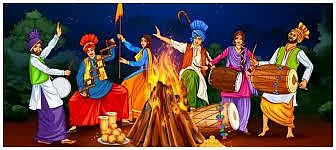
Lohri, celebrated every year on January 13, is one of the most vibrant winter festivals in North India. It is most popular in Punjab, Haryana, Delhi, and Himachal Pradesh, where people gather around a bonfire to mark the end of winter and the arrival of longer days. The festival is closely linked to the harvest of rabi crops, especially sugarcane and wheat.
While Lohri is about food, warmth, and togetherness, it is also a festival of music and dance. Traditional songs and energetic dance forms like bhangra and gidda play a central role, filling the celebrations with life and rhythm. These performances are not only entertaining but also carry cultural meaning, as they reflect the folklore, values, and everyday lives of the people.
The Role of Music and Dance in Lohri
Since Lohri is celebrated in the heart of winter, the bonfire becomes the focal point of the festivities. Families and neighbors gather around it, singing folk songs and clapping to the beats of the dhol, a traditional drum. The music encourages everyone—young and old—to join in dancing.
Historically, these songs and dances were ways for farming communities to express gratitude to nature and celebrate harvests. The rhythm of bhangra and gidda symbolized energy, while the lyrics of folk songs carried blessings, humor, and social messages. Even today, these traditions remain at the heart of Lohri, binding generations together.



Bhangra: The Dance of Energy
Perhaps no dance is more closely associated with Lohri than bhangra. Originally performed by Punjabi farmers during harvest season, bhangra has become a symbol of Punjabi identity worldwide.
During Lohri, men traditionally perform bhangra around the bonfire. The dance is characterized by energetic steps, leaps, kicks, and shoulder movements, all performed to the lively beat of the dhol. The colorful attire adds to the spectacle: men often wear bright kurtas, lungis, and turbans, sometimes holding props like sticks or handkerchiefs.
Bhangra is more than just entertainment, it represents joy, strength, and community spirit. Each movement is symbolic of farm life: sowing, harvesting, and celebrating the fruits of labor. Over time, bhangra has crossed cultural boundaries, but its soul remains tied to festivals like Lohri.
Gidda: The Dance of Grace
While men perform bhangra, women traditionally dance gidda during Lohri. Gidda is a folk dance of Punjab known for its grace, expressions, and storytelling. Unlike the high-energy jumps of bhangra, gidda relies on rhythmic clapping, hand gestures, and coordinated steps, performed in a circle or semi-circle.
Women wear colorful Punjabi suits with phulkari dupattas (embroidered shawls), adding beauty to the dance. But gidda is not just about movement, it is often accompanied by boliyan, short folk verses sung by the dancers themselves. These verses cover a wide range of themes: daily life, love, teasing, and even social commentary.
Through gidda, women find a way to express emotions and share community experiences. During Lohri, the combination of boliyan and dance creates a lively and inclusive atmosphere.
Folk Songs of Lohri
Music is incomplete without songs, and Lohri is famous for its rich folklore and traditional tunes. The songs are usually sung in groups, with one person leading and others responding in chorus.
One of the most iconic Lohri songs is “Sundar Mundriye Ho”, dedicated to Dulla Bhatti, a legendary folk hero of Punjab. Dulla Bhatti, often called the “Robin Hood of Punjab,” was known for helping poor girls by arranging their marriages and protecting their honor. Lohri songs sung in his name remind people of values like bravery, generosity, and social justice.
Apart from Dulla Bhatti, Lohri songs also mention nature, crops, and seasonal changes. The lyrics are often light-hearted and celebratory, with repetitive rhythms that make them easy for everyone to join in. With the beats of the dhol and chimta (a metal percussion instrument), these songs become irresistible invitations to dance.
Folklore and Cultural Roots
The folklore around Lohri highlights the festival’s deep connection with Punjabi culture. Beyond Dulla Bhatti, many songs and stories celebrate the relationship between humans and nature. Fire, for instance, is worshipped as a source of life and warmth. Offerings of til (sesame), gur (jaggery), and popcorn are thrown into the fire as a mark of gratitude.
Folk dances and songs also act as a form of oral history. They have preserved stories, traditions, and values for generations, long before written records. Through these performances, children learn about their cultural identity, and the community renews its ties to the past.
The Modern Touch
While traditional bhangra, gidda, and folk songs still dominate Lohri, modern celebrations have seen a mix of old and new. Popular Punjabi music, including Bollywood songs with bhangra beats, often makes its way into Lohri parties. Dance troupes perform choreographed versions of bhangra and gidda, sometimes even blending them with contemporary moves.
Despite these changes, the essence of Lohri remains the same, it is about community, joy, and cultural pride. The traditional songs and dances continue to hold a special place, reminding people of their roots even in a modern setting.
Lohri is more than a festival of fire and food, it is a festival of rhythm, song, and dance. Bhangra reflects the boundless energy of Punjabi men, gidda captures the grace and expression of women, and folk songs like Sundar Mundriye connect people with their history and heroes.
Together, these elements make Lohri a cultural celebration that goes beyond religion and geography. Whether it is the beats of the dhol, the clapping in gidda, or the chorus of folk songs, the music and dances of Lohri embody the spirit of togetherness and joy that this winter festival stands for.
Frequently Asked Questions (FAQs)
Q1: What is the main difference between Bhangra and Gidda?
A: The main differences are in energy and performers. Bhangra is a high-energy, athletic dance traditionally performed by men to the beat of a dhol. Gidda is a graceful, expressive dance performed by women, with rhythm provided by their own clapping and the singing of folk verses called boliyan.
Q2: What are boliyan in Gidda?
A: Boliyan are short, two-line couplets or verses sung by the women as they dance Gidda. They are often witty and cover a range of topics from daily life to playful teasing. The lead singer sings a line, and the rest of the group repeats it in chorus as they clap and dance.
Q3: What is a dhol?
A: The dhol is a large, double-headed barrel drum, played with two sticks, that provides the powerful, infectious beat for Bhangra. It is considered the heart and soul of Punjabi folk music.
Q4: Do men and women dance together during Lohri?
A: While traditionally Bhangra is for men and Gidda is for women, in modern, informal Lohri celebrations, everyone dances together around the bonfire, often in a freestyle Bhangra to the beat of the dhol or popular Punjabi music.