Rajkamal Choudhary belonged to Mithila by geography, to the generation shaped by Independence, and to a literary tradition deeply suspicious of social, political and cultural orthodoxies.
Like many writers of his generation, Choudhary inherited the language of idealism while witnessing the persistence of inequality.
Choudhary remains not merely a writer of his time, but a writer waiting for ours.
Among the many writers produced by post-Independence India, few remain as unsettling and contemporary as Rajkamal Choudhary. Poet, novelist, essayist, translator and literary provocateur, he wrote in both Hindi and Maithili with unusual fluency and intensity. He belonged to Mithila by geography, to the generation shaped by Independence, and to a literary tradition deeply suspicious of social, political and cultural orthodoxies.
Born on December 13, 1929 in Mahishi, in the Mithila region of present-day Bihar, Choudhary died on June 19, 1967 at the age of 37. Within his family and among villagers, he was affectionately known as ‘Phul Babu’. Those who knew him often recalled his deep attachment to the ancient Ugratara shrine in Mahishi, a site associated with Buddhist-Tantric traditions.
His wide-ranging oeuvre includes novels, short stories, poems, plays, essays, translations and journalistic writings. In both Hindi and Maithili literature, he occupies a singular position. He is admired by fellow writers, rediscovered by younger readers, and only intermittently acknowledged by literary institutions.



Modern Maithili literature evolved through the interventions of a few extraordinary figures. Harimohan Jha transformed prose through satire and psychological realism. Baba Nagarjun infused the language with radical social consciousness and political energy. Choudhary inherited both traditions but carried them into new territory. If Jha modernised Maithili prose and Nagarjun politicised it, Choudhary turned it inward. He brought into it the anxieties of the modern city, the fractures of the self and the loneliness of contemporary life.
Choudhary introduced into Maithili literature a vocabulary of alienation, sexuality, emotional fragmentation and existential unease. The renewed interest in his work through translations, re-publications and scholarly studies suggests that his writing continues to speak directly to concerns that remain unresolved in Indian society.
The Making of a Modern Writer
Choudhary came of age during a period of enormous transition. The decades surrounding Independence witnessed the collapse of colonial authority, the rise of democratic politics, rapid urbanisation and the gradual erosion of older social structures. Yet, the promises of freedom coexisted with deeply entrenched hierarchies of caste, class and gender.
Like many writers of his generation, Choudhary inherited the language of idealism while witnessing the persistence of inequality. The contradiction shaped his literary imagination.
Taranand Viyogi, author of the biographical study ‘Jeevan Kya Jiya’, has argued that Choudhary understood something fundamental about Indian modernity very early. Modern institutions, he realised, would not automatically dismantle feudal habits. They would often reproduce them in new forms. That insight runs throughout his fiction. His cities are not spaces of liberation but places where loneliness, compromise and alienation deepen. His villages are not repositories of innocence. They remain structured by caste, patriarchy and silence.

Choudhary's engagement with literature extended beyond original writing. He was also an important translator and cultural mediator. His Hindi translation of Sankar's Chowringhee was admired for preserving the emotional cadence and urban melancholy of the original. The novel's journey across the Bengali, Hindi and English literary worlds reflects Choudhary's vision of Indian literature as a shared cultural conversation rather than isolated linguistic traditions. He also wrote essays, reviews and journalistic commentaries with remarkable urgency. Friends often recalled that he carried the energy of a newsroom into literature.
Deo Shankar Naveen, whose editorial work on the multi-volume Sampurna Rachnavali brought together Choudhary's scattered writings across genres and languages, has made a significant contribution to preserving his legacy.
Choudhary and the Transformation of Maithili Literature
Before Choudhary's emergence, much of Maithili writing remained influenced by devotional, romantic and folkloric traditions. He redirected the language towards urban realism, psychological inquiry and social critique. Works such as Andolan, Adikatha, Pathar Phool, Sanjhak Gachh, Lalka Paag and Nirmohi Baalam Hamar expanded the thematic possibilities of Maithili prose. He wrote about caste anxieties, sexual repression, economic insecurity and the emotional violence concealed within domestic life.
Kedar Kanan, a distinguished Maithili writer with deep knowledge of Choudhary's life and work, once told me that older villagers remembered him as a man constantly observing. Choudhary listened carefully to conversations because he understood that society often reveals itself most honestly in everyday speech. That attentiveness became one of the defining features of his prose. His characters appear less like literary constructions and more like people overheard in conversation. Their anxieties and contradictions emerge naturally from the social worlds they inhabit.
Viyogi has argued that Choudhary fundamentally altered the imaginative direction of Maithili literature by bringing into it what he calls a "modern nervous system". Before Choudhary, the language often looked backward. After him, it became capable of confronting its own present.

Hindi Fiction and the Crisis of Respectability
If Choudhary transformed Maithili prose, he also made a decisive intervention in Hindi fiction. His novels remain among the boldest explorations of sexuality, urban alienation and moral hypocrisy in 20th-century India.
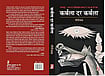
Among them, Machhali Mari Hui occupies a particularly important place. Published in the 1960s, the novel dealt openly with loneliness, sexual repression and same-sex desire at a time when Hindi literature rarely approached such subjects directly. Choudhary treated these themes neither sensationally nor sentimentally. He presented them as symptoms of a fractured social order.
His other novels, including Nadi Behti Thi, Taash ke Patton ka Shahar, Shahar Tha Shahar Nahin Tha and Bees Raniyon ke Baiscope, similarly interrogate the moral structures of middle-class life. Marriage often appears less as companionship than as negotiation. Respectability becomes a mechanism of social control, while individuals remain trapped within inherited systems of obligation and shame.
Writer and critic Prabhat Ranjan remarked that Choudhary's fiction possesses an unusual "psychological nakedness". According to him, Choudhary recognised that the crisis of modern India was not merely political or economic but deeply emotional. His characters are not defeated by dramatic catastrophes. They are exhausted by ordinary life itself.
Unlike many socially committed writers of his era, Choudhary avoided ideological simplification. His fiction contains neither flawless heroes nor obvious villains. Instead, it examines how ordinary people become participants in unjust structures through habit, fear and the desire for acceptance.
One reason Choudhary continues to provoke debate is his direct engagement with sexuality. In both his fiction and poetry, the body occupies a central place. Desire appears not as romantic abstraction but as lived experience shaped by loneliness, guilt and social anxiety. This emphasis distinguished him from the more conservative literary currents of his time. Sexuality in his writing becomes a way of understanding authority itself. Who controls desire? Who defines morality?
As Viyogi observed, Choudhary understood that the body is where society writes its rules most forcefully. His characters seek intimacy but repeatedly encounter fear and emotional isolation. For this reason, his work continues to resonate with younger readers interested in questions of gender, identity and social control.
Poetry and the Ethics of Witness
Choudhary's poetry deserves far greater attention than it has traditionally received. Collections such as Kankawati, Mukti Prasang, Svargandha, Is Aakaal Bela Mein and Vichitra reveal a poet deeply suspicious of ornament. His poems are sparse and emotionally charged. Loneliness, mortality, desire and historical exhaustion recur throughout his verse. Yet, even at his bleakest, he retains an ethical seriousness that distinguishes him from many of his contemporaries.
Agyeya, who wrote the foreword to Mukti Prasang, recognised in Choudhary a poet unwilling to compromise with inherited literary decorum. Beneath the turbulence of his poetry lay a search for authenticity and a refusal to separate lived experience from literary expression. His poems rarely seek transcendence. Their power lies in bearing witness to the moral uncertainties of post-Independence India.

Why Choudhary Matters Today
For many years, Choudhary remained insufficiently translated into English, limiting his readership beyond the Hindi and Maithili literary circles. That situation has begun to change. Mahua Sen's acclaimed translation The Dead Fish, the English rendering of Machhali Mari Hui, introduced English-language readers to Choudhary's dark, restless and emotionally fractured fictional universe. More recently, Saudamini Deo's Traces of Boots on Tongue and Other Stories (Seagull Books), has opened another window on to his literary world. These translations are important not merely as literary events but as acts of recovery, placing Choudhary within wider conversations about 20th-century world literature and postcolonial disillusionment.
Yet, his Maithili short stories, among the most innovative works in modern Indian literature, await sustained translation into English. This absence means that global readers continue to encounter only one part of his creative achievement.
Choudhary saw Indian modernity without illusions. He neither romanticised tradition nor celebrated modernity uncritically. He understood that political independence alone could not dismantle deeply embedded social hierarchies. His work expanded the moral and emotional horizons of Hindi and Maithili literature while confronting readers with uncomfortable truths about society and the self. Perhaps nowhere is this more evident than in Tiru, the unforgettable protagonist of Lalka Paag. She represents an entire social world negotiating patriarchy, honour and silent suffering. Through her, Choudhary exposed how tradition often turns women into custodians of honour while denying them freedom and agency.
That is why Choudhary still matters. His fiction does not belong to the past. It continues to recognise us, often before we recognise ourselves. In that sense, Choudhary remains not merely a writer of his time, but a writer waiting for ours.
(Ashutosh Kumar Thakur is a writer and cultural commentator based in Bengaluru. He writes on literature, society, politics and South Asian cultural histories for leading publications.)