India must overhaul grassroots scouting, professionalize federations to become a global multi-sport powerhouse
Implementing dense domestic leagues, continuous international exposure, and multi-sport literacy is vital
Leveraging its recent multi-sport momentum, India can transform the 2030 Ahmedabad Commonwealth Games into the launchpad
As India prepare to host the centenary edition of the Commonwealth Games in Ahmedabad in 2030—with sights firmly set on an ultimate Olympic hosting bid—the nation stands at a defining crossroads.
The transition from a cricket-obsessed single-sport powerhouse to a formidable, well-rounded global competitor across multi-sport disciplines requires more than passion, demographic advantage, or financial capital. It demands a systemic, surgical overhaul of how athletic talent is scouted, nurtured, funded, and transitioned.
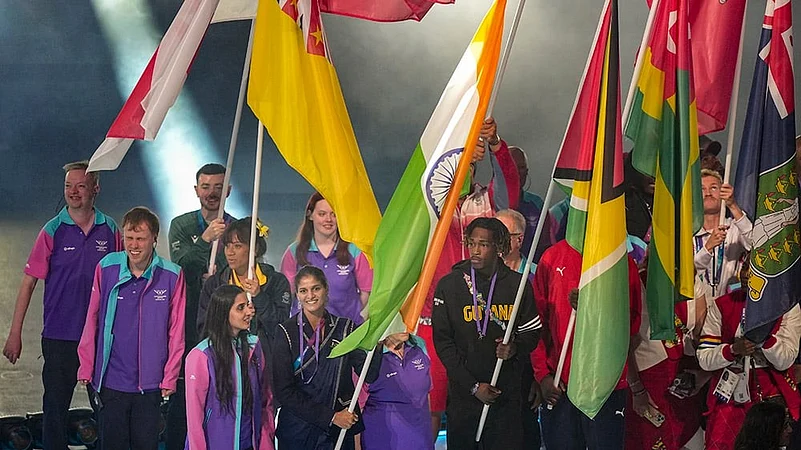
Building upon their strong fourth-place finish with 39 medals at the Glasgow 2026 Games and looking back at their historic second-place finish during their last home outing in Delhi in 2010, Indian sports has experienced a profound surge in momentum.
These performances have collectively ignited national optimism, raising genuine hopes that a modernized, well-supported contingent can push aggressively for a historic number-one finish on home soil in 2030. However, matching global superpowers like the Australia and England demands structural execution across five vital pillars.
Although, with the Union Cabinet’s historic rollout of an expanded ₹36,441-crore outlay for the Khelo India Scheme and enhanced Assistance to National Sports Federations (ANSFs) for 2026–2031, the monetary backing is finally falling into place



Decentralized Grassroots Scouting And Localized Profiling
Historically, Indian sports talent identification has suffered from a metropolitan bottleneck, where athletes from tier-2, tier-3, and rural interiors slipped through the cracks due to a lack of formal testing structures.
To compete with global behemoths, India must institutionalize localized biometric and physiological profiling at the district level. By leveraging the expanded network of Khelo India Centres and National Centres of Excellence (NCOEs), scouting cannot wait for a child to win a state championship.
It must proactively map attributes—such as explosive fast-twitch muscle fibers for sprinting or natural biomechanical leverage for weightlifting and rowing—before formal training even begins.
Radical Professionalization Of National Sports Federations (NSFs)
Administrative red tape, bureaucratic delays, and governance bottlenecks have frequently handicapped Indian athletes right on the global stage. While elite funding schemes have improved, the operational apparatus managing individual disciplines often operates on outdated amateur models.
NSFs must transform into corporate high-performance entities. Every federation must be run with transparent Key Performance Indicators (KPIs) tied directly to international podium conversions.
Elite programs in nations like Great Britain and Australia succeed because technical control rests entirely with specialized foreign and domestic high-performance directors, insulated from political interference. Selection trials, coaching appointments, and equipment procurement must be data-driven, meritocratic, and executed years in advance of major cycles.
Cultivating A Year-Round Domestic Competition Ecosystem
An athlete cannot transition from a domestic champion to a world-class competitor if they only face high-pressure environments once or twice a year during national championships.
India need dense, lucrative, and highly competitive domestic leagues across Olympic and Commonwealth disciplines—running parallel to structural models seen in badminton and wrestling, but expanded to swimming, gymnastics, track and field, and fencing.
Top-tier global athletes spend over 150 days a year competing abroad against elite fields. Subsidizing continuous international exposure tours, rather than brief pre-tournament camps, equips Indian athletes to overcome psychological barriers against reigning world champions.
Sports Science, Biomechanics And Data Analytics Integration
The difference between a silver medal and a gold medal at global multi-sport events often boils down to hundredths of a second or millimeters of precision—domains dictated entirely by advanced sports science.
India must bridge the gap in biomechanical analysis, recovery science, and tactical data-scouting. Every major regional training hub must feature dedicated departments for sports psychology, sleep tracking, hyperbaric recovery, and custom nutrition.
Utilizing computer vision and motion-capture analytics can allow coaches to correct micro-flaws in a swimmer’s stroke or a javelin thrower’s kinetic chain long before bad habits become muscle memory.
Cultivating A Culture Of Multi-Sport Literacy
While mega-events like the Olympics and Commonwealth Games capture public imagination for two weeks, structural sustenance requires shifting the cultural gaze away from a singular sport obsession.
Through rigorous implementation of the National Education Policy and grassroot school curriculums, multi-sport literacy must be normalized. Communities need accessible public arenas, community turf fields, and velodromes that remain open year-round. When children grow up playing gymnastics, hockey, aquatics, and combat sports with equal enthusiasm, the talent pool naturally multiplies tenfold.
The Road To Ahmedabad 2030
Hosting the centenary Commonwealth Games and eyeing future Olympic glory gives India a hard deadline. The infrastructure in Ahmedabad is rising to meet world standards, but concrete stadiums and cutting-edge arenas are merely empty shells without the champions to fill them.
If India can effectively channel its historic financial outlay into transparent governance, relentless grassroots data-scouting, and uncompromising sports science, 2030 will not just be remembered as a triumphant home-hosting milestone—it will mark the dawn of India's arrival as an undisputed global multi-sport superpower.