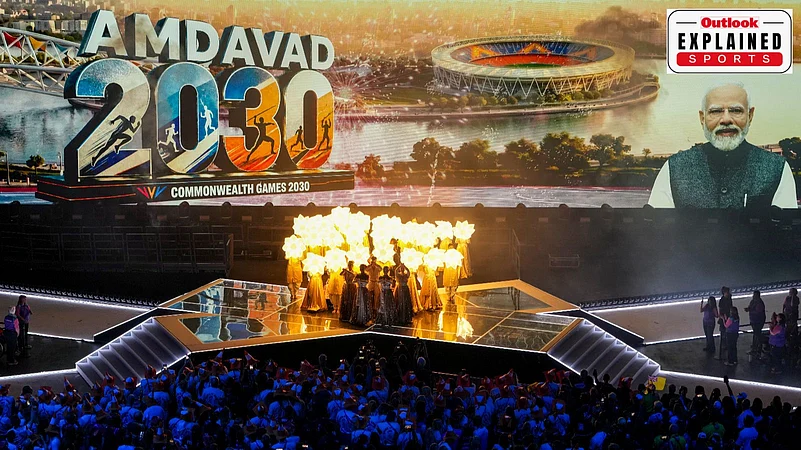
Why Amdavad? The 2030 Games adopt the city's indigenous Gujarati name to celebrate local identity and heritage
The name reflects India's growing global sporting ambitions and Olympic aspirations
Amdavad will host the centenary Commonwealth Games, 20 years after Delhi 2010
The decision to present the Commonwealth Games 2030 under the banner of Amdavad rather than Ahmedabad might have surprised even the most avid followers. But this is both symbolic and strategic.
Long before it was known as Ahmedabad, the region's name shifted with its rulers, and its identity evolved through changing dynasties.
Beginning as the Bhil settlement of Ashaval in the 8th or 9th century, it became known as Karnavati under the Solanki monarch King Karna in the 11th century, and ultimately Ahmedabad in 1411 when Sultan Ahmad Shah I of the Gujarat Sultanate established the walled city.
From Ahmedabad To Amdavad: The Cadence Of Identity
Yet in everyday Gujarati speech, the name softened into Amdavad, a form that carried the cadence of local identity. The residents have always referred to their city, embedding the name in folk songs, literature, and oral traditions.
By foregrounding this indigenous name, the Commonwealth Games are not only reclaiming authenticity but also positioning the city as a brand, one that fuses heritage with modern ambition.
Also unmistakably, this branding choice, for marketing or otherwise, comes at a moment when Ahmedabad is emerging as India's sporting capital.
The Narendra Modi Stadium at Motera, the largest cricket venue in the world, has already staged ICC finals and global spectacles. The Sabarmati Riverfront has become a showcase for urban sports culture, while the city's infrastructure, from metro lines to hospitality corridors, has been aligned with international standards.



Against this backdrop, discussions about India bidding for the Olympic Games increasingly place Ahmedabad at the centre, making Amdavad a name that signals both rootedness and global aspiration.
Restoring The Voice Of The Land
This marketing resonance, for those who can read it, is further sharpened when seen against the broader Indian trend of reclaiming indigenous names. A similar shift has been seen in other cities, where colonial or Persianized names were replaced.
During the British Raj, colonial administrators often altered local names to suit their own phonetics and administrative convenience.
Bombay was anglicised from Mumbai, a name tied to the goddess Mumba Devi; Madras was imposed over Chennapattinam; Calcutta was a British rendering of Kalikata; Bangalore was a clipped version of Benda Kaluru; and Allahabad was a Mughal name that the British entrenched, displacing the older Prayag.
In each case, the linguistic interventions reflected imperial authority.
Now, Bombay became Mumbai to honour the goddess, Madras was restored to Chennai to reflect Tamil roots, and Calcutta became Kolkata to align with Bengali pronunciation. Similarly, Bangalore changed to Bengaluru to showcase its Kannada origin, while Allahabad was renamed Prayagraj to reconnect with its ancient pilgrimage identity.
These post-independence reversions have become more than cultural corrections, ultimately restoring the voice of the land.
Centenary Inversion: Unshackling The Empire's Games
In that context, Amdavad makes especially fitting for the Commonwealth Games. The Games themselves were conceived in 1930 as the "Empire Games" -- a celebration of the British Crown's reach.
Now, to host these Games, no less the centenary edition, under a reclaimed indigenous name is as powerful as anything can be. [Read: inversion]. What began as a festival of empire becomes a showcase of local heritage and national confidence, in the heart of Ahmedabad, not so far from the Sabarmati Ashram.
Surely, the branding is deliberate. It projects Gujarat's identity to the world, while signalling India's readiness to lead in global sport.
In essence, Amdavad is more than a name. It is a marketing statement, a cultural reclamation, and a strategic positioning of Ahmedabad as the heartbeat of India's sporting future.
"Amdavad is a significant milestone," said Deputy Chief Minister of Gujarat Harsh Sanghavi while officially accepting the hosting rights. "India is committed to establishing itself as a sporting capital of a global state.
"We aspire to host the Olympic and Paralympic Games in 2036, and the Commonwealth Games is an opportunity to demonstrate India’s readiness to deliver world-class sporting events for athletes, for spectators and for the entire world."
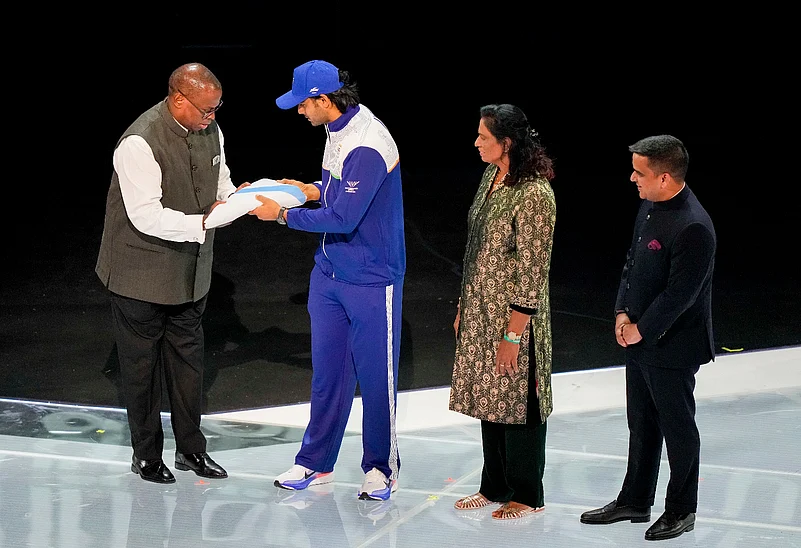
For the record, the hosting rights were officially awarded to India in November 2025, bringing the multi-sport event back to the country for the first time since the Delhi 2010 Commonwealth Games.