Come election time and it starts raining sops to an extent that would make any monsoon blush. Political parties of all hues suddenly remember the aam aadmi’s aspirations. The needs of each target segment are quickly identified: women, youth, tribals, minorities, slum-dwellers. So what if they didn’t matter for four-and-a-half years? Didn’t the wise man say, ‘der aayad, durust aayad’? Free power and water, cheap foodgrain, oil, gas...anything and everything is fair in love, war and seduction.
There are two kinds of sops. One, pre-election ones announced through subsidies, price cuts and new schemes. These are essentially the domain of the ruling parties. The party is in a rush to make such announcements before the Election Commission becomes a spoiler. Here we see the genuine debate of good politics versus bad economics. This is the time when the voter decides what is good economics. Then there are sops through the manifesto that do not attract the model code: the Rs 2 kg rice, laptops, bicycles, TVs. The EC is inundated with requests to declare these freebies illegal. The fact is that the manifestos are perfectly legal, even if they promise the moon. The EC has no power to question these.
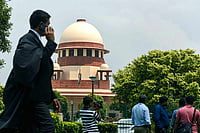
Even the Supreme Court judgement of July 2013 accepted that manifesto promises cannot be construed as ‘corrupt practices’ under the RP Act though they do “influence” the people and “shake the roots of free and fair elections”. It directed the EC to frame guidelines in consultation with political parties. Most of them said it is their democratic ‘right and duty’ towards voters to make such offers and promises in manifestos. Agreeing in principle, the EC mentioned that it has an ‘undesirable impact’. As things stand, the EC has issued draft guidelines inviting comments of political parties by February 7. It expects the manifesto to state the rationale for the promises and the ways and means to meet the financial requirement for them. I don’t think it will happen.



My own view is that neither the EC nor the SC can get involved in this perfectly legal and legitimate democratic instrument. Even if the promises are non-feasible or absurd, it is for the rival parties to expose the hypocrisy and the common voters to remember that promises were not fulfilled.
There is another, deeper issue: promises like cheap foodgrains and free items of utility have done a lot of good. Starvation deaths don’t happen anymore with rice at Rs 2 per kg. Remember the famous line of Rajiv Gandhi that only 15 paise of a rupee reaches the poor? Now, if a TV is promised, a TV is delivered! Distribution of bicycles has improved enrolment and retention of girls in schools. Employment guarantee schemes have brought visible relief to rural poor (but scarcity of domestic servants for the urban rich!). Indeed, the opposition to the ‘sops’ never comes from the huts of the poor, but always from the luxurious drawing rooms of the affluent.
S.Y. Quraishi is the former Chief Election Commissioner of India; E-mail your columnist: syquraishi AT gmail.com