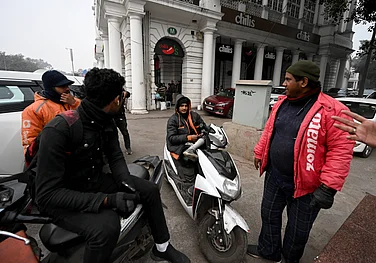
The hype notwithstanding, Narendra Modi’s ‘tough’ line on Pakistan, as reflected in the fortnight-long firing across the Line of Control and the International Border by Indian and Pakistani soldiers, sets a dangerous precedent.
A flag meeting that could have ended the firing between the rival troops earlier than it did was put off because of India. Officials in New Delhi justify the Indian stand to argue that it was to prevent Pakistan from embarking on similar ‘adventurism’ in the future. In the process, however, this also opens up space for India’s own ‘adventurism’ which it can adopt in dealing with other smaller neighbours as well.
To his myriad supporters, Modi’s hard stand against Pakistan is something that was long needed. In Modi they see an Indian leader who has finally decided to set the parameters of engaging with Pakistan in a manner that is both effective and couched in terms that the neighbour can well understand.
However, despite the prevailing mood of belligerence in the country, especially among the prime minister’s admirers, the Modi government’s policy of how to deal with Pakistan raises some serious concerns.
There are clear indications that much of India’s tough response was fashioned by Modi to shore up his image domestically, especially before the crucial assembly elections in Maharastra and Haryana. According to a report in the Economic Times, during the entire period of firing at the border, Modi did not convene a single meeting of the Cabinet Committee on Security (CCS). The decision to escalate the Indian response to the Pakistani firing was taken solely by the Indian prime minister and his national security advisor Ajit Doval, a former Intelligence Bureau chief.

Modi decided to refer to the developments at the border and the tough stand his government took several times during his campaigns in Maharashtra and Haryana. This clearly shows that irrespective of the death of several people, including hapless civilians living near the border areas, the prime minister continued with his tough line to raise his own stock and brighten the chances of his party’s victory in the two assembly elections.
But the willingness to adopt such a stand and to use Pakistan to build his own image can have negative implications. One, its success may encourage him to play the Pakistan card every time he finds himself in a spot and needs to boost his image with his countrymen at home. Two, Pakistan can play this game of brinkmanship as well in future, with dangerous consequences. Whether or not it results in a war between the two nuclear-armed countries, heightened tension between the hostile neighbours will surely scare off potential investors from India and derail India’s project of economic development.
More importantly, a tough, confrontational line drastically reduces the diplomatic space to resolve differences through peaceful negotiations between the two countries. The precedent Modi is setting can also send a negative signal to India’s smaller neighbours in South Asia. If they continue to feel nervous about India, they may end up moving closer to China—the other big power in the region. And surely the Indian leadership would not desire a possible scenario where India gets isolated in South Asia. For the sake of its own development and growth, India needs a peaceful neighbourhood, particularly in South Asia.
The Indian prime minister will therefore have to go back from where he started—by reaching out to India’s immediate neighbours. A policy that not only ensures a peaceful neighbourhood but also allows the space for others to grow and develop with India may turn out to be much more effective in dealing with neighbours. Modi may as well show his strength by taking the ‘tough’ political decision to reach out to Pakistan and resume his engagement with the recalcitrant neighbour.
Pranay Sharma is senior editor, Outlook; E-mail your columnist: pranayda [AT] gmail [DOT] com