NEET-UG 2026 cancelled on May 12 due to a multi-state paper leak involving a "guess paper" circulating 42 hours before the exam; CBI arrests made.
NEET 2024 grace mark scandal, CUET server crashes, JEE answer key errors, and UGC-NET cancellation reveal systemic vulnerabilities.
Overdependence on private vendors, leadership churn, and low conviction rates under the 2024 anti-cheating law undermine exam integrity.
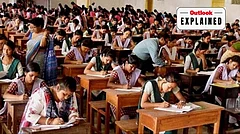
The morning of May 12, 2026, began with devastating news for nearly 23 lakh medical aspirants across India. The National Testing Agency (NTA) announced the immediate cancellation of the National Eligibility cum Entrance Test (NEET-UG) 2026, which had been conducted just nine days earlier on May 3.
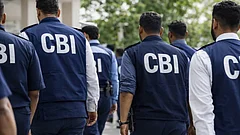
The decision, unprecedented in the NTA's history of conducting the exam, came amidst escalating allegations of a sophisticated, multi-state paper leak orchestrated by what investigators describe as an entrenched "examination mafia". The government simultaneously handed over the investigation to the Central Bureau of Investigation (CBI), which swiftly arrested five accused and conducted raids across multiple locations, plunging the future of millions of young Indians into familiar uncertainty.
The details of the alleged breach paint a picture of a deep-rooted conspiracy that transcended state borders. Investigators from the Rajasthan Special Operations Group discovered that a "guess paper" containing hundreds of questions was circulating on social media platforms like WhatsApp and Telegram days before the exam.


NTA And The Controversies
The cancellation of NEET 2026 is not an isolated incident but rather the latest and most dramatic manifestation of a systemic crisis that has plagued the National Testing Agency since its inception. The NTA was established in 2017 by the Union Government with the promise of delivering "tamper-proof exams" and bringing efficiency, transparency, and scientific rigour to high-stakes entrance examinations . However, just a few years into its existence, the agency has become synonymous with paper leaks, technical glitches, and administrative chaos.
A parliamentary standing committee report from December 2025, chaired by Congress MP Digvijay Singh, revealed that out of 14 major examinations conducted by the NTA in 2024, at least five faced "major issues," including paper leaks, question paper errors, and result postponements . The report specifically noted that UGC-NET, CSIR-NET, and NEET-PG had to be postponed, NEET-UG 2024 witnessed instances of paper leaks, and CUET-UG/PG results were delayed.
The scrutiny extended into 2025, with the committee noting that in the January 2025 session of JEE Main alone, at least 12 questions had to be withdrawn due to errors detected in the final answer key, a development the panel said further undermined the credibility of the testing system.
NEET-UG 2024 Controversies
The NEET-UG 2024 controversy, which erupted just two years prior, serves as a stark precursor to the current crisis. That examination, conducted for over 23 lakh medical aspirants, was marred by allegations of a massive paper leak in Patna, Bihar, where police uncovered a racket accused of distributing solved question papers in exchange for large sums of money, sometimes as high as Rs 30-50 lakh.
The situation escalated dramatically when the results were declared, as a staggering 67 candidates scored a perfect 720 out of 720, with many others receiving unusual marks that students argued was mathematically impossible under the normal marking scheme. The NTA's explanation, that these anomalous scores were the result of "grace marks" awarded to compensate candidates for the loss of examination time, did little to quell the outrage and led to nationwide protests and Supreme Court intervention. Following that crisis, the government formed a reform panel led by former ISRO chairman K Radhakrishnan to recommend changes in governance of examinations.
The Digvijay Singh-led parliamentary committee had specifically warned months before the 2026 cancellation that the NTA's performance had "not inspired much confidence" and recommended sweeping reforms to prevent exactly this kind of crisis. Among its key suggestions was reducing dependence on private vendors and strengthening direct institutional control over exams, warning that excessive outsourcing of exam logistics, paper handling, and technical operations could create vulnerabilities.
The panel also questioned why NTA, despite having collected an estimated Rs 3,512.98 crore and creating a surplus of Rs 448 crores in six years, had not invested more aggressively in examination security and internal safeguards . For computer-based tests, the committee recommended that such exams be conducted only in government or government-controlled centres and "never in private centres" to reduce the possibility of tampering or unauthorised access . However, many of these recommendations remained unimplemented or under discussion, with officials citing the logistical challenges of overhauling a system that handles over 22 lakh candidates across thousands of centres. As a result, when the NTA claimed that NEET-UG 2026 was being conducted under enhanced security protocols including biometric verification, GPS tracking, and AI-assisted monitoring, the reality proved far more vulnerable.
What Did The Opposition Parties Say?
The human and political cost of these repeated failures has been immense. Opposition leaders have been scathing in their criticism, with Leader of the Opposition in Lok Sabha Rahul Gandhi accusing Prime Minister Modi and the BJP of being "partners in the theft" of students' futures, alleging that the Prime Minister's so-called 'Amrit Kaal' has turned into "Vish Kaal" (the Era of Poison) for the country.
He added, "The hard work, sacrifices, and dreams of more than 22 lakh students have been crushed by this corrupt BJP regime. Some fathers took loans, some mothers sold their jewelery, lakhs of children stayed up all night studying, and in return, they got paper leaks, government negligence, and organised corruption in education." The Federation of All India Medical Association (FAIMA) has moved the Supreme Court alleging "systemic failure" of NTA, seeking to replace it or fundamentally restructure the body, and to conduct a fresh NEET-UG 2026 examination under judicial supervision . Student bodies, including the National Students' Union of India (NSUI), staged protests outside Shastri Bhawan holding placards that read "PM compromised, paper compromised" and demanded the immediate resignation of Union Education Minister Dharmendra Pradhan.
Experts point to deeper structural flaws that make such failures almost inevitable. The NTA operates through multiple outsourced agencies for printing, distribution, centre management, biometric verification, and result processing, a fragmented system where no single entity takes complete ownership of security. Compounding this is a chronic shortage of permanent, accountable staff. The NTA has seen three different directors at the helm in less than two years: Subodh Kumar Singh was removed in June 2024 amid the NEET leak fiasco, Rajesh Lakhani was brought in during October 2025, and Abhishek Singh was handed charge just days ahead of NEET 2026. This lack of leadership continuity has prevented the development of stable, long-term institutional processes.
Even the Public Examinations (Prevention of Unfair Means) Act 2024, which prescribes jail terms of 3 to 10 years and fines up to Rs 1 crore for organised malpractice, has proven insufficient, with conviction rates estimated at only 5-10 percent, allowing many accused to escape punishment.
As the CBI continues its investigation across 12 locations and the NTA announces that re-examination will begin within the next seven to ten days, the fundamental question remains unanswered: how many more times will lakhs of students have their futures held hostage by a system that seems unable to protect its own integrity?