The Supreme Court has paused the UGC’s 2026 equity regulations, saying they seem unclear, and the 2012 caste-discrimination rules will stay in effect until March 19.
The regulations, stemming from a 2019 petition by the mothers of Rohith Vemula and Payal Tadvi, introduced enforceable accountability mechanisms on campuses.
While marginalised students see the stay as a setback, upper-caste groups argue the rules are exclusionary, exposing unresolved caste tensions in higher education.
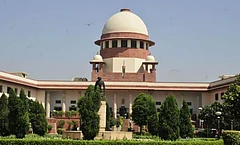
“The guidelines were ‘vague’ and ‘capable of misuse.’” With these observations, the Supreme Court stayed the UGC’s Promotion of Equity in Higher Education Institutions Regulations, 2026, raising serious reservations about their scope and phrasing. While suspending the operation of the new regulations, the court directed that the earlier 2012 UGC regulations on caste-based discrimination would continue to remain in force until further orders. The stay is an interim measure, with the matter scheduled to be heard on March 19.
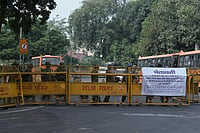
The stay has once again reignited a familiar debate around social inclusion in higher education. Resistance to the UGC’s anti-discrimination guidelines echoes the Mandal Commission protests of the 1990s. In that decade, protests erupted in response to the implementation of reservations for Other Backward Classes (OBCs) in higher education and met with widespread student opposition. Historically, policies aimed at addressing discrimination or expanding affirmative action have triggered protests, often reviving arguments around “merit” and claims of exclusion. While the anti-Mandal protests were largely confined to street mobilisation, current protests have also unfolded on digital platforms, alongside protests on campuses.
The new measures introduced by the UGC have a long-standing history, tracing back to a 2019 petition filed by Abeda Salim Tadvi and Radhika Vemula, the mothers of Payal Tadvi and Rohith Vemula. The petition raised concerns about the implementation of earlier equity rules and called for stronger measures to address discrimination on university campuses. In 2016, Rohith Vemula, a Dalit PhD scholar at the University of Hyderabad, died by suicide, triggering nationwide protests and starting a debate around caste-based discrimination in higher education institutions.



Responding to the Supreme Court’s interim order, Radhika Vemula said, “The stay on the UGC regulations is an interim order, and the matter will be heard on March 19. We cannot comment further as the issue is sub-judice. We believe in the judicial system and trust that the Hon’ble Supreme Court will take a rational decision.”
For many students from marginalised communities, the regulations represented long-awaited recognition.
“The new UGC anti-discrimination guidelines offered a sense of hope. Having lost years to systemic barriers, knowing the government officially acknowledges caste-based discrimination was validating. The guidelines show how such discrimination affects dignity, academics, and careers, reassuring that future generations from marginalised communities might not face the same struggles. They protect SC, ST, OBC students, as well as other marginalized groups, framing discrimination as a violation of constitutional rights and affirming that universities must be spaces of justice. This makes it psychologically safer for students to believe that speaking up can lead to accountability,” said Kaushal Yadav, a master’s student in education at Azim Premji University.

First-person account of discrimination
“The University Grants Commission (UGC), India’s apex higher education regulator, found that students from SC, ST, and OBC communities face systemic discrimination, with reported cases rising significantly. Such findings from a government body with institutional capacity deserve serious attention. However, when dominant-caste individuals challenged the guidelines in court over potential ‘misuse,’ the Supreme Court revised them without any SC, ST, or OBC representation on the bench. This raises questions about whose voices are considered legitimate in shaping policy,” Yadav added.
Yadav recounts a first-hand experience of facing caste-based discrimination to Outlook. “While pursuing my Master’s at a central university in Maharashtra, a senior student physically assaulted me and made casteist remarks. I submitted a complaint, but the inquiry committee, which was composed entirely of upper-caste professors, took no action. Instead, the hostel warden, who was also the accused student’s supervisor, forced me to accept a ‘resolution’ that involved an unwanted apology and hug. I was then asked to vacate my room, while the accused faced no consequences. Later, when applying for a PhD at another central university with reserved seats for SC, ST, and OBC candidates, I was told no suitable candidates were found from these communities, despite my strong performance in exams and interviews. This shows how institutional discretion can override constitutional mandates of social justice,” said Kaushal.
“Despite having policies, universities lack clear timelines and enforceable procedures for resolving complaints, leaving survivors at a disadvantage. Institutional support for students facing caste-based discrimination is minimal, and committees often lack sensitivity to caste realities,” Kaushal added.

The other side of the protests
At the same time, the regulations have triggered protests from sections of upper-caste students, who argue that the framework is exclusionary and vulnerable to misuse.
Vishwavidit Pratap Singh, a research scholar with the Hindi department at the University of Delhi, criticised the guidelines for focusing primarily on protections for SC, ST, and OBC students without offering comparable safeguards for students from the general category.
“Rules should be equal for everyone,” Singh said. “General category students also face discrimination. The regulations should apply equally to SC, ST, OBC, and general category students.”
Singh also claimed that many complaints filed under such frameworks lack merit. “A majority of the complaints are not genuine and often turn out to be false,” he said, adding that the regulations do not specify consequences for false complaints or provide clarity on counter-complaint mechanisms.
However, legal experts argue that the 2026 guidelines introduced two key enforcement mechanisms that were absent from the 2012 guidelines: a monitoring committee and a non-compliance clause. Outlook reached out to advocate Disha Wadekar, who is representing petitioners seeking institutional safeguards against caste-based discrimination in higher education institutions in India.
“The 2026 equity regulations introduce two concrete enforcement mechanisms, the monitoring committee and the non-compliance clause, which were absent earlier. Their inclusion makes implementation mandatory for colleges and universities, and that is what has triggered the outrage,” said Disha Wadekar.
“The equity regulations are designed to prevent discrimination based on structural or group identities, such as caste, gender, religion, place of birth, or disability. They address historic disadvantages and systemic discrimination, not individual harassment, which any student might face. Upper-caste students already have access to remedies under the UGC’s 2023 Student Grievance Redressal Regulations, which are caste-, gender-, and religion-neutral, as well as the 2009 anti-ragging regulations. There are claims that equity rules exclude upper-caste students, which are misleading. Upper-caste individuals can still report discrimination based on gender, disability, or other protected identities. These regulations aim to correct systemic inequities, not individual grievances,” says Wadekar on upper-caste students protesting the so-called “exclusion” in the new UGC guidelines.
The UGC’s anti-ragging regulations were enforced with exceptional strictness, which is why the prevention of ragging has been a largely successful story in India. But many institutions lack an equal opportunity cell. “In cases like Dr Payal Tadvi’s, the absence of such mechanisms allowed caste-based harassment to continue unchecked. Even a flawed Equal Opportunity Cell could have intervened, warned the accused, and created a formal record. Equity regulations existed on paper, but translating them into functional institutional mechanisms is key. These measures, though imperfect, provide a starting point for accountability,” says Wadekar, highlighting the importance of grievance and equity cells for marginalised students.
It’s not like everything will be decided based on one complaint, explains Wadekar. “A complaint is filed, a notice is issued to the respondent, and the respondent can put their submissions on record. They can bring evidence and witnesses before the committee to support their claim that they did not do this,” elaborates Wadekar, commenting on those protesting the alleged misuse of these guidelines.
Meenakshi Ravivanshi, a doctoral researcher at the National Institute of Educational Planning and Administration (NIEPA), Delhi, points out the structural nature of caste discrimination in universities. Caste discrimination in universities is rarely overt. “It operates through silences and cumulative practices rather than single, provable incidents,” she said.
According to Ravivanshi, claims of ‘vagueness’ often reflect a misreading of the regulations. “The criticism frequently centres on the general category not being explicitly named. Framing vagueness as a flaw shifts the burden of proof onto the most vulnerable,” she said.
Ravivanshi says equity committees must be genuinely representative. “Policy experts have argued that reserving at least 50 per cent of committee seats for SC, ST, and OBC members is essential to prevent upper-caste dominance in decision-making,” she said. “The fear of misuse reads less as concern and more as resentment, because these regulations could finally make discrimination consequential.”
Ravivanshi described the interim stay as unsurprising. “It reveals how fragile caste-protective policies remain when they challenge elite academic spaces,” she said.
As the Supreme Court prepares to hear the case on March 19, the interim stay has silenced upper-caste student protests, but rising cases of caste-based discrimination remain largely unaddressed. The debate around caste, equity, and accountability in Indian higher education continues, and the court’s final decision is likely to shape anti-discrimination guidelines nationwide.