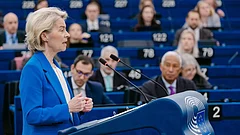
The top two EU leaders - Ursula von der Leyen and Antonio Costa - are likely to finalise the long pending India-EU Free Trade Agreement as well as advancing strategic and defence ties
The first guest of honour was Indonesian President Sukarno, one of the founders of the Non Aligned Movement.
India’s friendship with Russia and the former Soviet Union, resulted in four invites to Russian leaders as chief guest, including Vladimir Putin
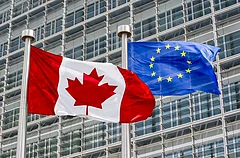
This year’s Republic Day chief guests underline the growing importance New Delhi attaches to the European Union, with the choice reflecting how India is recalibrating its view of the world amid shifting global alignments. Two of the top leaders, Antonio Costa, the EU Council chief and Ursula von der Leyen, head of the European Commission, are here to tie up the long pending India-EU Free Trade Agreement as well as advancing strategic and defence ties on Tuesday.
The invitation underscores the growing weight of the EU as a collective actor and offers a clue to how India is positioning itself amid an increasingly fragmented global order.
From 1950, when India began celebrating its Constitution, the chief guests reflected the state of play in India’s foreign policy and a calibrated signal of how New Delhi views the world.
The first guest of honour was Indonesian President Sukarno, one of the founders of the Non Aligned Movement. Soon after independence, India under Jawaharlal Nehru believed that newly independent countries of Asia and Africa should not be part of either the American or Soviet camps, but will keep themselves away from choosing sides in the Cold War.


India’s friendship with Russia and the former Soviet Union, resulted in four invites to Russian leaders as chief guest, including Alexei Kosygin, then Premier of the Soviet Union (Russia) in 1968, and the last was Vladimir Putin in 2007. Nelson Mandela was also the chief guest after the end of apartheid. In 2015, Barack Obama was the first sitting U.S. President to attend reflecting India’s growing warmth with the US, which began in 2000 with Bill Clinton’s visit to India. Before Barack Obama, Japan’s late leader Shinzo Abe in 2014, a great friend of India was in attendance. Abe, an avid China baiter, was the first leader to come up with the idea of QUAD, an arc of democracy stretching from the US, through Japan, India and Australia to contain China.
But today the world is a different place. US President Donald Trump has made disruption a governing principle in his second tenure. Nowhere is it more visible than in his assault on global trade and his contempt for long-standing allies. The fallout of US policy is forcing capitals to hedge. As Washington grows more erratic, countries are scrambling to lock in trade pacts that can cushion them from American tantrums. One of the clearest beneficiaries of this churn is the long-stalled India-EU Free trade Agreement, which was fast tracked and is now on the brink of being signed.
Talks on an India-EU FTA began as early as 2007, but were suspended in 2013 over differences and then re-launched in 2022. But with both India and the EU looking to quickly wrap up proceedings and seal the deal during the India-EU summit in New Delhi on Tuesday.
Both the EU and India are hyping up the agreement as “the mother of all deals”.
Trade deals usually take time as countries quibble over every minute detail to protect their interests. Agreements with the EU are always difficult thanks to the bloated European bureaucracy. It is slow and given to excessive red tape and is often dubbed as a mammoth regulatory leviathan.
The Indian bureaucracy is not far behind, but because the EU constitutes as many as 27 countries with different perspectives, progress is even slower. But the Trump assault on global trade has led to fast-tracking the process.
India’s relations with the EU have generally been good and got fresh impetus when US ties with India took an upward trajectory since 2000. As a close ally of America, the general trend had been for Europe to follow Washington’s lead. India and the European Union have been strategic partners since 2004 and New Delhi’s relations with European powers like Germany and France are excellent.
There was some heartburn in Europe when India refused to side with Ukraine after Russia’s invasion. In fact, Europe exerted the maximum pressure on New Delhi to break with Moscow and stop buying Russian oil. India’s foreign minister Subramanyam Jaishankar had hit back bluntly, much to the delight of ordinary Indian citizens.
But Ukraine has not come between India and the EU trading links.
Now Brussels and New Delhi are planning to sign a framework security and defence partnership covering maritime security, cyber security and counter-terrorism, according to the EU’s highest ranking diplomat Kaja Kallas. This will give new energy to the India-EU partnership. Details are not available, but the framework agreement will be sealed on Tuesday.
A joint comprehensive strategic vision for the 2026–2030 period, is also expected to be announced, signalling the growing partnership between EU and India.
The European Union is India’s biggest trade partner with bilateral trade in goods recording USD 135 billion in the financial year 2023-24. Bilateral Trade in Services in 2023 stood at US $53 billion (comprising Indian exports worth US $30 billion and imports worth US $23 billion) registering the highest ever trade in services. EU investments in India are valued at over US$117 billion with around 6,000 European companies present in India.
Indiaʼs investments in the EU are valued at around US$40 billion.
India and the European Union are betting that deeper economic and strategic ties with each other offer the surest hedge against a world where old certainties no longer hold.