



At the Mindmine Summit’s session, Surya argued that India’s rapid urbanisation is creating new pressures on housing, mobility and quality of life
It also raised concerns over whether inequality is increasingly visible within cities themselves
Panellists argued that while government schemes such as PMAY, interest subvention and redevelopment initiatives are expanding support, they stressed that developers also need stronger financial incentives to build affordable homes
At the 16th edition of the Mindmine Summit held on Monday, June 15, discussions ranged around how India navigates rapid economic transformation and rising global ambitions.
In a session titled ‘The India We’re Building: What’s Probable, What’s Possible?’, policymakers, industry leaders and political voices examined the choices shaping India’s future.
The discussion featured Sanjay Kulshrestha, Chairman & Managing Director, HUDCO; Anshuman Magazine, Chairman & CEO for India, South-East Asia, Middle East and Africa at CBRE; and Tejasvi Surya, Member of Lok Sabha, in conversation with Padmaja Joshi, Managing Editor and Prime Time Anchor at NDTV Network.
Joshi opened the discussion with Surya by raising a question about inequality and whether India’s growth story risks creating parallel realities.
“There is a Bharat that is shining, that is flying. But is there a divide that we are not talking about? Are we building two Indias?” she asked.
Responding, Surya said it is an exciting moment for urban India’s infrastructure, pointing to the Delhi-NCR region now being served by two international airports. But he argued that the bigger significance lies in what this moment represents.
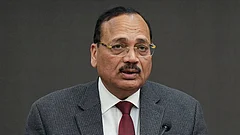


“If we zoom out and see what this moment symbolises, it is clearly indicating a concerted migration from rural areas to urban India.”
He noted that alongside rural-to-urban movement, Indian cities are also witnessing significant intra-city migration, creating a new set of pressures around housing, mobility and quality of life.
“Do we build homes first or do we build infrastructure first?” he asked.
Surya said these shifts are unfolding alongside changing social aspirations, with people wanting cleaner air, better employment opportunities and improved access to water and public services.
“This is a big challenge that urban India is facing across the country. In my humble opinion, in the coming couple of decades, this is one issue India needs to address in a very comprehensive manner.”
He argued that the conversation about inequality has evolved. All this time, we were thinking of two Indias in terms of rural and urban. “Now, within urban India itself, there are two different types of India.”
Surya pointed to the contrast between India’s high-growth urban centres and pockets of deprivation. There are gleaming GCC centres and apartments worth crores, and then you go a block away and find jhuggis and slums that “require serious redevelopment.”

He said these divisions are becoming more visible as India undergoes economic formalisation.
“The country is going through a formalisation of the economy. However, there is still a large number of people in urban cities doing informal jobs,” he said. Therefore, they do not have access to formal banking, which creates problems with access to credit.
Calling these structural challenges, Surya argued they must be addressed through coordinated policy interventions spanning finance, transport and urban planning.
These are structural issues that should be addressed from a finance perspective, transport perspective and, most importantly, through answering the question: “how much load can a select few Indian cities handle?”
Joshi then turned the discussion to housing, questioning why urban India continues to struggle with affordable housing even as the market for luxury apartments expands.
She noted that affordable housing supply has declined despite a substantial share of the population continuing to seek lower-cost housing options.
Responding, Surya argued that market incentives largely explain the imbalance.
“Private capital goes where there are formal profit-making routes and predictable financial market structures.”
Anshuman Magazine added that while India can draw lessons from countries such as Singapore and Japan, it ultimately needs to develop solutions suited to its own realities.
One of the reasons for the decline in affordable housing, he said, is straightforward: “There is no incentive for any developer to do affordable housing.”
He argued that government policy can play a stronger enabling role but stressed that incentives for developers are equally important. “We have to incentivise developers,” he said, suggesting measures such as tax benefits and asking a broader question: “How do we first create affordable financing for the developer, and for the consumer?”
Speaking about the Pradhan Mantri Awas Yojana (PMAY), Kulshrestha highlighted the multiple interventions already underway, particularly for Economically Weaker Sections (EWS). With PMAY 1 and PMAY 2, he said, states have increasingly come forward to support EWS housing.
“The second component is the interest subvention scheme,” he said, noting that the Government of India has already announced an interest subsidy of 3–5 per cent for affordable housing across the country.
Kulshrestha also pointed to other policy interventions aimed at expanding affordable housing, including Transit-Oriented Development (TOD), redevelopment of old buildings and markets, and upgrading jhuggis and informal settlements (shantis). He added that rental housing under PMAY could particularly benefit high-growth urban centres such as Bengaluru.
“There are already a lot of incentives,” he concluded.
Surya added that when there is a switch in profession from agriculture based employment to city-based non-agriculture based employment, it naturally means that, consequentially, “we must also address the challenges and opportunities that rise with such a large number of people coming.”
“Is the government at the state and central level trying enough? They are. Should more need to be done? Of course more needs to be done, no questions about that,” he said.















