



Vaibhav Sooryavanshi's debut has reignited the debate over whether Indian cricket is shortening the incubation period for exceptional talent
The IPL is increasingly replacing the traditional domestic pathway as the fastest route to international cricket
Beyond talent, managing physical growth, mental pressure and long-term backing will determine Sooryavanshi's success
For generations, Indian cricket followed a carefully mapped pathway. A promising youngster would dominate age-group cricket, graduate to the Ranji Trophy, impress in the Vijay Hazare and Syed Mushtaq Ali tournaments, earn an India A call-up, tour overseas, and only then receive the coveted India cap. The journey itself was considered part of a player's education.
That traditional "incubation period" is now being questioned.
When Vaibhav Sooryavanshi walked out to open for India against England in the second T20I at Old Trafford, he was 15 years and 99 days old, becoming the youngest player to represent India in international cricket and breaking Sachin Tendulkar's 36-year-old record. It was not just another debut, it was perhaps the clearest indication yet that Indian cricket's definition of "ready" has fundamentally changed.
The left-hander did not spend years knocking on the selectors' door. Instead, one extraordinary Indian Premier League (IPL) campaign rewrote the timeline. Playing for Rajasthan Royals, Sooryavanshi amassed 776 runs in just 16 innings in the recently concluded edition, finishing as the tournament's Orange Cap winner, Most Valuable Player, and Best Emerging Player.


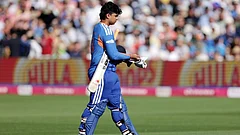
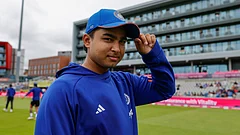
He also smashed 72 sixes, eclipsing Chris Gayle's record for the most sixes in a single IPL season, while striking at a scarcely believable 237.30. Numbers that would command attention regardless of age suddenly made selectors wonder whether waiting any longer served any purpose.
But his rise also raises a bigger question: Has Indian cricket shortened the incubation period too much, or is it simply adapting to a new era?
From Domestic Grind To International Spotlight
Traditionally, domestic cricket was viewed as cricket's finishing school.
The Ranji Trophy tested technique over four days. India A tours exposed players to overseas conditions. Domestic cricket taught patience, recovery from poor form, and consistency across an entire season before international cricket arrived.
Sooryavanshi's journey looks markedly different.
His biggest classroom was the IPL, where he faced some of the world's best bowlers before he had even turned 16. Packed stadiums, millions of viewers, pressure chases and tactical match-ups against established internationals arguably replicated many aspects of international cricket far more closely than domestic competitions ever could. For today's selectors, performances under those conditions increasingly carry as much weight as traditional domestic numbers.
Every New Talent Means Someone Misses Out
The romanticism surrounding teenage prodigies often overlooks a difficult reality.
Every debut comes at someone else's expense.
Sooryavanshi replaced Sanju Samson for the second T20I against England, highlighting one of selection's oldest dilemmas: when should potential outweigh experience?
India's T20 side is clearly entering a transition phase. The management appears increasingly willing to invest in long-term upside rather than short-term familiarity. That philosophy rewards exceptional talent but also creates uncertainty for established players, who now know sustained IPL excellence can fast-track teenagers into the national setup.
A cherry on the cake for Sooryavanshi was Samson's multiple bad outings which was clearly enough to open the doors for him.
The Long Rope Debate
Perhaps the biggest challenge begins after the debut.
India have invested heavily in Sooryavanshi's potential. The question now is whether they will remain equally committed if immediate results do not follow.
His debut offered glimpses of why the excitement exists. Opening the batting against England, he struck 14 off just 10 deliveries, including two sixes, before being stumped. It was brief but fearless, exactly the style that had defined his IPL campaign. Yet England eventually chased down India's 190/7, with Jacob Bethell's unbeaten 76 off 46 balls overshadowing the teenager's historic evening.
One innings should neither confirm nor reject a player's readiness. History suggests even the greatest careers include difficult beginnings. The real measure of faith lies not in handing out a debut cap but in continuing to back a player through inevitable failures.
Before Sooryavanshi's debut against England, former India captain Sunil Gavaskar remarked on Sony Sports.
"It all depends on, you know, what Vaibhav does today. I won't be surprised if he gets going from the first ball and, you know, everybody watching in India on television will be jumping. I mean, not, I don't mean jumping, but, you know, I mean, they'll all be elated because, look, he is India's baby now. He's, you know, I mean, not just Indian cricket, he's India's baby, and everybody wants their baby to do well," Sunil Gavaskar said on Sony Sports.
The challenge for India's team management is not simply helping Sooryavanshi score runs, but creating an environment where inevitable failures do not become defining moments.
If Sooryavanshi is genuinely viewed as a generational investment, India must resist the temptation to judge him after three or four low scores. A shortened incubation period should not mean a shortened patience period.
A New Selection Philosophy
Sooryavanshi's debut may ultimately be remembered for something much larger than a record. It signals that Indian cricket increasingly believes elite franchise cricket can accelerate development, compress learning curves and identify international-ready players earlier than ever before. The IPL undoubtedly has become one of the country's most influential selection laboratories.
That does not necessarily make the old pathway obsolete. Domestic cricket will continue producing technically sound cricketers and future internationals. But extraordinary talent now appears capable of bypassing parts of that queue when performances demand immediate recognition.
The debate, therefore, is no longer whether 15 is too young to debut.
The bigger question is whether Indian cricket can provide enough time, support and patience after that debut. Because while the incubation period may be shrinking, the process of building a great international career still takes years.
Vaibhav Sooryavanshi's story has begun at remarkable speed, but how India nurtures the next chapter could define whether this bold experiment becomes the blueprint for a new generation or remains the exception that proved the rule.















