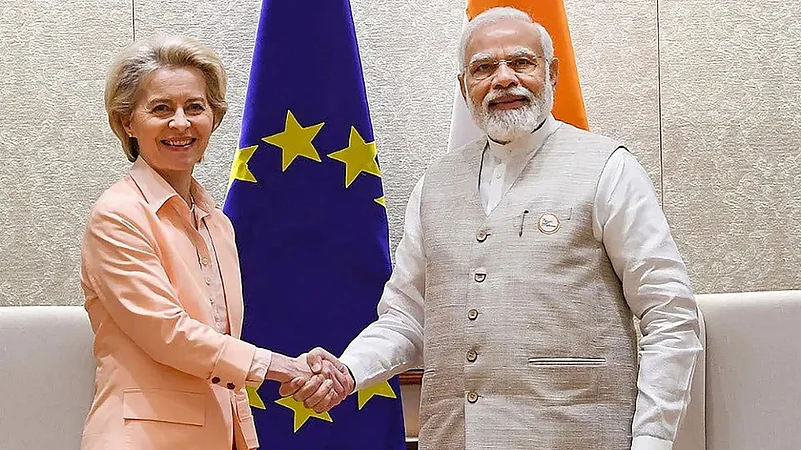
India and the European Union are expected to announce the conclusion of talks on an ambitious free trade agreement at the summit hosted by Prime Minister Narendra Modi.
A mobility framework for Indian workers and discussions on global challenges, including the Russia–Ukraine war, will be key elements of the summit agenda.
An announcement on the conclusion of talks on an ambitious free trade agreement, along with the finalisation of a strategic defence pact and a mobility framework, is expected to be among the key outcomes of the India–European Union summit scheduled for Tuesday.
Prime Minister Narendra Modi will host European Commission President Ursula von der Leyen and European Council President Antonio Costa at the summit, which is expected to lay out a broader vision for both sides to navigate the geopolitical uncertainty triggered by Washington’s policies on trade and security.
"A successful India makes the world more stable, prosperous and secure. And we all benefit," von der Leyen said on Monday.
Last week, the EU leader said India and the European Union are on the verge of a “historic trade agreement” that would create a market of nearly two billion people, accounting for almost a quarter of global GDP.
India and the EU first launched negotiations for a free trade agreement in 2007, but talks were suspended in 2013 due to differences in ambition. Negotiations were relaunched in June 2022.
The proposed FTA is expected to bring a qualitative shift in bilateral ties across a wide range of sectors.
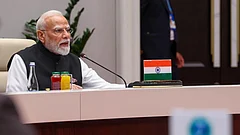
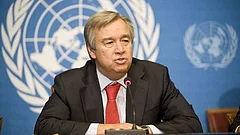

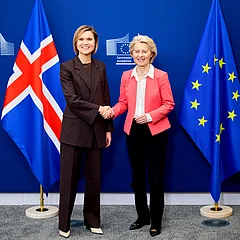
The summit’s broad focus will be on trade, defence and security, climate change, critical technologies and strengthening the rules-based global order.
In addition to advancing the free trade agreement, the two sides are set to unveil a defence framework pact and a strategic agenda.

India and the European Union have been strategic partners since 2004.
Officials said the proposed Security and Defence Partnership (SDP) will enable deeper defence and security cooperation between the two sides.
The SDP is expected to enhance interoperability in the defence domain and open avenues for Indian companies to participate in the EU’s SAFE (Security Action for Europe) programme.
SAFE is the EU’s €150 billion financial instrument aimed at supporting member states in accelerating defence preparedness.
India and the EU are also expected to launch negotiations for a Security of Information Agreement (SOIA) at the summit.
The SOIA is likely to boost industrial defence cooperation between the two sides.
Another major outcome is expected to be a memorandum of understanding on facilitating the mobility of Indian workers to Europe.
Officials said the framework will help advance mobility initiatives between EU member states and India.
France, Germany and Italy are among the European countries that already have migration and mobility partnerships with India.
The two sides are also expected to sign several agreements to deepen cooperation in other sectors.
They are likely to discuss pressing global challenges as well, including the Russia–Ukraine war.
While India and the EU do not agree on all issues, they share core interests such as maintaining a stable international order, European officials said last week.
The summit will also provide an opportunity to discuss with India “Russia’s war of aggression against Ukraine”, they said.
Officials noted that President Costa will reiterate the view that the war poses an existential threat to Europe, challenges the rules-based international order and has clear implications for the Indo-Pacific as well.
India–EU relations have strengthened significantly in recent years.
As a bloc, the EU is India’s largest trading partner in goods. In the 2024–25 financial year, bilateral trade in goods stood at around USD 136 billion, with Indian exports valued at about USD 76 billion and imports at USD 60 billion.
(with PTI inputs)