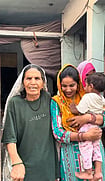
When 12-year-old Salma (name changed) was being married to a 30-year-old man in Haryana’s Jind, the parents were ecstatic. The fact that the groom had neither asked for a dowry nor made any demands were reasons enough for celebration, they thought. So when Just Rights for Children, which is among the largest networks of NGOs with over 250 partners, intervened and stopped the marriage, the parents revolted. “We got married early too,” they argued.
“This is one of the biggest challenges our NGO partners face at the grassroots,” explains Ravi Kant, National Convenor, Just Rights for Children. “Communities are completely unaware that they are committing a criminal offence. It is only when the fear of law is instilled in them that they begin to understand and deter,” he adds. When everything else fails, these NGOs utilize legal tools such as injunction orders to prevent marriages to FIRs to punish the culprits.
Laws Vs Reality
India’s laws criminalize child marriage and holds everyone involved, from family members, guests, to even service providers such as florists, caterers, horse vendors, priests, or imams, legally accountable. Complementing this is the Protection of Children from Sexual Offences (POCSO) Act, which prohibits any sexual relationship with a girl under the age of 18, regardless of marital status.
Yet these laws often just remain on paper. On the ground, social acceptance of child marriage continues to override legal mandates. In many villages and urban pockets alike, the moment a girl hits puberty, her family starts scouting for a groom, sometimes because they feel it is the only next viable and natural step, and often because they are still unaware of the laws, the opportunities their children will miss and are blinded towards the abuse and exploitation their children are pushed towards.


The Numbers
According to the National Family Health Survey V (NFHS 2019-21), 23.3% of girls aged 18 to 24 in India were married before turning 18. West Bengal reports the highest child marriage rate at 41.6%, followed closely by Bihar (40.8%), Tripura (40.1%), Jharkhand (32.2%), and Assam (31.8%). These numbers are especially shocking considering India has some of the most progressive laws against child marriage but traditions and social norms continue to shield child marriage in many regions and communities.
History in the Making
Given the numbers and the deeply ingrained traditions in the country, various agencies like the UN stated that it might take 300 years to completely end the practice of child marriage. That might be true had there been no movement or winds of change at the grassroots, in courtrooms and government offices. But India is in the midst of a reform. A silent but strong upheaval is underway to uproot child marriage, and there is no reason why a child marriage free India cannot become a reality even before 2030.
In 2022, the angst against the crime of child marriage began taking shape when ‘Child Marriage Free India’ campaign was launched mobilising thousands of women, men and children. Soon, the survivors of child marriage, the ones who were vulnerable and could be pushed into child marriage, the ones who had watched in silence the victims, the angry ones, the vulnerable ones, the ones who were wronged, the ones who were guilty of being in the wrong – everybody joined in and what had started with a dream by Just Rights for Children started becoming a shared goal of the entire nation.
In 2023, the momentum reached newer heights. Now activists, sarpanches, teachers, and police officers joined hands, and together they were armed with not just slogans but with awareness, determination and knowledge of the law by their side.
2024 saw a shift no one had ever dreamt of. In an almost never-before show of determination and commitment towards a single cause, not just NGOs but governments, judiciary, law enforcement agencies and communities stood up to remove this crime, brick by brick, child by child and village by village.
In October 2024, the Supreme Court issued landmark guidelines to prevent child marriage. The Apex Court emphasised the role of Child Marriage Protection Officers (CMPOs) in all the districts and of panchayats to make villages child marriage free. In November 2024, the Government of India launched the ‘Bal Vivah Mukt Bharat’ campaign with focus on education, awareness, accountability, and incentives to eliminate child marriage. At the launch, lakhs took a pledge against child marriage online with her. It was a moment of India’s defiance against the centuries-old tradition of child marriage. A year later, standing at the podium once again, Just Rights for Children announced that it would make one lakh villages child marriage free in one year.
The promise had the strong foundation of partnership, experience and a successful ‘whole of society and whole of government’ approach. The network, with the support of government and law enforcement agencies had stopped 198,628 child marriages in the last year, mobilized over 300,000 faith leaders and linked over two million families to government welfare schemes.
From Vigyan Bhawan to Villages
To truly end child marriage, interventions must occur on multiple fronts. Many state governments now offer financial incentives to girls to continue their education. The Bihar government has introduced accountability mechanisms at the panchayat level, which mandate that if a child marriage occurs and the local leadership fails to report or prevent it, they will be held responsible.
In a bold move, the Assam government launched a large-scale crackdown on child marriages, arresting thousands involved. According to a report by India Child Protection titled Towards Justice: Ending Child Marriage, Assam witnessed an 81% reduction in child marriages following legal interventions.
The "Assam model" offers a replicable framework. It reinforces a simple truth: laws only matter if implemented. When enforced sincerely, they become powerful tools for change.
Ending child marriage also requires aligning education policy with protective legislation. Financial incentive schemes must be coupled with mass awareness campaigns and effective delivery to the most marginalised families. And one very important aspect of child marriage is faith and religion. No marriage can be solemnised without the assistance of pandits, maulvis, or other faith leaders.
“Faith leaders are the most crucial block of this puzzle. Given the influence and command they have over the communities is tremendous, and so when they become the message bearers of ‘Child marriage free India’, there is no reason that this crime will not cease to exist. We have put up posters on child marriage in places of worship across the country, and this surely is making a difference,” explains Bidhan Chandra Singh, National Coordinator, Child Marriage Free India.
The ground is shifting. In remote parts of almost every state, young girls are now stepping forward to stop their weddings, informing panchayats and local officials. In a patriarchal society where family elders usually have the final say, this represents a seismic cultural shift. With the Supreme Court's guidelines, the central government's national campaign, and the tireless efforts of grassroots organisations, India has entered a decisive phase in the fight against child marriage. India's journey to eliminate child marriage is not just a legal battle. It is a unique social revolution. The road ahead may be long, but for the girls still waiting for a chance to study, dream, and decide their futures, the destination is worth fighting for.