Kerala budget focuses on the elderly, presents the Elderly Budget Document alongside the budget, first of its kind in the country
Honorarium for Accredited Social Health Activists (ASHAs) and Anganwadi workers increased by Rs 1,000, and for Anganwadi helpers by Rs 500.
Economist questions the claim of financial stability and growth in states own revenue
Kerala’s Left Democratic Front government, in its final budget presented barely three months ahead of the Assembly elections, sought to counter the narrative of a deep fiscal crisis by rolling out a series of welfare and populist measures. The exercise appeared aimed at projecting fiscal resilience and administrative stability, while attributing the state’s financial constraints to what it described as the Union government’s restrictive and adversarial fiscal policies.
Finance Minister K.N. Balagopal delivered an unusually long budget speech—stretching over three hours—underscoring the government’s claims of fiscal prudence, improved revenue mobilisation, and a strong welfare orientation. The emphasis on financial discipline seemed designed to rebut persistent criticism of fiscal stress, while the expansive welfare announcements reinforced the government’s attempt to project social responsiveness ahead of the elections.
Beyond repeated assertions of financial stability and sustained growth, a key highlight of the budget was its explicit focus on the care economy and the emerging silver economy, reflecting Kerala’s demographic reality as the country’s fastest-ageing state. In a first for India, Balagopal presented an exclusive Elderly Budget Document alongside the main budget, signalling a structural shift in how ageing-related expenditure is planned, tracked, and prioritised. The budget also proposes the constitution of an Elderly Commission and commits to presenting a separate elderly budget in the coming years.


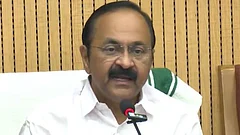

“Our state is facing a significant demographic transition marked by a rapid increase in the elderly population. In this context, the care economy and silver economy have become imperative,” the finance minister said.
Ageing Demographics in focus
Demographic indicators underscore the scale of the challenge. The proportion of senior citizens in Kerala is rising rapidly even as growth in the younger population continues to slow. With a median age of 37, significantly higher than states such as Bihar, where it is around 23, Kerala is well ahead of the national ageing curve. By conventional demographic standards, a society is considered “aged” when those above 60 years constitute 15 per cent of the population, a threshold Kerala is fast approaching, lending urgency to the budget’s ageing-focused interventions.
Reflecting this policy thrust, the budget announced ₹30 crore in subsidies for organisations and groups to establish retirement homes, and ₹10 crore for on-call volunteer services catering to the elderly. It also proposed a special pneumococcal vaccination programme for below-poverty-line citizens aged 60 and above. A range of additional measures aimed at strengthening elderly care and social support systems were also outlined, reinforcing the budget’s attempt to institutionalise ageing as a core governance concern rather than a peripheral welfare issue.
In a move with clear electoral resonance, the budget announced the formation of a new pay commission for government employees and pensioners. The decision mirrors the strategy adopted by the first Pinarayi Vijayan government in 2021, when a pay revision was announced on the eve of the Assembly polls, highlighting the continuity of a pre-election fiscal approach centred on salaried and pensioner constituencies.
Welfare-heavy allocations ahead of polls
Welfare measures featured prominently. The budget increased the monthly honorarium for Accredited Social Health Activists (ASHAs) and Anganwadi workers by Rs 1,000, and for Anganwadi helpers by Rs 500. Pre-primary teachers and literacy mission motivators were granted a monthly hike of Rs 1,000, while daily wages of school cooking staff were raised by Rs 25, reflecting a targeted focus on low-paid frontline workers.
The budget also earmarked Rs 3,700 crore for the Chief Minister’s Stree Suraksha Scheme, signalling a renewed emphasis on women-centric welfare. In addition, allocations for the rural employment scheme were increased by Rs 1,000 crore over previous years. The announcement of life and health insurance coverage across categories, including schoolchildren, and the promise of free degree education in arts and science colleges further reinforced the welfare-heavy thrust of the budget, despite lingering concerns over fiscal sustainability.
Infrastructure projects
The budget also provided for the controversial High Speed Railway Corridor, a project that has faced sustained scrutiny over its feasibility, cost, and social impact. Earlier in the day, the state cabinet approved a proposal for a Regional Rapid Transit System (RRTS) connecting Thiruvananthapuram and Kasaragod. The finance minister earmarked ₹100 crore for preliminary works despite the detailed project report (DPR) yet to be finalised, raising questions about the sequencing of approvals and financial commitments. The allocation appears intended to signal political intent and continuity on the project, even as uncertainties remain over its funding, execution timeline, and broader fiscal implications.
The Opposition dismissed the budget as impractical and accused the government of undermining the sanctity of the budgetary process. Leader of the Opposition V.D. Satheesan argued that several announcements, including the constitution of a new pay commission, were made with the knowledge that the Left government may not have to implement them. “The government has impaired the sanctity of the budget. Many of the announcements are politically expedient, not administratively implementable,” he said.
Economists challenge revenue claims
The government’s assertion of fiscal discipline has also been questioned by economists. Jose Sebastian, former faculty member at the Gulati Institute of Finance and Taxation, disputed the finance minister’s claim of improved revenue mobilisation. “The minister’s assertion that the state has increased its own revenue is contrary to the data,” he said. Citing Reserve Bank of India figures, Sebastian pointed out that Kerala’s share in the cumulative own revenue of Indian states stood at 4.08 per cent in 2021, but has since declined to 3.71 per cent, according to the latest RBI document. “This indicates a relative erosion of the state’s revenue position. Several of the budgetary claims are not grounded in fiscal reality,” he argued.
Presented barely three months ahead of the Assembly elections, the budget is widely being read as a template for the Left Democratic Front’s campaign narrative. By anchoring its proposals in welfarism, the care economy, and targeted social spending, the government has signalled the framework through which it intends to engage the electorate in the run-up to the polls.
The Opposition, however, has sought to turn this strategy on its head, portraying what it describes as the budget’s extravagant announcements as evidence of fiscal indiscipline and electoral opportunism, and arguing that the welfare-heavy thrust masks deeper structural weaknesses in the state’s public finances.