Marco Rubio tours Gulf states to bolster support for the US-Iran deal.
Strait of Hormuz security remains central to regional diplomatic discussions.
Gulf nations seek clarity on sanctions, inspections and ceasefire implementation.
For more than a hundred days, the Gulf held its breath. Tankers idled off Fujairah, insurers pulled their cover overnight, and a waterway that normally carries a quarter of the world's seaborne oil traffic turned into a minefield. Quite literally but also diplomatically.
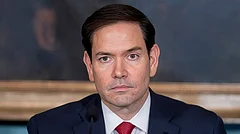
So when US Secretary of State Marco Rubio touched down in Abu Dhabi yesteday, moved on to Kuwait City, and landed in Manama for the final leg of his three nation tour, this was never going to be a routine handshake circuit. It was Washington trying to convince its oldest Gulf partners that the peace it has just struck with Iran will actually hold, and that they will not be left to pay for it if it does not.
All Eyes on Bahrain
The State Department confirmed on 22 June that Rubio would visit the UAE, Kuwait and Bahrain over three days to discuss the memorandum of understanding with Iran, efforts to secure full and free safe transit through the Strait of Hormuz, and the importance of peace and stability in the region.
Bahrain was always going to carry the most weight on this itinerary. It is home to the headquarters of the US Navy's Fifth Fleet, and Manama hosted the GCC-US Ministerial Meeting, pulling in foreign ministers from across the bloc rather than just the three countries on Rubio's flight plan.


Saudi Arabia's Foreign Minister, Prince Faisal bin Farhan, flew in for the session, where discussions focused on strategic cooperation and common priorities, according to the Saudi Press Agency. Bahrain's Foreign Ministry called the visit around strengthening their long-time friendship and strategic relationship and improving regional security and stability, anchored in the existing Comprehensive Security Integration and Prosperity Agreement between the two countries.

The ‘Fragile’ Deal
More or less this entire tour seems to exist because of a single document. President Trump and Iranian President Masoud Pezeshkian signed a 14 point memorandum of understanding on June 17, giving Washington and Tehran a 60 day window to negotiate something more permanent.
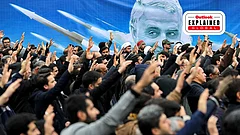
Vice President JD Vance has been leading direct talks with Iranian officials since June 21, following technical discussions held in Switzerland. The whole arrangement is meant to end a war that began on February 28, when US and Israeli strikes killed Iran's supreme leader and triggered Iranian retaliation across the region, including a near total shutdown of the Strait of Hormuz that hammered global energy markets.
Rubio was candid about his own role on this trip, telling reporters in Abu Dhabi, "We're really here to hear from them more than we are to talk." On Iran's longer term choices, he added that Tehran's leadership faces a fundamental choice between continuing its militant legacy or adopting a conventional state framework, and that real opportunities open up only if Iran chooses to behave like a normal state rather than what he called a revolutionary movement.

Gulf Sceptisims
The scepticism in Gulf capitals is not abstract. Despite the ceasefire, shipping through Hormuz has remained patchy at best. Maritime intelligence firm Windward reported a sharp drop in transits in mid June after Israeli strikes on Lebanon rattled the truce, with most vessels still crossing dark, meaning their tracking systems switched off, a pattern resembling the late blockade baseline more than a functioning open strait.
That is precisely why Hormuz transit rights sat alongside the Iran memorandum on Rubio's agenda in every country he visited. Saudi Arabia, Qatar and Oman were not formal stops on this trip, yet they showed up in Bahrain anyway, and reporting around the visit suggests they are pressing Washington for clarity on how sanctions relief, nuclear inspections and missile restrictions will actually be sequenced, rather than accepting broad assurances. Riyadh has also been running its own parallel track, with Foreign Minister Faisal bin Farhan holding direct calls with Iranian counterpart Abbas Araghchi to compare notes on where the negotiations stand.
None of this resolves on its own once the Secretary's plane leaves Bahrain. The 60-day clock on the memorandum keeps ticking, and the real test will be whether Hormuz returns to something close to normal traffic rather than the stop-start pattern of the past few weeks.