• Maritime security sources say clearing mines from the Strait of Hormuz could delay the resumption of normal shipping traffic for several weeks even after the waterway reopens.
• Shipping companies and oil traders remain cautious, with full operations dependent on security assessments and confidence in long-term stability.
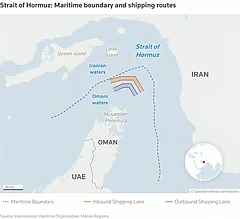
Clearing mines from the Strait of Hormuz could delay the resumption of normal shipping traffic by several weeks even after an agreement to reopen the key waterway, according to shipping and maritime security sources, Reuters reported.
Assessments by five Western maritime security sources indicate that demining operations using conventional minesweepers and advanced underwater drones may continue for 40 to 50 days before insurers, shipping firms and oil traders consider conditions safe enough to fully resume transit.
The prolonged disruption could delay the movement of tens of millions of barrels of oil, in addition to Gulf supplies already blocked since the United States and Israel launched attacks on Iran on February 28, according to estimates based on pre-war export flows.
The delay comes at a critical moment for global energy markets, with analysis from the U.S. Energy Information Administration last week showing oil stockpiles in the world’s largest economies are approaching their lowest levels since at least 2003.
Although Iran and the United States quietly facilitated limited ship movements through the blockaded route in recent weeks, shipping industry officials have continued to urge caution after both countries announced on Sunday that they had reached a preliminary agreement to end the conflict and reopen the strait.



Shipowners are also signalling that operations will not resume immediately. Shipping companies are expected to wait until they are convinced the U.S.-Iran peace agreement is "material", according to comments by the chief executive of Japan’s Mitsui O.S.K. Lines in an interview with the Financial Times published on Tuesday.
The conflict, which began in late February, severely disrupted shipping through the Strait of Hormuz, a route that handles around one-fifth of global oil and liquefied natural gas supplies, as well as products such as aluminium and urea.
"Given the experiences in the last couple of months, I think it’s reasonable to assume that it may take at least a couple of weeks or if not a month," Jotaro Tamura told FT, before U.S. President Donald Trump announced a deal to end the war in Iran.
Mitsui O.S.K., one of Japan’s three largest shipping companies, operates a fleet of more than 900 vessels, including bulk carriers, tankers and ferries.
In a Truth Social post on Monday, Trump said ships carrying oil had started moving out of the strait, "going along the Southern 'Highway,' which is totally safe, secure, and pristine".
However, according to the FT report, the agreement between Washington and Tehran has not changed Tamura’s assessment.
"We recognize that there are signs of movement toward a ceasefire. However, operations will not be resumed until safety has been sufficiently confirmed," Mitsui O.S.K. said in an emailed statement to Reuters.
"The resumption of transit will require close coordination with the governments of the relevant countries, insurers, and other stakeholders," the Japanese shipping giant added.
(Reuters and FT reported)