A brutal June 2026 heatwave that killed at least 1,300 people across Europe has turned air conditioning into a defining political fault line.
Very few European households have air conditioning, compared to nations like the US, Japan, and South Korea.
The EU is simultaneously phasing out the HFC refrigerants that power most ACs while demand surges, betting on heat pumps, district cooling, and natural refrigerants .
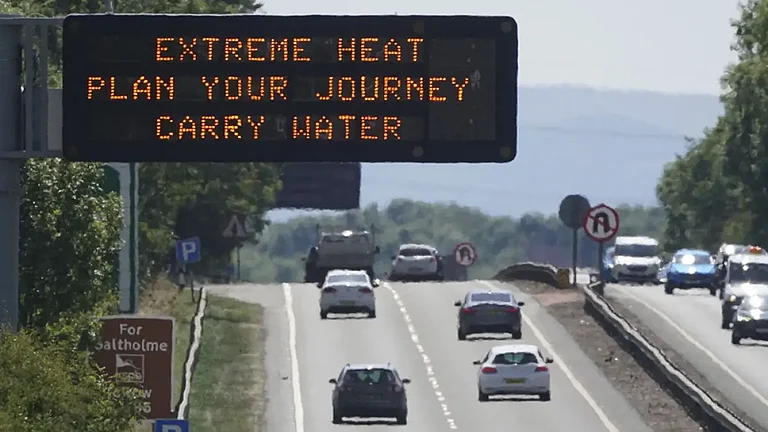
Southern and central Europe are living through their first major heatwave of 2026, a heat dome dragging hot air up from North Africa and pushing temperatures as much as 15°C above seasonal norms. The death toll has already passed 1,300, and France alone has recorded around 1,000 excess deaths since the heat began, figures health authorities expect to rise as data is finalised.
In past decades, this would have been treated as a weather story. In 2026, it has become a fight over how Europe should live with itself and air conditioning sits at the centre of it.
Why Air Conditioners Became Politically Sensitive
In France, the issue has become a genuine electoral wedge. The far-right National Rally, currently leading polls ahead of next year's presidential election, has floated a mass subsidised rollout of AC systems a populist pitch to voters sweltering through record heat.
Critics have dismissed the National Rally's proposal as opportunistic and unfunded, noting that the party's camp was among the last in French politics to acknowledge climate change in the first place, undermining its credibility on a climate-adjacent solution.




Caught in the middle, Brussels has chosen studied neutrality. Pressed directly on the matter, European Commission spokeswoman Anna-Kaisa Itkonen told reporters she doubted the bloc had a particular position on air conditioning, framing cooling instead as part of broader building renovation and energy efficiency policy. The Commission left the door open to revisiting that neutrality if political pressure mounts further over the summer.
The Energy Crisis And Cooling Debate
Europe's hesitance toward air conditioning was never purely cultural. It is structurally embedded in the continent's building stock and energy thinking. Many European buildings are old and often require structural modification for installation. Britain and France additionally impose bureaucratic restrictions on installation, partly to preserve the visual character of historic buildings and conservation areas.
The deeper concern is grid and climate impact. Critics argue that a sharp rise in air conditioning use will make Europe's 2050 climate-neutral pledge significantly harder to reach. Air conditioners are energy-intensive, and they also push heat outward, intensifying the very urban heat island effect that drives people to install them in the first place.
According to a report by the European Environment Agency (EEA) about 47% of EU electricity came from renewables in 2025, which is the more meaningful lever. The real focus should be on how electricity is generated, not on whether people use air conditioning at all.
Why Climate Activists Are Divided
Even within the environmental movement, opinion is not unanimous. One camp insists widespread air conditioning offers only a short-term fix while worsening the long-term climate problem, locking in decades of additional electricity demand and emissions at precisely the moment Europe needs to be reducing both.
The opposing camp, increasingly vocal as heat deaths climb, argues that withholding cooling from vulnerable populations, the elderly, the sick, those in poorly insulated social housing, is its own form of harm, one that falls hardest on people with the least power to adapt.
The World Health Organization estimates that more than 200,000 people have died from heat-related causes across Europe over the past four years, with most of those deaths considered preventable. The argument that cooling access is a public health necessity, not a luxury, has gained real traction even among activists who remain wary of mass AC adoption.
Can Green Cooling Technologies Help?
Under the EU’s Fit for 55 climate strategy, Brussels has sharply tightened quotas on hydrofluorocarbons (HFCs), the refrigerant gases used in most conventional AC units.
In place of HFCs, manufacturers are being pushed toward natural refrigerants such as propane and carbon dioxide, which have dramatically lower global warming potential. Propane is highly efficient but flammable, requiring new safety standards, particularly for the dense apartment buildings common across European cities.
Beyond refrigerant chemistry, cities are increasingly turning to district cooling networks, which centralise cooling production and distribute chilled water through underground pipes, often drawing on rivers, lakes, or waste heat rather than electricity-hungry individual compressors.
What Experts Say About Europe's Future
Experts broadly agree on one point: the debate over whether Europe should have air conditioning is effectively over, because adoption is happening regardless of the political argument. The remaining question is how that adoption is managed.
European homes need to withstand cold winters and brutal heat, not just one or the other, a reorientation that most European housing was not designed for.
The starkest warning concerns lock-in. Every air conditioner sold today commits the buyer, the grid, and the climate to roughly a decade or two of associated energy use and emissions, meaning the choices made in this single politically charged summer will echo for a generations.