Iran wants the right to charge navigation fees for ships passing through the Strait of Hormuz.
The proposal has sparked a dispute over international maritime law and freedom of navigation.
The outcome could affect global shipping and energy trade through one of the world's busiest sea routes.
Iran's proposal to introduce navigation fees for ships passing through the Strait of Hormuz has revived questions over who can regulate one of the world's busiest ship
ping routes. While Tehran argues that vessels should pay for services itsays it provides in the Strait, the United States maintains that the waterway must remain open to international navigation without unilateral restrictions.
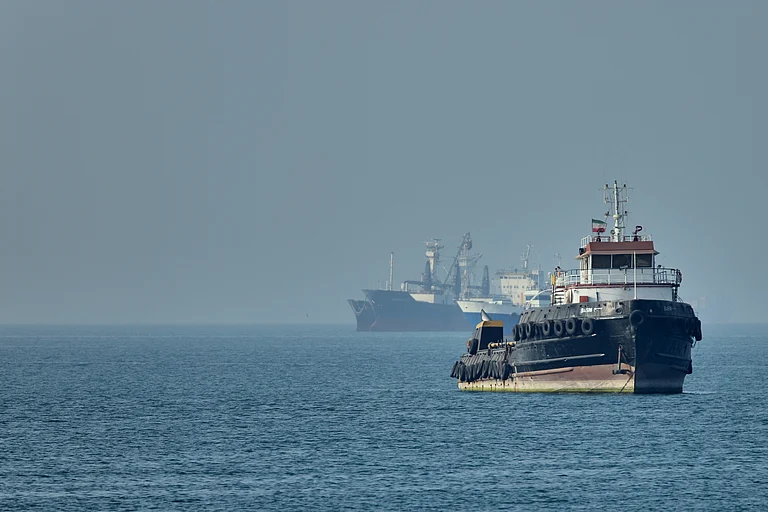
The proposal has drawn attention because the Strait carries a significant share of the world's seaborne energy trade and is governed by international maritime rules that Iran and other countries interpret differently. The disagreement is as much about authority over the waterway as it is about the proposed charges themselves. Although Iran has publicly said it does not intend to close the Strait, its proposal has prompted renewed questions over whether it can require commercial ships to pay for transit.





Why has the issue resurfaced?
According to Reuters, Iran is seeking broader international recognition of its role in managing the Strait of Hormuz as part of ongoing negotiations with the United States. Iranian officials want any long-term arrangement to acknowledge Tehran's authority over the waterway, including the ability to collect navigation fees from commercial vessels and, in some circumstances, determine which ships may pass through.
The discussions follow an interim arrangement under which ships continue to transit the Strait without paying fees while negotiations continue. Reuters reported that the temporary understanding is expected to expire later this year, after which the two sides hope to reach a permanent agreement. If no deal is reached, the future of Iran's proposal remains uncertain.
Iran first outlined the idea publicly in June. Speaking in Moscow, Iran's ambassador to Russia, Kazem Jalali, said the Strait would remain open to international shipping but that vessels could be required to pay transit fees. He said Iran provides navigation, safety, environmental and administrative services in the waterway and should be compensated for those functions. The remarks were first reported by Reuters and later carried by Al Monitor.
The Strait of Hormuz links the Persian Gulf with the Gulf of Oman and the Arabian Sea. Because a large share of globally traded crude oil and liquefied natural gas passes through it, even limited changes to how the route is managed can attract worldwide attention.

What does international law say?
The legal disagreement centres on how international maritime rules governing international straits should be interpreted. Reuters reported that maritime law experts say international law does not generally permit a coastal state to impose unilateral charges simply because foreign vessels are exercising their right of transit through an international strait. Since the Strait of Hormuz is shared by Iran and Oman and serves international shipping, many governments view uninterrupted transit as a fundamental principle.
Iran, however, argues that the proposed charges are not simply a toll for passing through the Strait. Instead, it says they would cover the cost of services that help vessels navigate safely, including traffic management and other operational support. Tehran also maintains that, as one of the two coastal states bordering the Strait, it has an important role in regulating activity there.
The United States has rejected Iran's position, insisting that the Strait should remain an unrestricted international waterway and that freedom of navigation must be preserved.
Why does it matter?
While the legal arguments remain contested, developments in the Strait continue to draw attention because of their potential impact on commercial shipping. The Associated Press reported this week that a container ship ran aground after taking a route that Iranian authorities said was unauthorised. Iranian officials cited the incident as evidence that ships should follow navigation guidance issued by Tehran when passing through the Strait.
For shipping companies, the outcome of the negotiations could affect operating costs and the rules governing one of the world's busiest maritime corridors. For energy-importing countries, including many in Asia, any changes to transit arrangements could have wider implications for the movement of oil and gas.
For now, ships continue to pass through the Strait without the proposed fees. For now, commercial vessels continue to use the Strait under existing arrangements while negotiations continue. Whether Iran's proposal eventually forms part of a longer-term agreement remains uncertain, leaving the legal and diplomatic questions unresolved.