






BNP secured 209 of 297 seats in the general election.
Jamaat-e-Islami won 68 seats, while the Awami League was barred from contesting.
BNP declined to take a second oath linked to the “Constitution Reform Council”, despite over 60 per cent voting “yes” in the constitutional referendum.
The newly elected Bangladesh Nationalist Party (BNP) lawmakers were sworn in on Tuesday, six days after the country’s crucial general elections.
The Bangladesh Nationalist Party (BNP) secured 209 of the 297 seats, while the right-wing Jamaat-e-Islami won 68 seats in the 13th parliamentary elections. Deposed premier Sheikh Hasina’s Awami League was barred from contesting the polls.
Chief Election Commissioner AMM Nasirudin administered the oath of office to the lawmakers inside the Jatiya Sangsad Bhaban as a constitutional alternative in the absence of outgoing parliamentary Speaker Shirin Sharmin Chowdhury, who had resigned earlier.
In the altered political landscape, Deputy Speaker Shamsul Haque, who was meant to conduct the oath in the Speaker’s absence, was jailed after a student-led violent street protest dubbed the ‘July Uprising’ toppled deposed prime minister Sheikh Hasina’s Awami League government.
The Awami League was disqualified for the February 12 polls, while the BNP’s former long-time ally and now staunch rival, Jamaat-e-Islami, emerged as the main opposition.


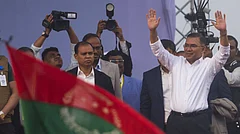
According to the official schedule, President Mohammad Shahabuddin is set to administer the oath of office to the cabinet in the afternoon, formally bringing the BNP to power after the majority party members elect their leader.
The Constitution mandates that the President invite the leader of the majority party to form the government and administer the cabinet’s oath. The BNP has said the cabinet will be led by party Chairman Tarique Rahman as the next Prime Minister of Bangladesh.
The party had earlier announced that its chairman would assume the office of prime minister.
However, unlike Jamaat, the BNP declined to take a second oath as members of the “Constitution Reform Council” to endorse the referendum held simultaneously with the general election.
The second oath seeks to bind MPs to implement the much-publicised “July Charter”, which calls for sweeping constitutional changes. The 84-point proposal was presented in the referendum in a recognised but highly complex form for voting.
The Election Commission reported that over 60 per cent of voters cast a “yes” vote in the referendum. “We have not been elected as members of the Constitution Reform Council; no provision of the council is yet to be incorporated in the Constitution,” BNP policy-making standing committee member and newly elected MP Salahuddin Ahmed told party lawmakers shortly before the ceremony as they gathered to take the oath.
In the presence of BNP chairperson Tarique Rahman, he added, “None of us (BNP) members will take the second oath”.
(with PTI inputs)
















