In a city where skylines shift faster than memories, Bengaluru’s real estate story is as much about human grit as it is about urban expansion. Few people have lived this evolution as closely as Mr. Nagabushana Reddy. Over nearly three decades, his career has mirrored the city’s own transformation from dusty peripheral plots to the sophisticated, sustainability-driven vertical communities of today.
We sat down with Mr. Reddy to talk about the early days, the hard lessons of the 2000s, and the philosophy that keeps NBR Group relevant in a hyper-competitive market.
Q: Mr. Reddy, you started back in 1998. When you look back at the Bengaluru of that era, what is the first thing that comes to mind?
A: Honestly? It was a completely different world. In ’1998, Bengaluru was just beginning to wake up to its own potential. The market back then was quite fragmented very informal. We did not have these massive IT corridors or "premium clusters" like we see now.
Back then, our focus was almost entirely on plotted developments. We were trying to solve a very basic human need: providing a piece of land that was affordable, connected, and safe. There was a certain honesty to that period. It was not about luxury or "Branding" yet; it was about helping families plant their first roots in the city. Those early years were my classroom they taught me the ground realities of land and, more importantly, the value of a customer's trust.


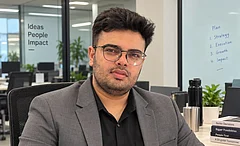
Q: How did those early lessons in plotted layouts influence the way you build today?
A: Those projects were purposeful. They were not flashy, but they were neighbourhoods where people-built lives. Throughout the 2000s, as we expanded into Hosur and deeper into Bengaluru, we were essentially learning how to navigate the complexities of land and regulation.
By the time the 2010’s rolled around, we had delivered major townships. But more importantly, we had developed an ear for what families were asking for. We saw the shift from people just wanting "a house" to people wanting a "structured life", amenities, security, and a sense of belonging.
Q: You eventually moved from selling plots to building premium residential communities. What was the "aha" moment for that transition?
A: It was not a single moment, but rather a response to how the city was maturing. The influx of global tech talent changed the DNA of the buyer. People started travelling more; they saw how people lived in Singapore or Dubai, and they wanted that same quality of life here.
At the same time, the industry was professionalizing. RERA changed the game by bringing in much- needed accountability. For us, it was the perfect time to pivot. We realized that if we wanted to stay ahead, we could not just sell space anymore we had to sell an experience.
Q: That brings us to NBR Soul of the Seasons. It is quite a departure from the "maximum density" model most developers follow. Why go this route?
A: You are right, it is a departure. We have nearly 10 acres off Sarjapur Road, and we have left almost 88% plus of it as open green space. Ten years ago, a developer would have called me crazy for "wasting" that much sellable area.
But today, it is what people are desperate for. We call it “Resort Living. Every Day.” because we realized that after the pandemic, home is not just a place where you sleep it is where you recover from the world. We did not want to just build another concrete block; we wanted a project that breathed. That intentionality is what defines NBR Group today.
Q: You were recently named ‘CEO of the Year’ at the ET Achievers Awards. After 27 years, do these accolades still hold weight for you?
A: It is always nice to be recognized by your peers, of course. But for me, the award is not about personal glory. It is a validation of the path we chose. Real estate can be a tough, cynical business. When you win an award like that, it signals to our customers and our team that being transparent and focusing on quality pays off in the long run. The real reward, though? It is driving past a project we finished 15 years ago and seeing that it is still a thriving, happy community.
Q: Leadership in this industry is notoriously difficult. What are the non-negotiables for you?
A: First is integrity especially when things get difficult. In real estate, there are a thousand ways to take a shortcut for a quick profit. We have always believed that trust is our most asset. If you lose that, no amount of marketing can save you.
Second is adaptability. You must be a student of the market. Whether it is new construction tech like aluminium formwork or changing ESG norms, you cannot afford to be stagnant. And finally, empathy. You must remember that you are dealing with someone’s life savings. That realization should change how you pick up the phone and how you pour the concrete.
Q: What do you see when you look at the next decade of Bengaluru real estate?
A: We are moving away from "transactions" and toward "value." The next generation of buyers is incredibly well-informed. They care about their carbon footprint, their water security, and their mental wellness.
Technology will obviously play a huge role not just in how we build, but in how these communities’ function day-to-day. Developers who only think about "housing stock" will struggle. The future belongs to those who build for urban resilience.
Q: If you could go back to 1998 and give that version of yourself one piece of advice, what would it be?
A: I would tell myself to build with empathy from day one. It is easy to get caught up in the numbers the square footage, the margins, the timelines. But at the end of the day, we are in the business of human aspirations. If you keep the person who will live in that house at the center of every decision, the success will follow naturally.
Closing Thought: As our conversation with Mr. Reddy came to an end, it was clear that the story of NBR Group is really the story of Bengaluru itself a journey from simple beginnings to a complex, world-class future. For Mr. Reddy, the 12 million square feet delivered so far is just the foundation for what comes next.