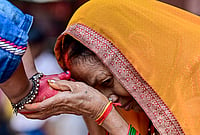
There is a strong presence of folklore and local belief systems in Taba’s work
Tales from the Dawn-Lit Mountains is actually her fourth manuscript.
Her next project explores how a family preserves its identity through myths that blur the line between the spirit world and the domestic one.
Subi Taba, who grew up in the hills of Arunachal Pradesh, has emerged as a distinctive new voice in Indian writing. Her debut collection, Tales from the Dawn-Lit Mountains, draws deeply from oral traditions, animistic belief systems, and the everyday life of her region. The book has received wide appreciation and recently earned her the Best Debut Author award at the AutHer Awards 2026 in New Delhi.
In this conversation with Abdullah Khan, she speaks about her journey into writing, the place of folklore in her stories, and the challenge of representing a region that has long remained at the margins of Indian literature.
First of all, congratulations on winning the Best Debut Author award at the AutHer Awards 2026 for your book. How did you receive this news, and what did it mean to you at a personal level?
"Thank you! It was an incredibly surreal experience. Being shortlisted was already a delight, and attending the ceremony at the Taj Palace in Delhi alongside such talented writers was an honor in itself. The wait for the announcement was nerve-wracking, but hearing my name called was a moment of pure joy. Personally, I feel incredibly lucky and deeply humbled by the warmth and appreciation the jury members showed toward my work."


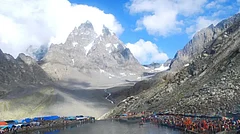
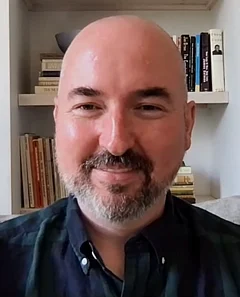
Could you tell us about your background—your childhood in Arunachal Pradesh, your family, and the kind of surroundings in which you grew up?
I belong to the Nyishi community of Arunachal Pradesh. I grew up in the serene, suburban setting of Rono Hills, raised by a father who is a University Professor and a mother who is the heart of our home. Growing up with my two younger sisters, I was quite a competitive child—always aiming for the top in school and college. But beyond academics, I was always deeply drawn to literary and cultural activities; those early years on the hills really fostered my creative spirit.
When did writing begin to matter to you in a serious way? Was there a particular phase or moment when you felt this is something you must pursue?
Writing has been a constant since my school days, though I lacked formal guidance back then. I actually finished my first manuscript at fifteen! By my early twenties, I had completed two more novels which I’ve kept tucked away—I haven't shown them to anyone yet, though I may revisit them one day. Tales from the Dawn-Lit Mountains is actually my fourth manuscript. I felt a different kind of confidence with this book, and seeing it resonate so well with readers has been immensely fulfilling.
You are working as an agriculture development officer. How do you balance this with writing? Do your field experiences and interactions with people find their way into your stories?
It is certainly a delicate balancing act. I dedicate my mornings to writing before the workday begins and reserve my evenings for research. My professional life and my creative life often intersect in unexpected ways; for instance, the stories Spirit of the Forest and Love and Longing in Seijosa were directly born from my posting in Seijosa. That idyllic town and its people left a lasting impression on me, and I felt a responsibility to capture its spirit on paper.
Your stories seem deeply rooted in everyday life. How much of your writing comes from what you have directly seen, heard, and lived?
As a writer, I believe we are like sponges, constantly absorbing the world around us. My ideas, personal philosophies, and daily observations naturally dictate the trajectory of my stories. I find a lot of inspiration in human connection—I love interacting with people and observing how their unique worldviews differ from my own. Those snippets of reality often become the seeds of my fiction.
There is a strong presence of folklore and local belief systems in your work. How did you approach these elements, especially keeping in mind readers who may be unfamiliar with them?
That was a conscious challenge. I didn’t want to write about tribal people as an outsider looking in; I wanted to write from the tribal perspective, inviting the reader into our worldview. My intention was to create a bridge—to educate and inform readers about the rich cultural history of Arunachal Pradesh while ensuring they remained thoroughly entertained by the narrative journey.
In many of your stories, nature feels alive, almost like a character with its own will. Is this reflective of how people in your community relate to the natural world?
In my community’s tradition of Donyi-Polo (Sun-Moon) worship, nature isn't just a setting; it’s a living part of our cosmology. While this is rooted in animism, I think it’s also scientifically and logically sound—humans cannot be separated from the environment. We are merely characters on a much larger canvas. In my writing, the rivers, forests, and mountains are not backdrops; they are presences with their own will and pulse.
Your book introduces readers to various religious traditions and customs. Could you speak about some of these practices, and how they differ from the more widely known religions in India?
The traditions in the book are centered on nature worship and animism, which are still kept alive by traditional priests known as Nyibus among the Tani group of tribes. The most striking difference from mainstream organized religion is that our deities are the life-giving forces of nature themselves—the Sun and the Moon—rather than human-like forms. It’s a very organic, earth-bound spirituality.
Many of your characters seem to carry memory, silence, and a sense of loss. Is this something you consciously explore, or does it emerge on its own while writing?
These themes emerge quite organically. I believe memory and silence are integral to the emotional landscape of the Northeast. The region carries deep histories of migration and quiet resilience that aren't always articulated in history books. That sense of something 'slipping away' often finds its way into my characters; it’s less of a deliberate choice and more of a reflection of the atmosphere I grew up in.
What is going to be your next project?
My next project, tentatively titled A Family of Mythical Storytellers, examines how stories are inherited across three generations of a Nyishi family. It’s an exploration of how a family preserves its identity through myths that blur the line between the spirit world and the domestic one.
Abdullah Khan is a Mumbai based novelist, screenwriter, literary critic and banker.