- Dragged to limelight: An invasion upon privacy becomes evidence of ‘gross misconduct’ as Siras is videotaped at home
- A battle ensues: Even as the professor is beleaguered by homelessness and isolation, he begins a legal fight to be reinstated
- Tragic ending: Although the fight is won, it is too late. Siras is dead in his room by the time he is found by the police.
***
A film called Aligarh is making waves in the festival circuit. But to appreciate its achievement, we have to go back a few years—five, to be exact. On April 7, 2010, at six in the evening, journalist Deepu Sebastian Edmond entered the two-room house of Professor Srinivas Ramchandra Siras. There was a powercut in Aligarh that evening. Deepu switched on his torchlight to find his way, when the beam fell on Professor Siras’s body, lying on the cot, facing the wall. This was the first time Deepu actually met the professor since he started speaking to him a couple of months earlier. The policemen in the room said Siras had committed suicide.
On February 8, a few men forced their entry into Professor Siras’s apartment in the Aligarh Muslim University (AMU) campus and videotaped him having sex with another man, which seemed consensual by all accounts. Siras was a professor of Marathi Literature in AMU and head of the department of modern Indian languages. The next day, Siras received a suspension letter for ‘gross misconduct’ An enquiry was to be conducted later. But straight off, the AMU public relations officer, Professor P.K. Abdul Aziz, was quoted as saying “the capture of Siras having sex with a man is a scandal no institution of repute can overlook”.

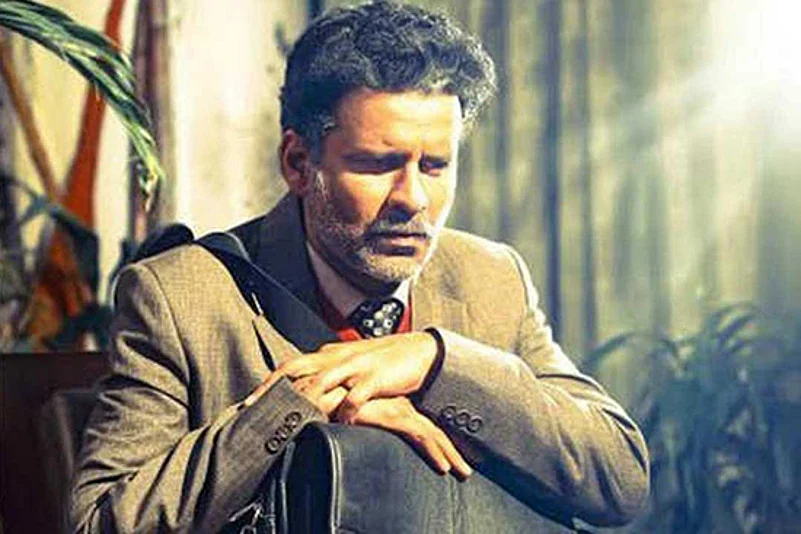
The story is now immortalised in Hansal Mehta’s film. The Jio MAMI Mumbai Film Festival will open with Aligarh—only the second time in its 17-year-old history it would open with an Indian film. It made its international premiere at the Busan Film Festival, where it received overwhelming response, and then travelled to the London Film Festival. Manoj Bajpai plays the traumatised gay professor and Rajkumar Rao plays the journalist, who developed a bond with Siras while reporting the case. “Many believe I broke the story. In fact, Times of India was the first to bring out a small piece from an Aligarh press release,” says Deepu. He had only been a few months in his job at the Indian Express. The Aligarh area had come under his charge only after AMU appointed a Keralite vice-principal and his editors thought he could form easy connections because of his Malayali background. “The very next day, I was on the case and an easy search on the AMU website gave me Siras’s number. I called, and to my surprise he picked up,” says Deepu. The professor was retiring in September the same year and chose not to contest the suspension. His decision to leave came as a relief to the university, which did not want any public glare on it. Then something made the professor change his mind and soon he filed charges against the university’s order. But the university was set to drive him out; the authorities cut off his water and electricity supplies. The hunt for a new house began, and so did the court battle. About four houses and four weeks later, Siras won the case against AMU on April 1, and got back his job at the university.


In Person Professor S.R. Siras outside AMU, February 2010. (Photograph by Jitender Gupta)
“I had remained in touch with Siras ever since, and spoken to him intermittently in hope of a story. When he won the case, I wasn’t the first to report it, yet again. I had formed a bond with him by then—something my colleagues teased me about, and I was furious that he didn’t tell me about the winning,” says Deepu. A late night call on April 5 was made to the professor, enquiring about his first day back in AMU. Siras spoke about his plans to go to the US and join the fight for gay rights in academics. After a long chat, the first time the otherwise reserved professor talked, the two decided to meet. “He told me to come to his department at 10:30 in the morning. He invited me home too, saying we had talked a lot but never met. I remember my colleagues jeering at the back.” (It is a great irony that not even someone professionally covering a case of lethal collective homophobia is immune to ‘humour’ in the same vein. No wonder Siras had to die.) The next day, Deepu along with the photographer Tashi left for Aligarh. A little delayed on the way, he called the professor to enquire. “His phone was switched off, he never did that,” says Deepu. He went to the university nonetheless. No one in the department knew of his whereabouts, and his apartment on campus was locked. Siras had changed so many houses that nobody really knew where he lived. “We went from one house to the other. No one wanted to talk about the case so we tried asking discreetly about the ‘vivaad wala professor’,” says Deepu. By then the search had become frantic and when their car was parked in the market place of the locality, a small boy quickly got into the car, and swearing secrecy, drew out the map to the professor’s house on the back of a notepad for Deepu and Tashi.

Witnessing Deepu Sebastian Edmond became suddenly involved
Siras’s house was on the ground floor, and had two entrances, both of which were locked. There was a garbage bag hanging from the kitchen door and it stank. They knocked for a while but with no response, left. “On April 7, I had an appointment with the vice-chancellor of the university. I asked him about revoking the suspension officially. He said they didn’t need to issue a letter after the court’s order, it was understood, so I left,” says Deepu. It was the time of the Dantewada attack, and Deepu had a new assignment —to profile the families of jawans who were from Aligarh. It was on his way to this that Tashi got a call informing them about the professor’s death. “We had called numerous people trying to trace Siras. One called back to inform us that the police, noticing a foul smell, had broken into the professor’s house to find his dead body. We rushed back.” In the house Siras was found lying on the cot. A Tata Sky remote, and a copy of the Time magazine by his side. He was facing away from the TV. Deepu could only stay there for three minutes. The forensics suspected suicide, traces of poison having been found in his body. A case of murder was also registered, and six people arrested, but the charge was later dropped due to lack of evidence. Deepu filed the story the next day and returned to the university to talk to the students and other officials. “I saw everyone around campus holding pieces of paper—they were copies of the letter revoking the suspension of Siras, dated April 6, 2010.” A victory on paper—perhaps an epitaph.
Related Stories Love In Lajpat Nagar