Only Angels premiered at Visions du Réel 2026.
The short film is directed by Clément Pinteaux.
The doc picks up on brief stories along the Saint-Nazaire shipyards.
Clément Pinteaux’s short film, Only Angels (Seuls les anges), has the meditative, lingering and yet evasive quality cinema often strives to reach. Premiering in International Medium Length & Short Film Competition at Visions du Réel Film Festival 2026, the film is a patchwork of stray thoughts, feelings, observations and recollections. Its axis pivots around the Saint-Nazaire shipyards. What begins as a solitary account of a man temporarily blinded by a work accident trawls around to entwine several anecdotes. A single night condenses and ties together disparate lives across miniature chronicles. We’re not offered entire, totalising narratives. Instead, strangers’ voices scurry through the night like whispers.

Pinteaux doesn’t exert what binds and separates the chosen group. A connective tissue is the conceit of migration, how it’s imagined as well as the ultimate vision. The first person, working alone in a ship’s engine room, shares he has made only one friend. However, the friend too will soon be gone. The days his eyes were bandaged, he’d keep windows open to be attuned to everyday sensations. When he does get back his sight, the Russian invasion launches. Hailing from Odesa, he “clings like a treasure” to the old image of his life there. Would he even recognise his home if he returns someday? Yet, different geographies too sometimes blur together. A local bridge here reminds him of one back in Kyiv. It’s a disorienting sensation.


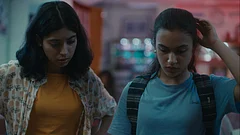
Empty streets seem to offer people roving through the film primacy. Buffeted around by fate, they relate snatches from their lives, major and minor, without wheedling sentiment. The night belongs to them. A string of lights lining the horizon holds out reassurance. Pinteaux, whose edit of Payal Kapadia’s All We Imagine As Light sculpted its dreamlike rhythms, unlocks here an elusive, introspective spirit. The characters are all travellers in different contexts. The act of embarking for other, foreign shores varies in degrees of impulsiveness and compulsion. Nevertheless, that movement has moulded their lives forever. Homecoming has long been redirected through a prism of belatedness. The return to one’s roots turns into a pipe dream, falling prey to a complicated, troubled world’s vicissitudes. Likewise, another individual confides about a lover who erratically vanished. Someone else talks of the generosity of love that steps in to care despite being apart for a while.

Unfolding mostly at night, the film relies on Juliette Barrat’s cinematography to strike wistful notes. Twinkling lights blanketing the distance accentuate an evocation of a destination yet to be reached. Barrat’s camera switches from one person to the next as the long night bends into dawn. As the film glides from dockyards to balconies, a subtle mist falls over it. Pinteaux achieves an alluring mix of intimacy, proximity and detachment. There’s a sense we’re getting close to the lives here, though a reserve exists in the same breath.

Pinteaux marshals an emotional topography that’s mellow and light as air. This is a densely voiceover-driven film. Narration dispenses the stories across the loosely connected tracks. Dialogue takes a backseat. But the voiceover, often a lazy crutch in countless films, doesn’t undermine Only Angels. Rather, it refracts through a life revisited within. There are moments when the veil on our past decisions parts. We may have taken those arbitrarily, not realising the incredible shape they would assume. Yet, Pinteaux is wary and astute enough not to peddle typical guilt. The cover of darkness on scenes seems to hold up an even stronger light on people’s trajectories. The film constantly scratches out dualities and paradoxes. Our assumptions about a particular journey may end up being wholly diverted and startled by the eventual route. The surprise gradually surrenders to acceptance. However, we cannot help but wonder how our lives would have panned out sans such decisions. Life takes all sorts of uncanny turns, spinning beyond early intimations.
Yet, matter-of-fact admissions creep in. A character confesses being neither happy nor unhappy. We just have to keep living. Such quiet, inner wrestling shimmers through the characters. But a ludic edge also blinks at times. Natalia, who believes in having nine lives ahead of her like a cat, muses how many more are left. She snuck away from home for what was originally meant to be few days. But they snowballed into years. For a decade now, her family hasn’t heard from her. Only Angels sifts through loneliness—both imposed and voluntary. It can be nourishing and depleting. Pinteaux scrapes from the night such small windows into displaced lives. The journeying appears never-ending; nonetheless, the people here are prepared.