

Kleber Mendonça Filho's The Secret Agent was the most awarded film at the 2025 Cannes Film Festival and has emerged the Oscar front runner.
The lush, sprawling drama is an epic continuation of themes and directorial impulses pervading the director's ouevre.
Throughout his career, Mendonça has confronted what Brazil tends to look away, dodge and bury.
In Kleber Mendonça Filho’s glorious new film The Secret Agent, poised to land the Best International Feature Oscar soon, history is summoned, recounted and parsed. There’s a vivid archivist bent, reminding us of the political charge memories hold, especially as regimes tear and wipe them out. Mendonça brings alive life under a dictatorship with daily uncertainty right down to granular moments. Cinema can fill the gaps created and stretched by systems of oppression which only change face through decades.
The filmmaker is deeply interested in memory and history as they converge with the present. The past isn’t split apart but breathes upon characters’ contemporary crises. “Brazil has a thing with memory,” Mendonça emphasised in a 2025 interview with Time. “Sometimes I think Brazil would rather not remember things. It's almost like a self-inflicted amnesia to avoid discussing its unpleasant past.” What simmers through in his films isn’t so much nostalgia as preservation of the past.
Clara, the indomitable heroine of Aquarius (2016) who’s in her sixties, fights to rescue her apartment from developers’ clutches. Led by a towering Sônia Braga, the film unfolds with novelistic scope and rich attention to a life lived—both endured and revelled in. It reinstates heritage against capitalism, gentrification and corporatised greed. It’s to save one’s memories from erasure. The affective value of her flat far outranks its market price. While everyone else in her apartment block, the titular Aquarius, has moved out, she stays on, indifferent to and challenging traps sprung by developers. The uncompromising heroine reflects a nation bludgeoned with economic transformation. Aquarius itself embodies endless corruption and manipulation performed on Brazil’s body-politic. Clara’s story speaks to not just the redevelopments of the local Boa Viagem neighbourhood, but every space across the world whose architecture is being razed to make way for nondescript high-rises. With these rapid meteoric landscape changes, textures of memories face a dramatic reckoning. Mendonça meshes the intimate and public sphere. Clara’s fight is lonely, but she’s powered by the history she’s seen, which must at least assert itself.




When the film premiered in competition at Cannes 2016, the makers seized the opportunity to publicly protest the alleged coup of President Dilma Rousseff. Thus, the film’s immediate afterlife took on political echoes to Dilma being ousted by a bunch of male conservatives. The new government lashed out by hampering the domestic release in Brazil. A pro-government critic, who had been noisily opposed to the film, was appointed to the Oscars selection committee, effectively ruling Aquarius out of contention.
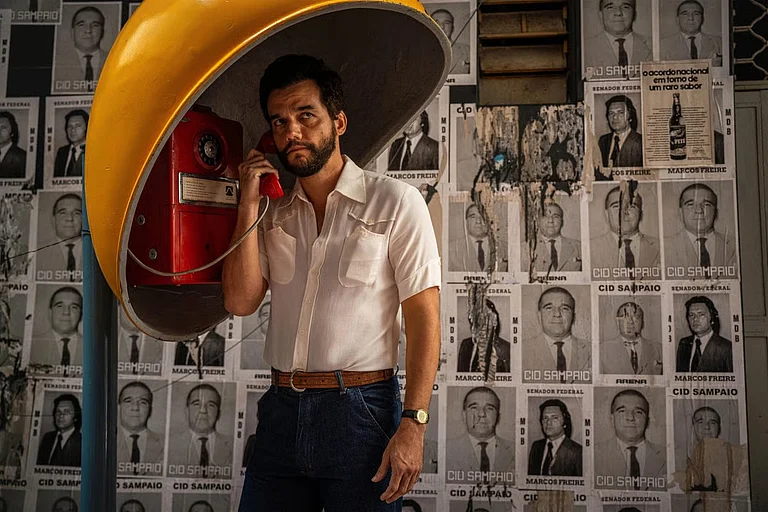
Across Mendonça’s films, the threat of violence whispers through streets and alleys. It’s as much a nocturnal presence as it latently submerges at daytime. Consider the opening of The Secret Agent—a gas station and a rotting corpse amp up tension, the ominous shape of things on the anvil. Mendonça withholds and fragments the moment, infusing its particular tone throughout the film’s unpredictable turns. He punches together the mundane and absurd, while borrowing from Brazilian urban legends and spinning grotesquely delightful diversions. At one point, the narrative around Armando (Wagner Moura) breaks and the perspective of a rampaging severed leg takes centre-stage. Mendonça’s mischief-making with genre expectations abounds in the film. It’s a tale with hitmen and political fugitives, but confrontations are mostly side-stepped until a suitably bloody, breathless climax. Instead, we get other stories and anecdotes of refugees, a community forged in disguise and implicit solidarity. The Secret Agent performs anomalous swings. It is tense one moment, until it luxuriously unrolls in the next. It’s anxious, taut while also folding in loose-limbed, laidback energy. Yet, never do the stakes diminish in intensity.
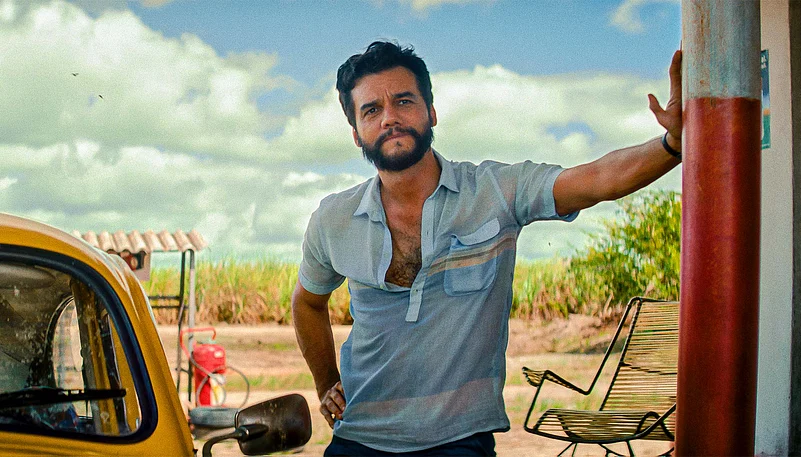
The Secret Agent eyes a country at the edge. Political volatility spikes a situation of utter unspoken fear and silent submission to the dictatorship in the 1970s. Amidst cramped repressions, how do the independent live without hiding and fake identities? It feels like Mendonça has been making films to reach this precise point of articulation. Armando might be set up as the film’s protagonist, but Mendonça always shifts to include other voices. This is his opus, scooping stray moods, thematic dimensions and political unease across his career.
The wild gonzo detours of The Secret Agent might not be as startling a shock to accustomed audiences. In his Cannes Jury Prize-winning 2019 thriller Bacurau, genre mutations register as invisible, insistent presence. Mendonça likes his viewers to be on the perch, awaiting something unfamiliar with a tightening knot in the stomach. He builds the uncanny with deliberate control that increasingly escalates into all-out chaos. The film opens with a woman returning home to Bacurau to attend her grandmother’s funeral. Slowly, strange, eerie things cycle into motion. The town vanishes off the map. Flying saucers race by. Mendonça codes menace into the atmosphere. Things seem to be going south before we even get a grip. The situation veers, vacillates and grows direr beyond initial foreboding. Mendonça prefers a loping style of telling, the narrative winding through digressions to reveal its own careful construction. Yet, its design pulses with the logic of life.

In his films, an individual trajectory is strongly welded to the collective. The initial homecoming twists into a blood-streaked parable of survival. The townsfolk of Bacurau know they are being hemmed in. But they don’t buckle or cede. They can put up a mighty fight—resilience and fortitude the strongest tools in arsenal. The community secures its ranks. The film is a hot, seething stew of curdled power games and viciously twisted hierarchy. It’s an insider-outsider battle, with the Bacurau community refusing to turn over their land, resources and water. It’s a place envied and sought by many—a neighbouring mayor and Americans on a maniacal murderous spree. Yet, the invaders don’t stand a chance in exerting their grip. Mendonça draws from classic Westerns while swapping roles. Here, the Americans are stripped of overblown heroism, exposed for greed and overreach.

Ghosts of the indigenous residents fending off such encroachments hark back to his 2012 debut, Neighbouring Sounds. Former plantations, colonial pasts, slaves and invisible, nonetheless firmly entrenched class system, can all be dredged up. Once again, intricate racial and ethnic tensions reverberate through a mosaic of lives as progress rears its head. A lot of the violence Mendonça indicates might even be imagined, wholly apprehended, before it can materialise. It stems from a country denying its bones in the closet, instead slipping smugly into what Mendonça himself calls “cordial racism”. Amidst surveillance and the modernising facelift of neighbourhoods, the filmmaker constantly brings forth the stiffening of enclaves, with privilege and oppression hiding in plain sight.