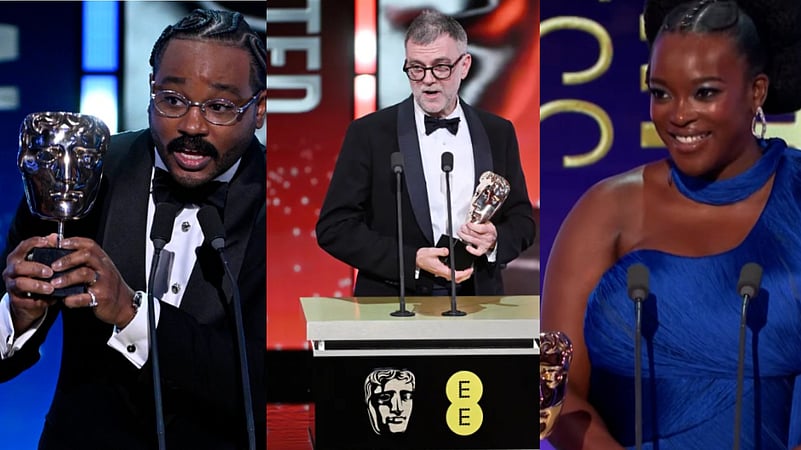
The BAFTA 2026 ceremony blended glamour with pointed political commentary from several winners and speakers.
From calls for freedom to defences of artistic independence, the night’s speeches reflected the anxieties of the present moment.
Despite concerns about censorship, the awards felt grounded in conviction rather than silence.
The 79th British Academy of Film and Television Arts Awards at London's Royal Festival Hall was star-studded and dazzling. Yet beneath the glamour, the 2026 ceremony carried a distinct political undercurrent. In the days leading up to the broadcast, there had been industry chatter about edits, swearing, and whether politically charged remarks would make it to the broadcast. BBC, mindful of past controversies, was reportedly cautious. What unfolded on stage, however, was not muted. It was measured, emotional, and at times, unapologetically direct.
Here are the statements that gave the night its edge:
1. Alan Cumming: Satire that hit close to home


Host Alan Cumming set the tone early. Referencing the storyline of Zootropolis 2 (2025), he joked about deceitful leaders, oppression, and the persecution of a race, before asking whether it all felt a little too reflective of current events. The room laughed, but the point was unmistakable.
Cumming's humour worked because it did not feel forced. It acknowledged what many artists understand but do not always say outright: cinema absorbs the anxieties of its time. How? By framing political parallels through satire, he created space for the rest of the evening to move more openly between celebration and critique.
2. Akinola Davies Jr.: Call for freedom
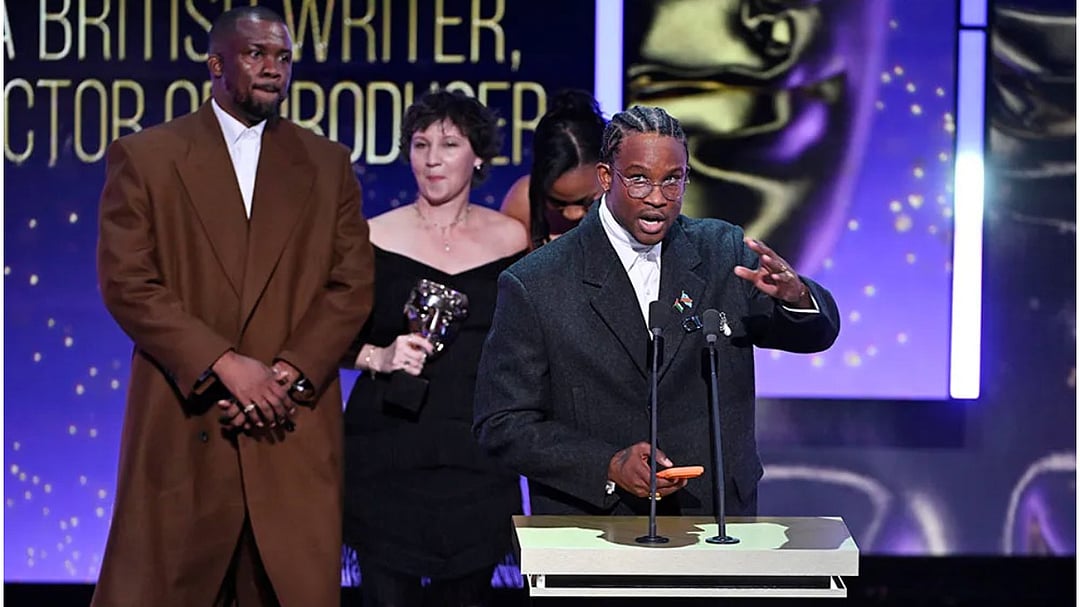
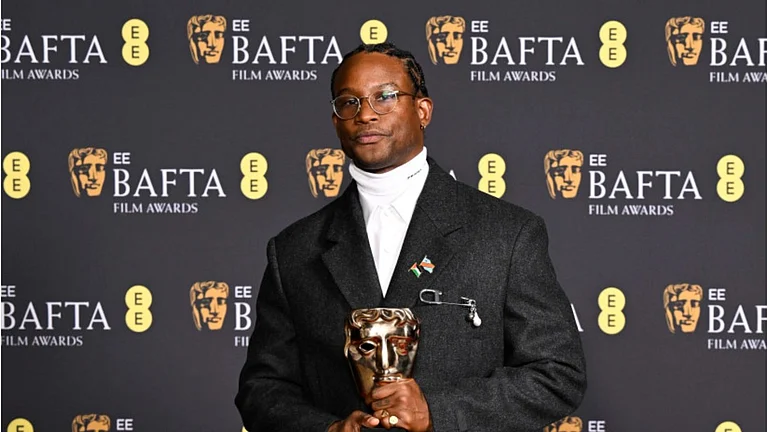
When Akinola Davies Jr. accepted the award for Outstanding Debut by a British Writer, Director or Producer, he widened the focus beyond his own achievement. He addressed children of the diaspora and families who moved in search of a better life. He spoke to those living under oppression, dictatorship, and genocide, naming Nigeria, London, the Congo, and Sudan. He ended with a clear call: “Free Palestine."
There was no metaphor and no attempt to dilute the message. In an awards setting that often favours diplomacy, Davies Jr chose clarity. The BBC may have chosen to edit out his statements from the broadcast, but his words defined the evening's political courage.
3. Kaouther Ben Hania: Challenging comfortable ideas of peace
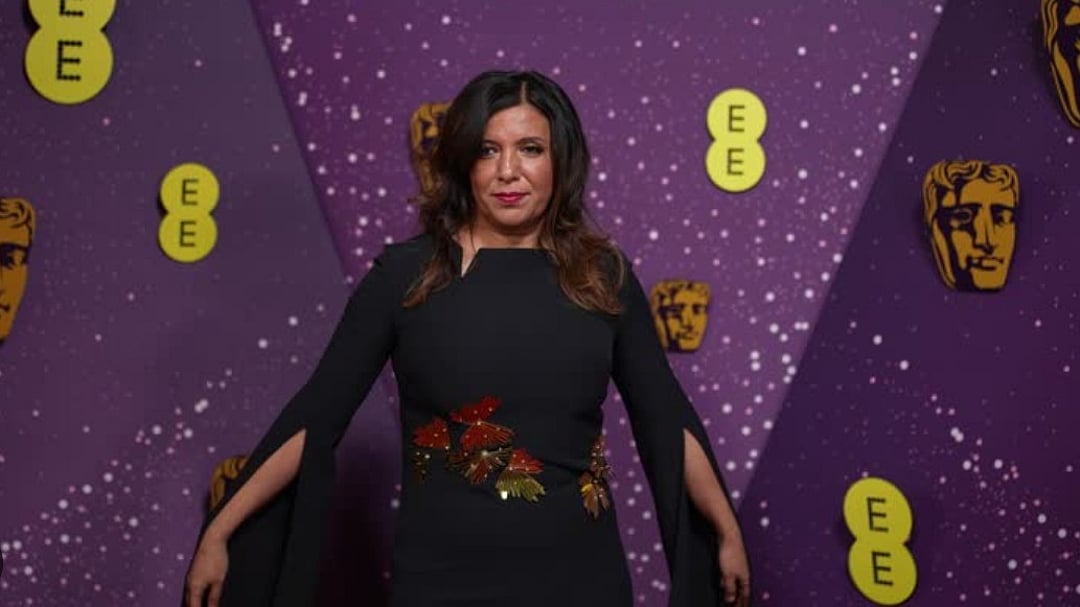
Filmmaker Kaouther Ben Hania offered one of the ceremony's most striking lines when she said that peace is not a perfume sprayed over violence so that power can feel refined and comfortable. The metaphor was elegant, but its criticism was sharp.
Her words questioned performative reconciliation and the idea that conflict can be glossed over without structural change. In a room celebrating artistic excellence, she insisted that art must do more than decorate uncomfortable realities. It was a reminder that awards do not exist in isolation from the world beyond the auditorium.
4. Wunmi Mosaku: Reframing the immigrant story as strength

Winning Best Actress in a Supporting Role for Sinners, Wunmi Mosaku delivered a speech rooted in family and gratitude. She thanked her daughter, calling her her greatest mentor, and paid tribute to her mother's sacrifices. Referencing Aesop's fable The Sun and the Wind, she described a love that gave her freedom to dream.
Mosaku has spoken previously about navigating identity and belonging, and this speech carried that context. It quietly positioned the immigrant experience not as something to overcome but as a source of resilience and creative depth.
5. Paul Thomas Anderson: Defending creative freedom without apology

Accepting Best Film for One Battle After Another, Paul Thomas Anderson delivered a blunt defence of filmmaking. He dismissed cynics in no uncertain terms and encouraged artists to keep making films without fear.
In an industry shaped by financial pressure, culture wars and intense scrutiny, his words resonated beyond the film itself. Anderson was not addressing a single controversy but a broader climate in which creative decisions are frequently politicised. His stance was simple: artists should not shrink.

6. Jessie Buckley: Turning motherhood into a statement of defiance

When Jessie Buckley won Best Actress in a Leading Role for Hamnet, she dedicated the award to her daughter, who has accompanied her on this journey since infancy. She described motherhood as the most fulfilling role of her life and promised to remain rebellious, so her daughter could grow up unafraid to embrace her own wildness.
In an industry that still struggles with how it supports working mothers, Buckley's words carried force. She rejected the idea that motherhood diminishes ambition and instead framed it as a source of strength. That reframing, in itself, felt very political.
7. Ryan Coogler: Making history by grounding self in community

When Ryan Coogler won Best Original Screenplay for Sinners, the moment carried historic weight. He became the first Black writer to take home the BAFTA in this category. Visibly overwhelmed, he admitted he did not expect the win and thanked the community that made him believe he could become a writer in the first place.
He then turned his focus to fellow writers. When facing a blank page, he said, think of someone you love or someone you have seen in pain and let that love guide the work. It was a simple but powerful reminder that storytelling begins with empathy, and that even genre films can carry deeply human truths.
A ceremony that refused to be sanitised:
Backstage, BAFTA president Prince William offered lighter reflections on nominated films, describing some as dark, others as unusual or musically impressive. Yet, the broader mood of the evening suggested that even within institutional frameworks, artists will continue to test boundaries.
Despite pre-ceremony concerns about controversial remarks, the 2026 BAFTAs were not defined by censorship but by conviction. Not every speech was overtly political, but many acknowledged the turbulence of the present moment.
The result was a ceremony that felt grounded. It celebrated craft without pretending the world outside was calm. If anything, this year's BAFTAs demonstrated that film culture does not sit apart from politics. It engages with it, questions it and, when necessary, confronts it head-on.