In a significant announcement that signals the Odisha government’s intent to strengthen governance and organisational efficiency, BJP State President Manmohan Samal on Tuesday declared that all vacant positions across various state corporations and boards will be filled in a time-bound manner. The state government has set June 12 as the deadline for completing these appointments—a symbolic and strategic date, as it coincides with the completion of two years of the BJP-led government in Odisha.
This move is being viewed as both an administrative and political milestone. By ensuring that key institutions are fully staffed before the government’s second anniversary, the BJP aims to reinforce its image as a performance-driven administration focused on timely execution and accountability. State corporations and boards play a critical role in implementing development projects, overseeing public sector functions, and delivering essential services. Filling long-pending vacancies is expected to improve operational efficiency and accelerate decision-making processes across departments.
Samal emphasised that the government is committed to streamlining these institutions to ensure they function effectively in line with the administration’s broader governance agenda. The decision also reflects the BJP’s intent to demonstrate concrete progress ahead of the two-year benchmark, which often serves as a key moment for public evaluation of a government’s achievements.
In addition to these appointments, Samal provided an update on legal recruitments, noting that the process of appointing government lawyers has already been completed in 29 districts of Odisha. Khordha remains the only district where the process is yet to conclude, though he indicated that appointments there are expected to be finalised soon. This development is particularly important, as legal appointments are essential for strengthening the state’s judicial representation and ensuring effective handling of government-related cases.

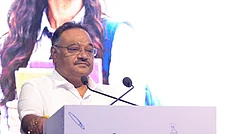


On the issue of a possible cabinet expansion—an area of considerable political speculation—Samal maintained a cautious stance. He stated that any final decision would be taken only after detailed consultations with the party’s central leadership. This suggests that while discussions may be underway, the BJP is prioritising internal consensus and strategic planning before making any structural changes to the state cabinet.
A major highlight of Samal’s remarks was his assertion that the Odisha government has already fulfilled nearly 80% of the promises outlined in its election manifesto. This claim is intended to underscore the administration’s commitment to its pledges and its ability to translate campaign promises into policy outcomes. According to Samal, the remaining commitments are on track to be delivered before the government reaches its two-year milestone in June.
This narrative of promise fulfilment is likely aimed at strengthening public trust and reinforcing the BJP’s governance credentials in Odisha. It also serves as a political message that the party remains focused on results rather than rhetoric. By publicly setting targets and timelines, the leadership appears to be positioning itself as transparent and accountable, qualities that resonate strongly with voters.
Overall, Samal’s announcements project a picture of a government and party machinery working in tandem to strengthen administration, fulfil promises, and expand political influence. As the June 12 milestone approaches, the Odisha BJP appears determined to showcase both governance achievements and organisational maturity—setting the stage for its next phase of leadership in the state.