Ireland’s 2-0 series sweep shatters India's long winning streak and exposes major tactical flaws
Poor leadership transitions and rigid selection choices fueled back-to-back collapses and adaptation failures
Gambhir and the BCCI now face intense pressure to address the growing instability in India's T20 setup
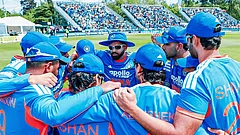
The Indian cricket team’s disastrous two-match tour of Belfast has sent shockwaves through the cricketing world, as Ireland pulled off a historic 2-0 series sweep that ruthlessly snapped India’s record-breaking 16-series winning streak.
Coming off their T20 World Cup triumph in March, this series was expected to be a celebratory march, but instead, it exposed significant cracks in India's transition phase.
Leadership Vacuum
The series marked a major leadership shift, with Shreyas Iyer taking over the reins as full-time T20I captain from Suryakumar Yadav. Unfortunately, the transition proved difficult; Iyer’s own form deserted him, as he managed scores of just 3 and 10 across the two matches.
Top-Order Fragility
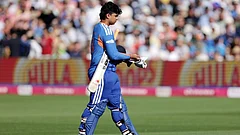
His captaincy debut was marred by recurring fragility, as India suffered a back-to-back collapse in both encounters. The visitors were consistently dismantled by the lethal left-arm seam of debutant Jai Moondra; in the opening match, the top order crumbled under his pressure, and the pattern repeated in the second T20, where India was reduced to a precarious 19/3 in just three overs.


The Sooryavanshi Snub
A major talking point throughout the tour was the exclusion of 15-year-old batting sensation Vaibhav Sooryavanshi. Despite his blistering form—including a record-breaking IPL season and a stunning 11-ball fifty against Sri Lanka A—the team management opted for continuity, backing the established duo of Abhishek Sharma and Sanju Samson.
This decision drew sharp criticism from experts like Michael Vaughan, who argued that the world’s most exciting young talent should have been fast-tracked into the side.
Adaptation Failures
Ultimately, India struggled to adapt to the conditions in Belfast. While the team boasted high-octane T20 talent refined in the IPL, they failed to adjust their aggressive stroke-play to the nuances of the Irish pitch.
The "IPL-to-International" transition looked disjointed, with batters failing to rotate the strike. Tilak Varma, despite his gritty approach, struggled to find the required tempo; he labored to 19 off 21 balls in the opening match and his 55 in the second was similarly criticized for being too slow to anchor a winning chase.
"Not a great series but kudos to them for the way they played. They had a tremendous idea how the wicket would play and the field work was phenomenal. The bowlers were phenomenal with their execution. They outplayed us in that department," newly-appointed skipper Iyer said at the post-series presentation ceremony.
Bowling Inconsistencies
The bowling department faced its own struggles, notably in the first match where Prasidh Krishna failed to make an impact, leaking runs and failing to provide the breakthrough deliveries needed to defend a modest total.
This gap in the attack highlighted the need for fresh energy, which arrived in the final game via the impressive debut of Prince Yadav. Yadav provided a glimmer of hope by claiming 3/22, a standout performance that underscored the missed opportunity to rotate the squad earlier. Despite his efforts, India fell short by just one run in the second T20.
"He has got great experience in the IPL, he has his own set of ideas and plans when he comes on to bowl" said Iyer about Prince
Crisis Of Authority In A Historic Collapse At Belfast
This historic sweep is a painful wake-up call for an Indian team struggling to maintain its world-champion status. The fallout has turned the spotlight on the BCCI and head coach Gautam Gambhir, with many questioning the logic behind a rushed, unnecessary captaincy change so soon after a successful T20 World Cup.
By abruptly replacing Suryakumar Yadav with Shreyas Iyer, the board appears to have disrupted the team’s stability. Critics argue that forcing a new structure on a winning group was a gamble that backfired. Furthermore, the decision to ignore young talents like Vaibhav Sooryavanshi in favor of a rigid "continuity" approach has made the management look eager to impose change for the sake of it.
Gambhir now faces his first real crisis. The team’s failure to adapt their high-octane IPL style to the testing conditions in Belfast highlights a disconnect between the coaching staff’s vision and the players' performance.
If this transition was meant to build for the future, the chaotic Ireland tour has instead created a narrative of instability. The BCCI must now decide if this series was just a temporary stumble or a sign of a deeper strategic misalignment that threatens India's dominance in T20 cricket.