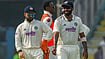
Ireland claimed a historic first-ever T20 victory over India, exposing significant flaws in the visitors' tactical execution
The decision to bench teenage prodigy Vaibhav Sooryavanshi sparked intense backlash following India's middle-order batting collapse.
India face a high-stakes second match in Belfast needing immediate tactical rejuvenation to avoid an embarrassing series defeat
Entering the two-match series as absolute favourites, a newly reshaped Indian side under the captaincy of Shreyas Iyer expected a routine win against an opponent depleted by a severe injury crisis.
It was a chilly, grey afternoon in Belfast that will forever be etched into the folklore of Irish cricket, a day when the traditional hierarchies of the sport were completely upended.
An Ambush At Stormont: India's Awakening
Instead, the Men in Blue walked straight into an ambush at Stormont, succumbing to a debilitating 34-run defeat that sent shockwaves through the cricketing world and marked Ireland's first-ever win over India in any format.
Painful as it may be for the Indian fans, it indeed was a sobering reminder of the uncertain nature of 20-over cricket. For the neutrals, a study in contrast may be. When complacency meets raw ambition, favourites crumble.
It was a chastening wake-up call for the visitors, turning what was marketed as a developmental tour, which is not entirely false billing, into an urgent, high-stakes battle for survival.


A closer look at the playing XI, and it indeed reveals an ensemble of sorts, featuring highly-paid, future-proof Indian Premier League stars. In fact, a few were part of the ICC T20 World Cup-winning team.
The Collapse: Indian Execution Goes Awry
India's decision to bowl first initially looked inspired as they dominated the hosts, claiming the top four for 51 in 7.1 overs. A combination of middle-overs rebuilding led by captain Lorcan Tucker and a catastrophic execution at the death allowed Ireland to escape the noose, however.
The subsequent chase exposed a fragile, top-heavy Indian batting unit that fell like a pack of cards the moment Abhishek Sharma's lone, explosive counter-attack was extinguished -- a half-hearted pull shot straight to mid-wicket, having lost the momentum with his partners coming and going at the other end.
The opener made 49 off 20 of India's 80/4 by the end of the 8th over, which soon became 148 all out in 18.5. overs.
The Selection Debate: The Omission of a Prodigy
The narrative surrounding the Belfast opener was dominated by anticipation of a historic milestone, but that, too, never came to fruition.
At just 15 years and a few months old, teenage prodigy Vaibhav Sooryavanshi stood on the absolute precipice of cricket history, poised to shatter Sachin Tendulkar's iconic long-standing record to become India's youngest-ever international debutant.
Fresh off a jaw-dropping IPL 2027 season where he captured the Orange Cap by bludgeoning 776 runs at a staggering 237 strike rate, the Samastipur-born wonderkid had driven ticket sales through the roof as fans clamoured to witness the birth of a new era.
Instead, captain Shreyas Iyer and head coach Gautam Gambhir chose tactical conservatism over the soaring public hype, keeping the explosive left-hander on the bench to maintain batting continuity with their established World Cup-winning players.
The Fallout: Post-Match Inquest And External Opinions
This conservative selection strategy backfired spectacularly, one would claim on hindsight, retroactively turning Sooryavanshi's omission into the focal point of India's post-match inquest.
Expectedly, it was gaining steam with every passing minute.
Rather than rewriting the record books, the teenager spent his maiden senior international match carrying drinks out to his teammates, watching from the sidelines as Indian batting crumbled.
While former players like Sanjay Manjrekar defended the management for backing proven performers, the sheer lack of intent and dynamism in India's middle-order collapse has amplified public demands for the teenager's immediate inclusion.
Denying the prodigy his cap saved him from the immediate wreckage of a historic defeat, but poses India with an urgent question heading into a must-win second match, where only fearless rejuvenation can save the series.
Talking Tactics: A Study In Contrast
The primary criticism, however, extended deep into India's bowling line-up. Selecting Prasidh Krishna for the tour ahead of more disciplined options drew heavy fan ire after the pacer completely lost his lengths under pressure.
Furthermore, giving Washington Sundar only a single over, after leaking 19 runs, showed a critical lack of tactical adaptability on a sometimes spongy and two-paced Belfast wicket. India's death bowling was thoroughly exposed as bowlers repeatedly missed their yorkers, turning a commanding position early in the game into a runaway disaster.
Ireland's performance, by contrast, was nothing short of miraculous.
Missing five first-choice regular bowlers to injury, the underdogs got off to a poor start with the bat. Newly appointed captain Tucker led the counter-attack, smashing a fluent 50 off 36 balls to anchor two definitive stands, 64 off 44 for the fifth with Gareth Delany and 49 off 16 with George Dockrell. India's best stand was 35 in 254 for the 7th wicket, for context.
Delany took the game away from India by hitting 49 runs off just 32 balls, most notably destroying Prasidh Krishna for 27 runs in a single, momentum-shifting 16th over to propel Ireland to a competitive total.
Debutants From The Other Camps, Making Noise
With the ball, Ireland's debutants put on a masterclass that shamed, if we may, their experienced counterparts from India. Matt Hollard tore through the Indian top order, finishing with figures of 3/28 to rightly claim the Player of the Match award.
Fellow debutant Jai Moondra bowled with exceptional discipline to claim 2/25. At the same time, spinner Matthew Humphreys bravely battled through a painful hand injury -- sustained while for a caught-and-bowled off Axar Patel -- to wrap up the tail, finishing with 3/38 as India collapsed to 148 all out in 18.5 overs.
India's reply in the powerplay had been a solo act, with Sharma hitting 50 runs off just 20 deliveries before the rest of the star-studded lineup -- featuring Ishan Kishan for 1, Sanju Samson for 5, and captain Iyer for 3 -- departed cheaply, leaving a late 25-run resistance from Shivam Dube entirely in vain.
The Fallout: Post-Match Inquest And External Opinions
To prevent an embarrassing series defeat, India must quickly fix these glaring tactical errors before the teams pad up again. They urgently need to address their death-overs bowling execution and re-evaluate their middle-order composition, which likely means finally handing a Vaibhav Sooryavanshi a debut, to inject fresh energy into the top order.
The second T20I will take place on Sunday, June 28, 2026, at the Civil Service Cricket Club in Belfast, with the match scheduled to begin at 1:30 PM local time (6:00 PM IST).