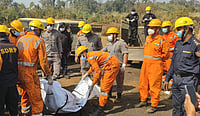
It was a cache soaked in blood. And it confirmed fears that Indias wildlife is literally being stripped bare. The recovery of 115 tiger and leopard skins (valued at around Rs 22 crore) in Khaga, Uttar Pradesh, last month proved that trafficking in illegal wildlife products is thriving. The situation is so bad that its ceased to be a mere police case and the government is even contemplating giving the cbi special powers to handle the issue. And fulfilling a long-standing demand, a Bureau for Control of Wildlife Crimes is also on the anvil. The problem has assumed mammoth proportions, for as many conservationists claim, endangered wildlife traffickers have increased and become highly organised.
"The spate of seizures is alarming. Wildlife authorities admit their efforts have failed and syndicates are having a field day," says Belinda Wright, executive director of the Wildlife Protection Society of India (wpsi). Large-scale poaching of protected species is carried out at will. The Khaga seizure came barely a month after another raid in Ghaziabad where sales tax officials seized similar skins with signatures on them. While the truck was bound for Siliguri, its real destination lay beyond the border - proving the existence of organised trade routes. In 27 cases in the last three months alone, forest department officials and the police have seized over 25 tiger skins, 320 leopard skins, 10 tons of deer antlers, 180 kg of tiger and leopard bones and claws and teeth of the big cats. The seizures in West Bengal, Uttar Pradesh, Madhya Pradesh and Maharashtra have only proved the extent and reach of the mafias tentacles. These smugglers are adept at taking advantage of the countrys lax enforcement of wildlife laws and also the absence of effective watchdogs to control this burgeoning crime. "Just imagine what might have gone by undetected. It must be phenomenal," adds Wright.




The seizures have resurrected anxieties that India, the worlds most important tiger haven, home to 60 per cent of the estimated 5,000 to 7,000 tigers roaming the wild, is losing the battle for the animals survival. In a conference of field directors of various tiger reserves held in Thekkady, Kerala, on March 2, P.K. Sen, director of Project Tiger, admitted efforts to protect the tiger were proving futile. "From my three-year experience as director, Ive no hesitation in saying that the tiger is dying," exclaims Sen. Project officials estimate that not more than 3,000 tigers are left in the wild, according to them 200-300 tigers were poached annually through the 1990s. Its the second largest illegal activity after drug running, overtaking even human trafficking, and criminal gangs have got their act together in the last few years. India is thought to be among the biggest hunting grounds for poachers and trade in wildlife parts. "The spurt in wildlife crime is also a result of skyrocketing prices," says Wright. Feeding an insatiable demand for tiger bones and skins in pharmacies and fur shops in China, Bhutan and Japan, these cartels have hit paydirt. And though the UP seizures were the largest in Indian history, conservationists say they are a tiny fraction of the endangered animals slaughtered each year to feed growing markets.
THE main trade route for tiger bones from India to China is by land across the porous passes of Uttar Pradesh, Himachal Pradesh and the Ladakh region of Jammu and Kashmir. Using road transport, railway parcel services or even commercial air flights, tiger bones are transported by a network of traders. Bones, easier to hide than skins, are also smuggled into Tibet through the neighbouring countries of Nepal and Bhutan. "At the border, tiger bone is also bartered for shahtoosh, the hair of the Tibetan antelope, which is smuggled into Kashmir to be made into expensive shawls," says a wildlife official. These clandestinely transported bones are powdered down and mixed with Oriental medicine which is in vogue in China. The thriving legitimate trade in cattle bones for fertilisers and gelatin is often used as a front for the tiger bone trade. But thats not all. Gall bladders of bears and other tiger parts are also being increasingly used. And its all very lucrative. "For example, restaurants even sell leopard penis mixed in a soup for a whopping $230," says a wpsi official.
The people arrested for poaching are just small links in a vicious and dangerous cycle, mere pawns operating unawares of the kingpins who control the levers. Many large scale poachers enjoy top-level patronage. Most operate in Delhi and Mumbai and, much like the brains behind drug cartels, never surface. "They have a good network with the timber mafia and the political class and operate behind a veneer of secrecy," says a cbi official. In the Khaga case, for instance, 11 top-rung lawyers were flown in to represent the seven accused in the case. "It gives you an indication of the money and Ôsensitivity of wildlife trafficking," admits an official in the Department of Environment, Forests and Wildlife. Ashok Kumar, vice-president wpsi, whos been associated with wildlife protection for years, says the incentive to poach hasnt been blunted due to poor penalties and a weaker enforcement machinery. Laws are seldom acted upon and to date only a handful have been convicted for killing a tiger, none having been given the maximum seven-year sentence. "Weve been demanding a Bureau for Control of Wildlife Crimes for many years, I hope it happens soon," he says. The 94 Subramanian Committee had also recommended such a directorate under the Ministry of Environment and Forests (mef).
Following the rise in wildlife crimes, a delegation of conservationists including Kumar called on home minister L.K. Advani to try and get approval for their demand for a separate Directorate. "It should be a multi-disciplinary body, equipped with dedicated officers who are able to move at short notice," says Kumar. Wildlife protection organisations have also been asking for the cbi to be given powers to prosecute under Section 55 of the Wildlife Protection Act. At present, the problems appear to be insurmountable. Apart from rampant poaching and trade in tiger and leopard parts, habitat degradation and destruction have also contributed to the diminishing tiger population. "The tiger has survived against all odds in India, but with habitats being further fragmented and reserves being denotified, things can only get worse," says Mahesh Rangarajan, an academic and wildlife conservationist.
The Khaga seizure did spur state authorities to ask the cbi to take up the case as it was felt the issue had wider ramifications. Even S.C. Sharma, Additional Inspector General (Wildlife) mef, admits to the large magnitude of the problem what with the illegal trade having inter-state linkages. However, the cbi is awaiting another Central notification to be issued before stepping in.
The tiger has long been listed as endangered. What is inexplicable is that the authorities seem to be silent spectators to its disappearance. As Sen told a Delhi conference after the Khaga raid: "If the government doesnt take immediate, harsh steps, tigers will only be seen in posters and photographs." A terrible fate for any species, leave alone the national animal.