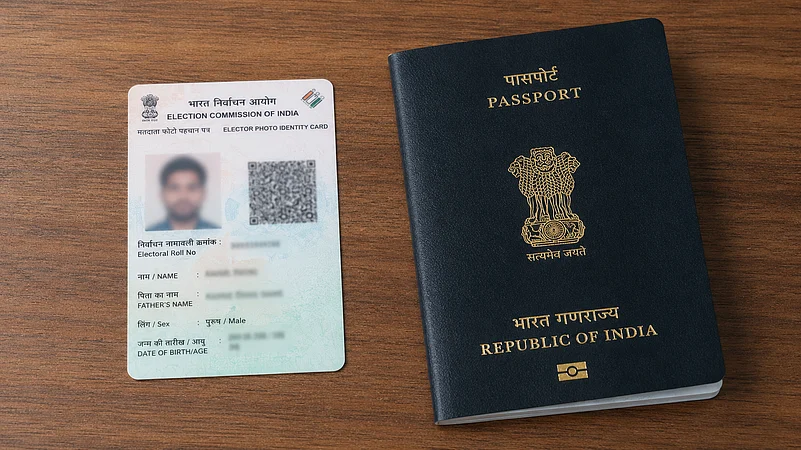
A missing name from the voter list can trigger adverse police verification, delaying or stalling passport renewals.
Although electoral rolls and passports are governed by separate laws, officials often cross-reference voter records during verification.
Citizens can challenge such delays through electoral appeals, Regional Passport Office hearings, or High Court intervention.
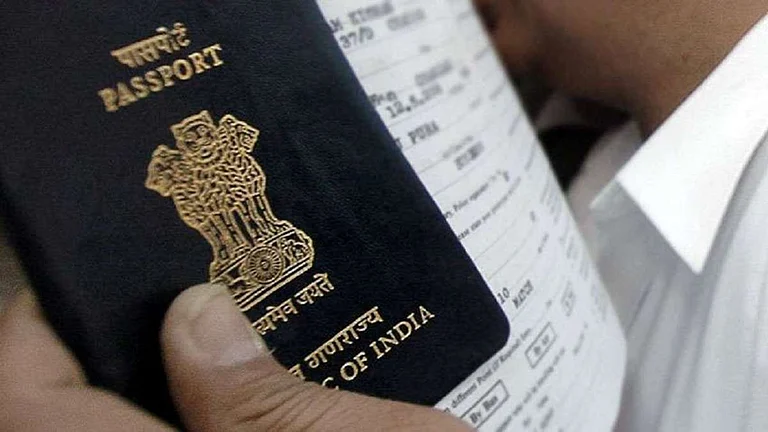
When veteran journalist and former The Telegraph editor R. Rajagopal applied to renew his passport, he expected a routine administrative update. Instead, he found himself trapped in a bureaucratic twilight zone for over 100 days, eventually missing his own daughter’s wedding abroad. The root cause was not a criminal record or a national security issue, but a clerical adjustment miles away: his name had been scrubbed from West Bengal’s voter list during a Special Intensive Revision (SIR) due to an administrative "logical discrepancy." Because his name was missing from the electoral roll, local law enforcement flagged his residency status, generating an adverse police verification report that froze his passport application entirely.
Rajagopal’s ordeal is not an isolated glitch; it is a high-profile warning sign of an emerging friction point in Indian civic administration.
Legally and constitutionally, the electoral roll and the passport issuance framework are entirely distinct systems governed by separate legislation. The electoral roll is regulated by the Representation of the People Act, 1950, and its sole statutory purpose is to determine who is eligible to cast a ballot in elections. Conversely, the passport is a travel document governed by the Passports Act, 1967, which dictates the rules under which an Indian citizen may cross international borders.
Nowhere in Indian law is it stated that being listed on a voter roll is a mandatory prerequisite for holding or renewing a passport. A person may choose not to register to vote, or they may be temporarily omitted from a voter list due to an administrative shift, without losing their legal status as a citizen. Under the Passports Act, primary proofs of citizenship traditionally include birth certificates, school leaving certificates, or certificates of naturalisation. However, a profound disconnect exists between the statutory letter of the law and the ground-level administrative mechanics of state verification.


The Reality of Ground Verification
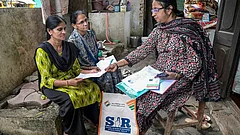
While the laws remain separate on paper, in practice, local law enforcement agencies heavily rely on the electoral roll as a definitive benchmark during domestic verification processes. When an applicant files for a passport renewal, the local police station is tasked with verifying the applicant’s residency and character.
In the absence of a unified, singular citizenship registry, ground-level police officers frequently treat a citizen’s absence from the local voter list as a major red flag. If a name has been deleted during an intense revision process like the SIR, the police often assume a discrepancy in residency or identity, leading them to issue an "adverse" verification report to the Regional Passport Office (RPO).
This reality points to a broader, systemic phenomenon known as creeping interoperability. Even though databases like Aadhaar, Voter IDs (EPIC), and Passports are meant to serve distinct administrative ecosystems, they are increasingly cross-referenced and linked implicitly during background checks. The push toward digital governance has meant that an error or deletion in one registry can cause a swift domino effect across all other spheres of a citizen's life. Instead of acting as independent verification vectors, these databases are treated as a single, interdependent web, meaning a localised clerical error can effectively freeze a person's broader civic status.
The High Cost of Voter Data Mismatches
When electoral records are used as a proxy for identity verification beyond the polling booth, a mismatch in voter data creates a host of profound hurdles for ordinary citizens. The most immediate impact is the double penalty of disenfranchisement coupled with immobility. As Rajagopal’s case demonstrated, an individual is not only stripped of their democratic voice but is also restricted from travelling abroad—causing severe personal distress, such as missing critical family events or professional engagements.
Furthermore, this interdependence shifts the burden of proof disproportionately onto the citizen. Rather than the state having to justify why a lifelong citizen's record was suddenly deleted, the individual is forced to dig up decades-old familial records, land deeds, or academic certificates to re-prove their basic existence to a sceptical bureaucracy. This environment breeds immense anxiety and vulnerability. While a prominent editor may possess the social capital and legal awareness to navigate a stalled application, ordinary or marginalised citizens face an even steeper uphill battle. For those lacking legal literacy, a single database mismatch can completely shut them out of the essential welfare and administrative architecture of the state.
Available Legal and Administrative Remedies
If a citizen finds themselves trapped in this specific bureaucratic knot, there are distinct legal and institutional paths available to restore their rights:
Special Appellate Tribunals
Recognising the massive scope of deletions that can occur during a Special Intensive Revision, the judiciary has previously intervened to create oversight mechanisms. Disenfranchised citizens can approach specialised appellate tribunals, often headed by retired judicial officers, specifically tasked with reviewing arbitrary voter deletions. Successfully appealing a deletion and getting reinstated on the electoral roll is the most direct way to clear the underlying discrepancy that triggered the adverse police report.
RPO Clarification Hearings
Under Section 5 and Section 6 of the Passports Act, 1967, the passport authority cannot indefinitely stall or deny an application solely based on a localised voter list discrepancy. The law requires the passport office to allow the applicant to be heard. Citizens can demand an official clarification hearing at their Regional Passport Office to present alternate, robust primary proofs of identity, such as a birth certificate, matriculation certificate, or income tax records—which legally supersede the voter roll for travel document purposes.
Constitutional Writ Jurisdiction
When administrative appeals fail or drag on indefinitely, an aggrieved individual has the right to approach the relevant state High Court under Article 226 of the Constitution of India. In the landmark Maneka Gandhi v. Union of India (1978) case, the Supreme Court firmly established that the right to travel abroad is an integral component of "personal liberty" under Article 21 of the Constitution. A citizen can file a writ of mandamus to compel the passport authorities to issue or renew the document, arguing that an administrative, clerical deletion from a voter list cannot be used as a tool to strip an individual of their fundamental constitutional rights.