The Rapid Action Force is a specialised CRPF unit trained to respond to riots, protests and other public-order situations.
The RAF supports state police during high-risk gatherings but does not replace routine policing or criminal investigations.
The recent Delhi protest has renewed attention on why the RAF is deployed when authorities anticipate violence or large-scale unrest.
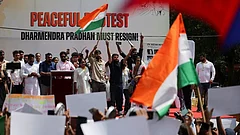
The Rapid Action Force (RAF) has returned to the spotlight after being deployed alongside the Delhi Police during the Cockroach Janta Party protest in Connaught Place. The deployment has renewed attention on the specialised CRPF unit that is often called in to manage protests, riots and other situations involving public disorder.
The RAF is a familiar presence at political rallies, religious processions and large demonstrations, yet its role is often misunderstood. Unlike the local police, it is a specialised wing of the Central Reserve Police Force (CRPF) that is deployed to assist civil authorities during situations involving public disorder. The Delhi incident has once again raised questions about why the RAF is deployed, how it operates and what distinguishes it from other security forces.
Why was the RAF created and what does it do?
The Rapid Action Force is a specialised wing of the CRPF under the Union Ministry of Home Affairs. It was raised in October 1992 to provide a centrally trained force capable of responding quickly to riots, communal disturbances and other large-scale public-order situations. Unlike regular CRPF battalions, which carry out a range of internal security and law-and-order duties, the RAF was established as a dedicated public-order unit focused on riot control, crowd management and assisting civil authorities during exceptional public-order situations.


According to the CRPF, the RAF was initially raised with 10 battalions and has since expanded over the years. Its companies can be deployed anywhere in the country at the request of a state government or Union Territory administration when local police require additional support to handle sensitive situations. The force is trained specifically for riot management and can be mobilised rapidly across states. As a result, governments often rely on it to reinforce local police during volatile situations rather than deploying additional personnel with routine policing responsibilities.
RAF personnel undergo specialised training in riot management, crowd behaviour, negotiation, rescue operations and the calibrated use of force. They are equipped with protective gear and non-lethal crowd-control equipment intended to disperse violent gatherings while minimising the risk of serious injuries. Their response is designed to be gradual, beginning with crowd management, communication and persuasion before escalating to non-lethal measures if tensions escalate.
While the RAF functions under the CRPF, it does not replace local police. Instead, it works alongside them, providing additional manpower when demonstrations or communal tensions threaten to overwhelm routine policing.
Why is the RAF deployed during protests?
The deployment of the RAF does not necessarily mean violence is expected. In many cases, authorities position the force as a precaution when intelligence inputs suggest a protest, political rally or religious procession could attract large crowds or lead to confrontation.
On the ground, RAF personnel do far more than stand guard. They establish security cordons, separate rival groups, secure sensitive locations, assist evacuations where required and help local police prevent demonstrations from escalating into wider violence.
The recent protest in Delhi illustrates this role. RAF personnel had been deployed to support the Delhi Police in managing the demonstration before one of the force's members was allegedly assaulted, prompting an FIR and an investigation. The incident has highlighted both the risks faced by personnel deployed at volatile gatherings and the importance of having a unit trained specifically to manage such situations.
Over the years, the RAF has been deployed during communal violence, election-related tensions, major religious processions and other events where authorities anticipated law-and-order challenges. It has also assisted civil authorities during natural disasters and rescue operations.
How is the RAF different from the police?
Although both are responsible for maintaining law and order, the RAF and state police perform different functions. Police forces are responsible for everyday policing, crime prevention, criminal investigations and traffic regulation within their jurisdictions. The RAF, by contrast, is a specialised reserve force trained to support civil authorities during riots, violent protests and other situations involving large crowds.
Another key difference is jurisdiction. State police operate within their respective states, while RAF companies can be mobilised across the country at short notice wherever their assistance is requested. Their role is not to investigate offences or replace the police but to reinforce local administrations until the situation is brought under control.