Rajendra Sadashiv Nikhalje, better known as Chotta Rajan, may have survived the gun attack on him in Bangkok on September 15. But the daring manner in which the sharpshooters struck has rattled the Bombay underworld. Rajan was caught off-guard at a terrace party at his Sawan Court apartment in Bangkok - hosted by his right-hand man Rohit Verma, who died in the shootout. The killers were contracted to kill Rajan, who normally operates out of Malaysia, by his rival Dawood Ibrahim's lieutenant Chotta Shakeel.
The planning that went into it has stunned the Bombay police. The elaborate charade of putting out the story of gangster Feroze Konkani's death and then using him as one of three hitmen is novel for any Indian gang. The Bombay police are keeping a close watch on the investigations, given that it's being handled by the Royal Thai police who may not be conversant with the ways of the Indian mafia.
Take the arrest in Bangkok of two of the "shooters" by the Thai police. The Bombay police smell a rat here - they feel it's not as much of an arrest as a surrender. The suspicion is that the two in Thai custody - Mohammad Salim and Sher Khan, both Indian nationals with Pakistani travel documents - are actually decoys for the true culprits Sayed Mudasir Hussain and Rashid Malabari. They gave themselves up to confuse the Thai police and to divert its attention to allow Hussain and Malabari enough time to make a getaway as well as escape Chotta Rajan's men who would now be gunning for them.

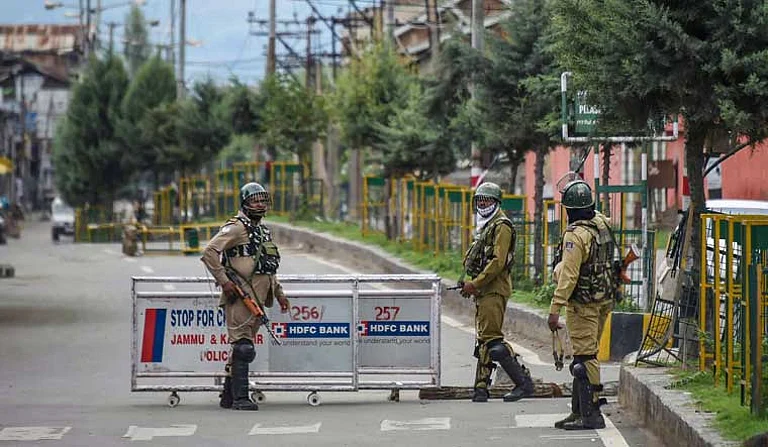
For the moment, however, the Bombay police are not particularly perturbed by the incident. "We have a tight grip on the underworld in Bombay," explains D. Sivanandan, joint commissioner (crime). "Even if some gangland killings do take place, we know how to control these." The police believe that even if a gang war breaks out, it would be a situation where the gangsters decimate each other and it would not impact the lives of the ordinary Mumbaiite immediately.
This feeling comes from a conviction that the next phase would essentially see attempted reprisal killings of Chotta Shakeel's men by Chotta Rajan. Before that can happen, though, Chotta Rajan must recover from his injuries, which are said to be serious. Moreover, considering the subterfuge adopted by Dawood and Shakeel and the dramatic nature of the killings at the terrace party in Bangkok, Bombay's top cops believe Rajan will prefer to target not the minions but their bosses. And that could happen only on foreign soil - Pakistan, Dubai, Thailand, Malaysia, Australia - where the various gangsters are supposed to have set up operations and created hideouts.
Lending credence to this view is the fact that a Bangkok-based Bombay jeweller, suspected by Chotta Rajan's men to have made the tip-off to Chotta Shakeel about the former's exact whereabouts, was killed in retribution just two days after the dramatic hit was made on Rajan. The jeweller was also bumped off on the streets of Bangkok, with no ripples felt at all in Mumbai.
Nevertheless, the police are worried that the rivalry between Chotta Rajan and Dawood Ibrahim has entered a new phase in the wake of the Bangkok shootout. Former friends turned foes, they fell out not because of the communal riots of Bombay in 1992-93 as is generally made out but because of the killing of Kim Bahadur Thapa, a gangster and a Shiv SENA corporator, by Rajan without Dawood's sanction, an event that coincidentally occurred around the same time as the riots. In popular lore, the mutual estrangement of the two took on communal tones.
At the time in Bombay, Arun Gawli was, for want of a better word, the official don. He enjoyed the patronage of SENA leaders. Gawli later fell out with SENA chief Bal Thackeray and Maharashtra's SENA-led government left no stone unturned to decimate the man from Dagdi chawl, who now lives in virtual exile a few miles outside Pune.
The marginalisation of Gawli saw the rise of Rajan, who began to develop a closeness to the SENA. He was helped in this by the fact that a former chief minister who started out his political career from Chembur - which is Rajan's home turf - was in power. So close was Rajan to this personage that he not only bestowed official largesse on the gangster but did not hesitate to place calls to "Nana" (as Rajan is popularly referred to) from his office and official residence. The police were tacitly told to keep off Rajan and his men while it was free to target Dawood's D Company men.
Ever since he broke off from Dawood, Rajan has been operating out of Malaysia and other East Asian locales. But Bombay was where he generated a sizeable chunk of his revenue. The old D Company trick of extorting money from businessmen was what he too employed. And it was in Bombay that the two former friends carried out their turf war - the period saw many gangland attacks. In the last two years there was relative calm in the underworld, and so the Bangkok incident has come as surprise.
The exit of the SENA-BJP government in Maharashtra was the beginning of the change in the fortunes of Chotta Rajan, who was aware that minister for home and deputy CM Chhagan Bhujbal would take a personal interest in decimating him the same way the SENA finished Gawli. Incidentally, Bhujbal is said to be close to Gawli. It is for this reason that Rajan attempted to lie low and turn legit by entering the film-making and cable businesses, using his brother as the front. (Dilip Nikhalje, the brother, even produced the Sanjay Dutt gangland film Vaastav.) He offered little provocation to Maharashtra's current political dispensation, largely adopting a live-and-let-live policy.
Chotta Rajan, the police know, is now in a bind, compelled as he is to respond to the humiliation. Honour must be restored and so some revenge killings are inevitable. This in turn could provoke government and police wrath, which could prove to be the end of the road for the self-proclaimed "Hindu" gangster. However, the police say such killings are unlikely to take on the proportions they did in 1998 when innocent businessmen and professionals were targeted for their affluence and the life of the common man was put in peril.
The only impact on the common man that the turf war between the two dons will finally have is if one gang manages to marginalise the other. If this happens, then the new don and his men will set the rules and extortion drives could take a new turn. After narcotics, extortion is the most lucrative activity for the underworld.
It is still too early to say if D Company will displace Chotta Rajan. Right now, what the police is concerned about is the possibility of ordinary citizens getting caught in the crossfire as and when the revenge killings begin. In the none-too-distant past, underworld battles have spilled out on the streets and the police, despite confident statements, are keeping their fingers crossed that history does not repeat itself.