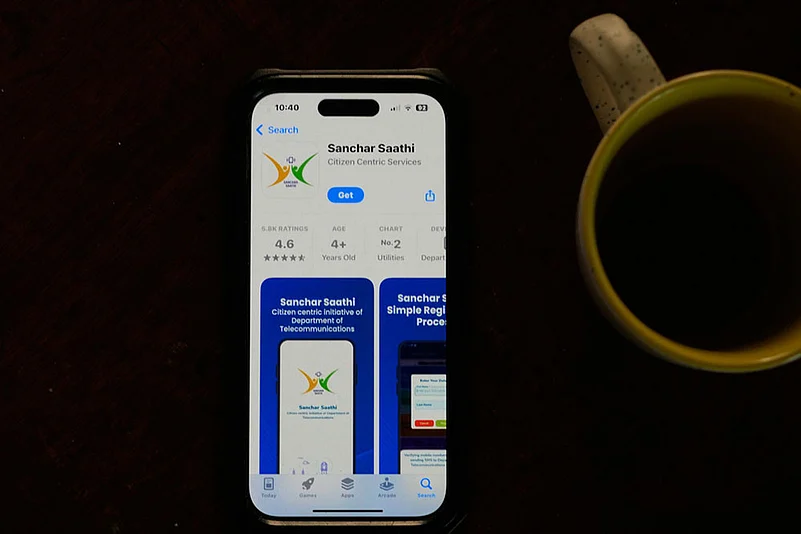
Sanchar Saathi app will remain optional for users; they can uninstall or ignore it if they choose.
The government argues the app is a cybersecurity measure against fraud, theft and counterfeit phones — not a surveillance tool.
Privacy advocates and opposition leaders warn that pre-installing a government app on all phones — even if optional — undermines consent and digital privacy.
In response to a public outcry over privacy concerns, India’s government has clarified that the Sanchar Saathi app — recently mandated to be preinstalled on all smartphones — is entirely optional. Union Communications Minister Jyotiraditya Scindia told reporters on Tuesday that if a user does not wish to use the app, they can simply delete it. “If you don’t want Sanchar Saathi, you can delete it. It is optional,” he said, stressing that there is no requirement to activate or register it.
The clarification comes after the (DoT) directed smartphone manufacturers to pre-install the state-developed cybersecurity tool, fueling fears of mass surveillance and loss of privacy. Critics argued that mandatory installation — and potential inability to delete the app — threatened individual autonomy.
Scindia denied all allegations of the app being used for surveillance or call-monitoring. He described Sanchar Saathi as a consumer-protection tool aimed at tackling fraud: tracing lost or stolen phones, blocking suspicious SIMs, and curbing counterfeit devices. According to officials, the Sanchar Saathi portal already has crores of users and has helped disable fraudulent connections and recover stolen handsets.




Despite the government’s assurances, opposition voices and privacy advocates remain wary. They contend that pre-installation itself — even if “optional” — raises fundamental questions about consent and digital rights, urging a broader public discussion before enforced rollout.
On Monday, December 1, 2025, reports circulated that on November 21, 2024, the DoT, through its AI & Digital Intelligence Unit (AI & DIU) had, under the Telecommunications (Telecom Cyber Security) Rules, 2024, had issued a direction on pre-installing the Sanchar Saathi app.
While the full text of the direction was not been made public by the DoT, the tech news website Medianama released the full text on Monday. Based on that the IFF has said that it will follow up with the DoT via an RTI which asks not just for the directive’s text but also the reasoning behind it. The IFF has said it will shortly release “analysis as well as steps, if required to support a challenge to it in a court of law.”
The DoT has said, before, that the Sanchar Saathi app is meant to enhance telecom security of Indian citizens by allowing users to report fraud, block lost or stolen phones, verify the mobile connections registered in their name, and “stay informed about the latest updates on telecom security.”
The IFF, however, points out that though enhancing security is, on face value, is a legitimate state claim, “the means chosen are disproportionate, legally fragile, and structurally hostile to user privacy and autonomy.”