The issue examines the erosion of freedoms and empathy, from the brutality enabled by AFSPA to the shrinking space for humour and satire in public life.
Through essays, reportage and photographs, the pieces together portray an apocalypse that unfolds in fragments.3: It does not mark an end, but a transition into an uncertain new world.
As Outlook’s 30 year anniversary issue turns to Imaginary Places, it is worth examining places that feel just as unreal, yet are firmly embedded in our lives.
Reality, after all, can be stranger than fiction. Fiction merely mirrors lands where extreme force is routine, where the suspension of everyday life is accepted as a deadly virus sweeps through both the first and third worlds alike, and where society is so detached from human interaction that even a joke can land one behind bars.
As the Earth keeps spinning, the question lingers: where does it end? At what point does the old world fade, and the new one begin?
In Outlook Magazine’s January 17, 2022, issue, we look at ‘my dear Apocalypse’. Editor-in-chief Chinki Sinha writes about the beginning of what everyone called the “end of the world”. In the days of the pandemic, when people queued up for oxygen and migrant labourers made the endless journeys on foot, in ‘Almanac Of Darkness: An Essay On Life And Love’, Sinha wrote a story about herself and the horse with a broken foot, a story about the lizard on my walls, a story about a professor in a film who was writing a curriculum of darkness.


“This is my apocalypse story. In the beginning, there was a horse with a broken foot under a flyover. At night, the cold white light installed as part of the city’s scheme to light up the streets made the horse more pronounced. In that concrete dystopian landscape, the horse stood motionless.”
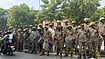
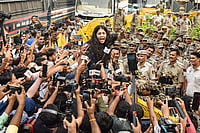
Amitesh Grover wrote on AFSPA: A Night Of Detention And Torture, He chronicles, if you are not from the region, the only way to witness the brutality that the sweeping power of AFSPA enables—to search, seize, arrest or shoot to kill—is to have a friend who has endured the savagery of its operations, and for him to trust you deeply to describe it in you.
“The soldiers took my friend to a nearby camp, where they stripped him, tied him up, and inquired about an incident he had no knowledge of; still, they held him captive through the night. He was beaten, spat at, denied food and water, and at one moment, he quivered with terror uncontrollably at the sight of a cutting plier that a soldier brandished in his face; it was meant as a threat to pull his toenail. Following hours of torture, my friend eventually passed out.”
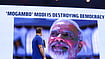
Sanjay Rajoura asks if it is fair to say that it is the end of humour for the world’s largest democracy? In ‘A Nation Without Humour’, he states how “A society that stops laughing at itself is as good as dead.”
The piece argues that as Indians become increasingly intolerant of humour, treating jokes as offences and even crimes, rather than harmless entertainment, stand-up shows get cancelled, comics face legal trouble and threats for their material, and satire is met with outrage instead of laughter.
Kushal Poddar in Patna Through The Eye Of The Third Kind replies on photographs to describe the end of year 2021 in Patna. “Mundane should not be ignored in the grand theory of defining and classifying civilization. In his From Popular Culture to Everyday Life, John Storey failed to define ‘Everyday Life’, and acknowledges that there exists ‘enormous difficulties’ in defining ‘something that is so taken for granted.’”

Together, these pieces and more, map an apocalypse that is neither sudden nor singular, but lived, uneven and disturbingly familiar.
From the quiet brutality of power and the erosion of humour, to the intimate images that document loss, endurance and memory, My Dear Apocalypse captures a world in transition rather than collapse.
As the Earth keeps spinning, the end does not arrive with a single moment of finality; instead, it unfolds slowly, in pieces—forcing us to confront not just what has been lost, but what kind of world we are transitioning to inhabit next.