A former IPS officer and two alleged victims of the July 20 CJP protest crackdown have moved the Supreme Court seeking a nationwide ban on pellet guns for crowd control.
The petition alleges RAF personnel fired pump action guns without warning as protesters retreated, causing pellet injuries, and argues such weapons violate constitutional standards governing the use of force.
Besides seeking a ban, the petition also seeks compensation, medical treatment and rehabilitation for those allegedly injured during the police action, while the Delhi Police has denied using pellet guns.
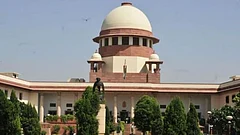
A former IPS officer and two people who allegedly suffered pellet injuries during the Cockroach Janta Party (CJP)-led 'Sansad Chalo' march over the NEET paper leak have moved the Supreme Court seeking a nationwide ban on the use of pellet guns for crowd control.
The petition has been filed by former IPS officer Yashovardhan Azad, along with Prashant Kumar and Sheikh Irshad Mansoori, through advocate Vrinda Grover.
It seeks directions to decommission or prohibit the use of metallic kinetic projectiles fired from pump action rifles or Projectile Action Guns (PAGs) by law enforcement agencies while dealing with civilian assemblies.

Petition Alleges Unprovoked Firing
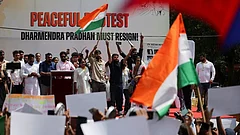
Prashant Kumar, a 25-year-old artist, said he was participating peacefully in the July 20 'Sansad Chalo' protest when personnel of the Rapid Action Force (RAF) allegedly opened fire without provocation, leaving him with pellet injuries.


Sheikh Irshad Mansoori, 26, said he was in Connaught Place for passport and visa-related work when he too was struck by pellets despite not participating in any violence.
According to the petition, the Delhi Police had deployed the RAF during the CJP-organised protest against alleged irregularities in public examinations.
The petition states that between 4 pm and 4.30 pm, police and RAF personnel fired tear gas shells, carried out baton charges and pushed protesters towards the inner circle of Connaught Place.
A PTI report confirms the use of pellet guns during the course of the protest. According to the report, on the directions of the DCP, RAF fired 55 non-electrical shells, 15 electrical shells, five tear smoke grenades, two rounds from the anti-riot guns and two rounds of plastic pellets on July 20.

'No Warning, No Water Cannons Used'
The petition alleges that authorities did not use water cannons or issue public announcements before resorting to force.
"Pertinently, no water cannons were used, and no announcements were made about the impending use of force," it states.
It further claims that RAF personnel fired pump action guns while protesters were retreating.
"While the protesters were fleeing, with many raising their arms up as if in 'surrender' mode, despite no provocation, RAF personnel suddenly fired pump action gun(s), releasing a wide spray of splinter-like pellets," the petition alleges.
Why Are Petitioners Seeking a Ban?
The petition argues that the right to peaceful assembly is protected under the Constitution and restrictions on that right must satisfy the tests of necessity and proportionality under Article 19(3).
It contends that projectile action guns are inherently unsuitable for crowd control because of the unpredictable movement of pellets.
"Projectile action guns are per se unfit for dispersal of peaceful assemblies," the petition states, adding that such weapons cannot be considered the "least amount of necessary force" due to their erratic trajectory.
According to the petitioners, the unpredictable spread of pellets makes the weapons arbitrary and inherently unsafe for deployment against civilian gatherings.
Apart from seeking a ban on pellet guns, the petition asks the Supreme Court to direct authorities to provide exemplary compensation, comprehensive medical treatment, rehabilitation and long-term care to all those injured during the July 20 police action in New Delhi.