Trump rejects Netanyahu’s objections as the US considers restoring Turkey’s access to F-35 fighter jets.
Turkey was removed from the F-35 programme in 2019 after buying Russia’s S-400 air defence system.
Any F-35 deal faces US legal restrictions and opposition from lawmakers in Congress.
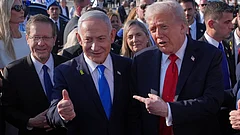
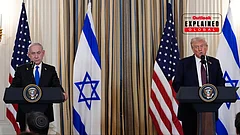
US President Donald Trump on Monday rejected Israeli Prime Minister Benjamin Netanyahu’s opposition to a possible sale of F-35 fighter jets to Turkey, saying no foreign leader would decide Washington’s arms policy as his administration considers restoring Ankara’s access to the F-35 programme.
ANI reported that Trump’s remarks came as Netanyahu arrived in Washington for talks with the US President, with regional security and the confrontation with Iran among the key issues on the agenda. Turkey was removed from the US-led F-35 programme in 2019 after purchasing Russia’s S-400 air defence system, a move that Washington said posed security risks to the fighter jet programme. Any attempt to restore Ankara’s access would face legal and political challenges in Washington, LiveMint reported.
Trump Rejects Netanyahu’s Concerns Over Turkey
Speaking to reporters aboard Air Force One, Trump dismissed Netanyahu’s reservations over arming Ankara and defended his relationship with Turkey.
"Nobody tells me what we should be selling," Trump said. "Turkey has been a tremendous ally for me."
Earlier this month, Netanyahu voiced strong opposition to the possible sale of US-made F-35 stealth fighter jets to Turkey, warning that the move would alter the regional balance of power, CNN reported.
In an interview with CNN, Netanyahu said he had personally urged Trump not to approve the sale after Trump indicated that he was considering reversing restrictions imposed during his first term.

"The sale of America's most advanced fighter aircraft 'doesn't make Turkey a friendly state to the United States,'" Netanyahu told CNN.
Referring to Turkish President Recep Tayyip Erdogan, Netanyahu said Ankara is "a regime that's infected with the Muslim Brotherhood, which hates the United States."
"He's not exactly a model ally of the United States," Netanyahu said. "He threatens to destroy my country, the one and only Jewish state," he added, as reported by CNN.
Netanyahu further warned that supplying the aircraft to Turkey would have wider regional consequences.
Netanyahu added that he urged Trump directly not to sell the fighter jets to Turkey because doing so would "destroy the power balance in the Middle East."
Trump, however, defended closer ties with Ankara.
"We have a better relationship with Turkey, and Turkey has been in many ways much more loyal than other countries that we think would be loyal," Trump said.
Calling the F-35 "the best plane by far", Trump said the proposed sale was "certainly something we will consider."
Turkey Seeks Return To F-35 Programme
ANI reported that Trump had earlier said his administration would soon decide whether to sell F-35 fighter jets to Turkey despite restrictions linked to Ankara’s purchase of the Russian S-400 system. He also said sanctions linked to the S-400 purchase could be lifted, according to CNN.
Turkish President Recep Tayyip Erdogan has indicated that Ankara believes it is close to securing a deal to purchase US-made F-35 fighter jets and American-made engines for Turkey’s indigenous KAAN fighter aircraft, CNN reported.
According to LiveMint, citing a report by The New York Times, senior US administration officials have indicated that Trump is considering bringing Turkey back into the F-35 programme, reversing the decision taken during his first term in 2019.
However, officials said discussions were still ongoing and no final decision had been announced. LiveMint reported, citing The New York Times, that one option under discussion involved Trump signalling Washington’s intention to restart the process through an exchange of letters with Erdogan.
During a recent Oval Office meeting with NATO Secretary General Mark Rutte, Trump hinted that he planned to give Erdogan a surprise. When asked about the F-35 issue, Trump said he would bring the Turkish President a gift that would make him "very happy."
Vice President JD Vance later said Pete Hegseth and the administration team were reviewing possible legal pathways.
"Pete and the entire team are reviewing this right now, because there are certain things that we have to certify have happened if the administration was to comply with American law. The president has asked us to do that."
Trump later added: "We will work it out."
F-35 Deal Faces US Legal And Congressional Hurdles
Ankara’s removal from the multinational F-35 programme in 2019 followed its acquisition of the Russian-made S-400 air defence system.
US officials argued that operating the S-400 alongside the F-35 posed security risks because the Russian system could potentially collect intelligence on the aircraft’s stealth capabilities.
A White House statement issued at the time said: "The F-35 cannot coexist with a Russian intelligence collection platform that will be used to learn about its advanced capabilities. Turkey has been a longstanding and trusted partner and NATO ally for over 65 years, but accepting the S-400 undermines the commitments all NATO allies made to each other to move away from Russian systems."
The decision also triggered US sanctions against Turkey’s defence procurement agency.
LiveMint reported that a law passed by Congress in 2020 remains a major obstacle to restoring Turkey’s access to F-35 fighter jets. The law prevents the sale of F-35 aircraft to Turkey unless the US administration certifies that Ankara no longer possesses the Russian S-400 systems.
US officials have discussed possible options, including transferring the S-400 batteries to a third country or making the systems permanently inoperable by removing critical components. No final arrangement has been agreed.
The issue is expected to face scrutiny on Capitol Hill, where several lawmakers have opposed attempts to restore Turkey’s participation in the programme.
Turkey has spent years seeking to return to the F-35 programme while resisting pressure to abandon the S-400 system. Any move to restore Ankara’s access will depend on whether the Trump administration can address the legal restrictions linked to the Russian-made system.