Delhi’s fast-track court adjourned its first NEET paper leak hearing to August 3.
The CBI prosecutor initially failed to appear, delaying arguments on two bail pleas.
Defence counsel later sought adjournment, citing another court appearance in Rohini.
Delhi’s newly designated fast-track court for cases involving examination fraud began hearing the 2026 NEET paper leak matter on Monday, but its first listed hearing ended in an adjournment.
The court of Special Judge Anu Grover Baliga at Rouse Avenue Court was scheduled to hear the bail pleas of two accused, Dinesh Biwal and Vikas Biwal. But the hearing ran into an early procedural hurdle after no prosecutor appeared for the Central Bureau of Investigation (CBI) when the matter was initially called.
“None appears on behalf of the state till 10.45 am to argue on the bail application,” the judge recorded in her order.
A CBI lawyer appeared shortly afterwards, but by then defence counsel A P Singh sought an adjournment, saying he had another case to attend at Rohini courts.
“Ld. Counsel A P Singh (defence counsel) submits that he has to attend to another matter at Rohini courts and is not in a position to wait any longer. He further requests that the present bail application be adjourned for August 3,” the judge said in the order.
The court accepted the request and listed the bail pleas for August 3. Judge Baliga also directed the “director of prosecution to depute a public prosecutor in the present court”.


Why Was The Hearing Adjourned?
The adjournment resulted from a combination of the prosecution’s initial absence and the defence counsel’s inability to remain in court once the CBI lawyer arrived.
This is significant because the court had only recently been designated specifically to handle criminal cases arising from paper leaks and other unfair practices in public examinations.
The Delhi High Court issued a notification on July 23 designating Judge Baliga’s court as a “Specially Designated Fast Track Court” for offences under the Public Examinations (Prevention of Unfair Means) Act, 2024, and connected offences.
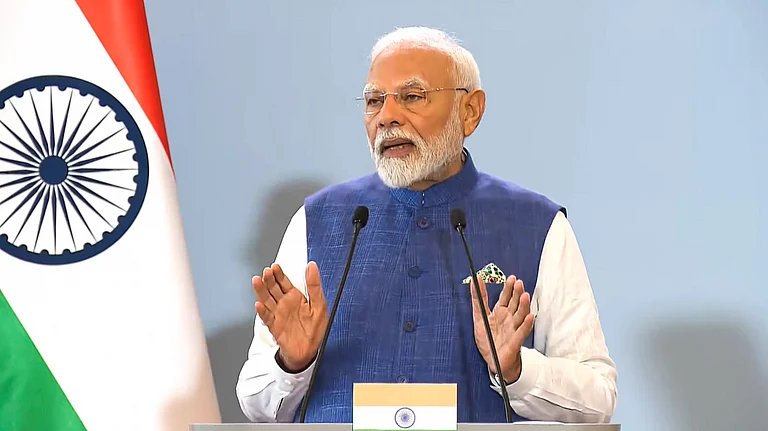
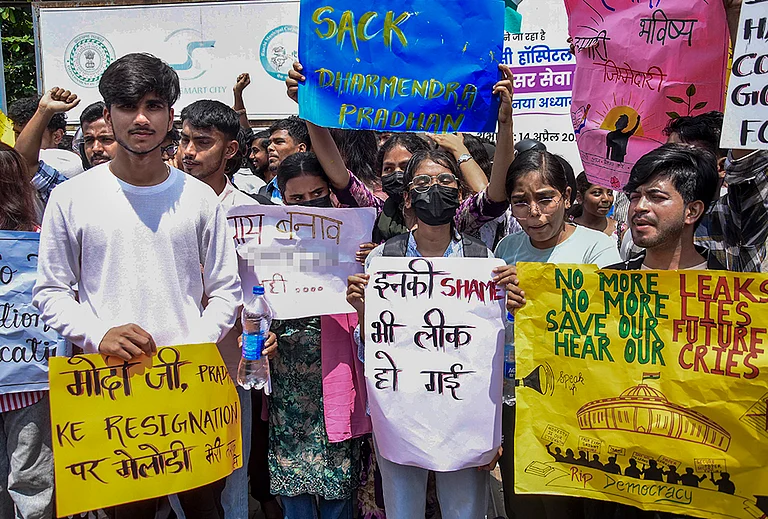
The move followed Prime Minister Narendra Modi’s announcement that fast-track courts would be established to deal with paper leak cases amid nationwide protests over alleged examination irregularities.
Fast Track Court Can’t Bypass Procedural Requirements
A fast-track court gives certain categories of cases priority, but it does not remove normal procedural requirements. Lawyers can still seek adjournments, accused persons retain their rights to bail hearings and legal representation, and investigating agencies must produce evidence and comply with procedural rules.
The “fast-track” designation is intended to reduce institutional delays by giving cases dedicated judicial time and priority over ordinary case loads. It does not mean that every hearing must result in a substantive order or that a trial must conclude within a fixed number of days.
There is also no single central legislation governing every fast-track court in India. Different categories of such courts have been created through judicial directions, government schemes and administrative decisions.
How Fast Are Fast-Track Courts Supposed To Be?
The policy push for fast-track courts expanded substantially after the Fourteenth Finance Commission recommended establishing 1,800 such courts between 2015 and 2020.
They were intended to prioritise serious criminal offences, long-pending property disputes and cases involving vulnerable groups.
A separate system of Fast Track Special Courts was introduced in 2019, primarily for rape and Protection of Children from Sexual Offences Act cases.
Under the centrally sponsored scheme, each Fast Track Special Court is expected to dispose of around 41 to 42 cases every quarter, or at least 165 annually.
As of January 2026, 862 regular fast-track courts and 774 Fast Track Special Courts, including 398 exclusive POCSO courts, were functioning across India.
In 2024, 88,902 cases were instituted before Fast Track Special Courts and 85,595 were disposed of. These courts cleared about 9.5 cases per month on average, compared with around 3.3 cases in regular trial courts of comparable jurisdiction.
Yet faster disposal does not necessarily eliminate pendency. More than 2.4 lakh cases remained pending before Fast Track Special Courts at the end of 2025.
What Happens Next In The NEET Case?
The bail applications of Dinesh Biwal and Vikas Biwal are now scheduled for August 3.
Separately, Judge Baliga also heard an application concerning the medical treatment of another accused, Manisha Sanjay Hawaldar. The matter was listed for Tuesday, with the court directing that she appear through video conferencing so the judge could personally ascertain whether she was receiving treatment in jail.
The NEET paper leak case is currently the only case assigned to Judge Baliga’s newly designated court.