Government ready for NEET-UG debate without preconditions in Parliament.
Opposition insists on Pradhan's resignation and PM statement before discussion.
Lok Sabha adjourned again amid ongoing standoff on Day 3 of Monsoon Session.
The Centre on Wednesday said it was ready to hold a discussion in Parliament on the alleged NEET-UG 2026 paper leak, with Parliamentary Affairs Minister Kiren Rijiju urging the Opposition to allow a debate instead of attaching preconditions. The government's offer came as the Lok Sabha remained deadlocked over the issue for the third consecutive day of the Monsoon Session, with the Treasury and Opposition benches at odds over how the matter should be taken up.
The standoff is no longer centred on whether the alleged paper leak should be debated, but on the manner in which the discussion should proceed. While the government has said it is prepared for a full debate and has left it to the Speaker and floor leaders to decide the parliamentary rule, date and duration, the Opposition has continued to press for the resignation of Union Education Minister Dharmendra Pradhan and a statement from Prime Minister Narendra Modi, arguing that the controversy requires political accountability.
Soon after the Lok Sabha reassembled following an earlier adjournment, Speaker Om Birla asked Rijiju to make a statement on the government's position. Before he could do so, Congress leader K C Venugopal reiterated the Opposition's demand that Pradhan resign over the handling of the controversy. Rijiju then informed the House that the government was willing to hold a discussion on the alleged paper leak and suggested that the Speaker convene a meeting of floor leaders to decide the procedural rule under which the debate would be held, as well as its timing and duration. Amid continued sloganeering, the House was adjourned again.


Later, speaking to reporters outside Parliament, Rijiju said the government had been ready for a discussion since the Monsoon Session began and maintained that there was no reason for the Opposition to prevent a debate from taking place.
"Whatever else the opposition has to say, they can present their views during the discussion. If there is a discussion, every member has the right to express whatever they wish," he said.
Rijiju argued that insisting on conditions before allowing a debate defeated the purpose of parliamentary discussion.
"But if you impose conditions to stop the discussion, it means you don't want a discussion. The government does not run away from any issue, and in a democracy, it is our responsibility to inform the people about the work we do for them," he said.
He also rejected the Opposition's allegation that it was being denied an opportunity to speak, saying debates were conducted according to established parliamentary procedures and that every party would be free to present its views once a discussion was scheduled.
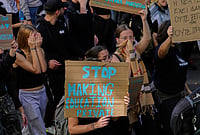
The Opposition, however, maintained that the government had yet to address its principal demands. Congress and other INDIA bloc parties have insisted that Pradhan take responsibility for the handling of the controversy and have sought a statement from the Prime Minister in Parliament. They have also linked the issue to the recent police action against student protesters in Delhi, warning that the impasse could continue unless the government responds to their demands.
The alleged paper leak has become one of the principal issues of the Monsoon Session after the medical entrance examination was cancelled following allegations that its question paper had been leaked before the test. The case is being investigated by the Central Bureau of Investigation, while the controversy has triggered sharp political exchanges over the functioning of the National Testing Agency and the government's handling of the examination process.
Although both the government and the Opposition say they are willing to discuss the issue, Wednesday's proceedings showed that the disagreement now lies over the terms of the debate rather than the debate itself. Whether the deadlock ends is likely to depend on consultations among the Speaker and floor leaders on the procedural framework under which the discussion is eventually taken up.

_.jpg?auto=format%2Ccompress&fit=max&format=webp&w=376&dpr=2.0)