Bihar issued recovery notices to men after ₹10,000 meant for women was wrongly transferred under a State scheme.
Some recipients say the money was spent during festivals, others question why notices came after the election.
The State government has ordered a probe amid Opposition allegations of vote-buying.
Days after the Bihar government issued notices to several men in Darbhanga district seeking the return of ₹10,000 wrongly credited to their bank accounts under the Mukhyamantri Mahila Rojgar Yojana, some recipients have said the amount has already been spent, while others argue the government should first return their votes if it wants the money back.
According to The Hindu, the notices were sent to male residents of Jale block after officials found that funds meant for women beneficiaries had been transferred to men due to an error. The Bihar Rural Livelihoods Promotion Society (BRLPS), an autonomous body under the Department of Rural Development known as JEEViKA, issued the recovery notices once the mistake came to light.
The scheme was launched ahead of the Assembly election in November, when Prime Minister Narendra Modi introduced it via videoconferencing from Delhi. Aimed at supporting women to start their own businesses, the programme saw ₹7,500 crore transferred to the accounts of 75 lakh women across Bihar. It was widely seen as a boost for the National Democratic Alliance (NDA), which went on to win 202 of the 243 Assembly seats.



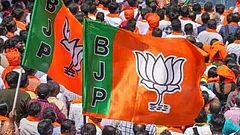
Reported The Hindu, the Nitish Kumar-led NDA government has so far credited ₹10,000 each to more than 1.56 crore women. The State government has also assured women entrepreneurs that, after assessing their performance, an additional grant of up to ₹2 lakh would be provided.
The issue triggered political sparring after the Opposition Rashtriya Janata Dal (RJD) on December 13 shared a screenshot of the recovery notice on X, alleging that the government had transferred money to men instead of women. The party cited the male recipients to support its charge that the cash transfers announced before the election were intended to “buy votes”, The Hindu reported.
Following the controversy, State Rural Development Department Minister Shravan Kumar ordered a probe on Wednesday and asked officials to submit a detailed report at the earliest.
In Bakhri village under Ahiyari panchayat, several men who received the notices said the funds were spent during the festive season. “The amount was transferred during the festive season. Some of it was spent on Chhath Puja festivities. I also used it to purchase ducks and some clothes for my family members. How can the government expect us to return the money? We are poor people and struggle to meet our daily needs,” Baliram Sahni, a beneficiary, told The Hindu over the phone.
Mr Sahni, who supports his wife and five children by collecting waste and working as a mason, said his wife Sunaina Devi did not receive any benefit under the scheme. “I voted for Jibesh Kumar [BJP MLA from Jale] thinking that the money was a pre-election gift. If the government wants the money back, then it should return our votes first.”
Another recipient, Ram Sagar Kumar, questioned the timing of the notices. “Amit Shahji [Union Home Minister] repeatedly said at every rally that the money given under the scheme will not be taken back. If there was any mistake at all, why didn’t the government send the notice earlier? Why wait till the election got over?” he said.
Some men also claimed they had never applied for the scheme and assumed the money was a different benefit. “I voted for Nitish Kumarji assuming that the money was given for personal use. It was transferred to my bank account though I had not applied for the scheme. I cannot work as I am physically challenged. Else, I would have found work and returned the money. I spent it on daily needs,” said Nagendra Ram, another beneficiary.
According to The Hindu, officials said the probe would determine how the erroneous transfers occurred and the steps needed to recover the funds without causing hardship to genuine beneficiaries.
(With inputs from The Hindu)