Iran enforces strict media control through laws, institutions, and digital surveillance.
Journalists face arrests, self-censorship, and online restrictions under state oversight.
Internet blackouts and press control deeply affect daily life, protests, and civic engagement.
Media censorship in Iran became systematic right after the 1979 Islamic Revolution. Although some level of media control earlier existed, but the new Islamic government made censorship stricter and more organised. The state has believed that media should promote Islamic values and support its revolutionary goals. As a result of this, many independent newspapers were shut down, and the critics were either imprisoned or forced into exile. The Ministry of Cultural and Islamic Guidance was established to oversee all media and cultural expression.
Legally Iran's Constitution does mention freedom of expression, but it also places broad restriction on this right. Article 24 allows freedom of the press, but only on the condition that the content does not violate Islamic principles or public interests. These terms are vague enough to give authorities wide authority to restrict speech.
Mechanisms of Censorship
Iran’s censorship system combines legal rules with institution oversight and security measures like Ministry of cultural and Islamic guidance, press supervisory board, judicial, revolutionary and security agencies. This centralised structure ensures that any critical coverage is discouraged and potentially dissenting voices are suppressed.


Print newspapers and magazines must have an official approval before they publish, whereas Television and radio are state owned. The national broadcast presents news that support the government and rarely allows any opposing views. Independent broadcast media are also banned within Iran which forces many critics to operate from outside the country.
Journalists, Self-Censorship, and Digital Controls
Journalists in Iran work in a risky environment. Arrest, interrogation, travel ban and imprisonment are a common experience. Reporters are often accused of spreading false information or threatening national security as justification for any legal action taken against them.
Many journalists practice self-censorship to avoid trouble and limit their reporting on sensitive topics to protect themselves and their families. Female journalist often face additional discrimination and harsher treatment, which reflects broader inequalities in the Iranian society.
With the rise of the internet and social media the state has expanded its censorship into the digital sphere. Platforms such as Instagram, Telegram, WhatsApp and X (Twitter) are frequently blocked or restricted inside Iran. It has also developed a national information network, which is a digital infrastructure intended to increase state control and reduce reliance on global internet.
Current Situation: Protests and Digital Suppression
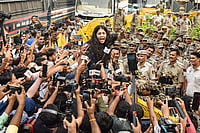
For Iranians, the start of 2026 must have felt less like a new year and more like slow suffocation. The simmering anger over empty wallets and worthless currency, where every trip to the market feels like a slap in the face, has finally boiled over. The protests that began in late December weren’t abstract; they were your neighbour’s hoarse voice echoing through the streets and your cousin’s determined face in a crowd, lit by the glow of a phone. Then, in early January, the silence fell.
It didn’t start with a bang, but with a frustrating, endless buffer. A message wouldn’t send. A call dropped. Then, nothing. Everything slammed shut. In its place was a deafening quiet, broken only by the distant sounds of the city and the growing anxiety in your own home.
This blackout wasn’t a technical fault, but a calculated act of isolation. Human rights workers might say that in this darkness, worst-case scenarios thrive, arrests without evidence, violence without witnesses and proof, and grief without a record.
This moment lays bare a harsh reality: the internet isn’t just a luxury. For people in crisis, it’s a fragile tether to reality, to community, and to safety. Turning it off isn’t merely censorship; it’s a deliberate act of leaving millions of people alone in the dark, with only their fear and the sound of their own heartbeat for company.
Social Impact of Censorship
Media censorship isn’t just a political issue — it reaches into the daily lives of ordinary people. For small business owners, social media isn’t just a website; it’s their shop window and the only way to reach their community. When these platforms are blocked, it doesn’t just silence voices, it cuts off a lifeline, shutting down livelihoods and connections in an instant.
But in terms of information itself, this control extends to the construction of reality in which people live. When their information is limited to the perspectives available in this controlled press, it becomes difficult for them to effectively connect with new ideas. It can be said to be almost ironic in terms of results, however, in that it sparks suspicion instead of confidence. When people are left feeling as if they are simply learning one side of a story, their initial reaction might be to put their faith in other sources.
Perhaps the most profound effect is the quiet, psychological toll it takes. The awareness of being monitored, coupled with the threat of punishment, casts a shadow of fear. For journalists, this pressure is a professional hazard, while for ordinary citizens, it becomes a personal calculation. Many begin self-censoring, choosing to hold back opinions or withdraw from public discussions in order not to take any risk. The result is a quieter public square, where genuine dialogue diminishes, civic participation wanes, and the collective wisdom of society is muted.
Media Censorship and Human Rights
In Iran, media censorship is deeply rooted and is supported by law, institutions, and digital control. The state restricts the free flow of information and public discussion through strict licensing and internet shutdowns, to name a few methods.
These recent, nationwide protests and the government's use of internet blackout measures merely show that censorship remains a strong tool through which to mold public perception and limit reporting on political unrest. Yet, even under such conditions, many Iranians continue to fight this censorship with alternative media, digital tools, and a network of international reporting.
Understanding media censorship in Iran provides a shortcut to understanding the challenges facing freedom of expression in that country and the ongoing struggle by citizens and journalists alike to access and disseminate information in an uncertain environment.