The Union government is considering pausing the transition to E25 petrol containing 25 per cent ethanol after facing backlash over the rapid E20 rollout.
Motorists have reported a perceptible drop in fuel economy, cold-start issues during winter, and corrosion risks in older vehicles due to higher ethanol blends.
A high-level government meeting advised addressing genuine consumer concerns scientifically and giving the automotive ecosystem sufficient time to prepare.
The government is likely to delay the proposed shift to E25 fuel comprising 25 per cent ethanol and 75 per cent petrol following backlash over the rapid transition from 10 per cent to 20 per cent in just three years.
The original plan mandated dispensing E20 petrol by 2030 but the government advanced the target by five years, and the 20 per cent blend is now the standard variant nationwide.
Adding to that, fears of an impending E25 launch grew after two recent administrative moves: the waiver of central excise taxes for fuel containing 22 per cent to 30 per cent ethanol and the Bureau of Indian Standards notifying fuel standards for these mixtures.
According to a report by The Indian Express, a high-level government meeting last week advised addressing genuine consumer concerns scientifically. This included asking original equipment manufacturers to address consumer complaints, though officials stated some of these are "overblown". The government informed that the ecosystem needs sufficient time for readiness to avoid pushing through the E25 transition, especially after the rushed E20 rollout.



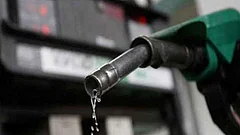

Impact On Consumers
Motorists have complained of a perceptible drop in fuel economy as ethanol has a lower calorific value than petrol. This has caused mileage drops among most vehicles, a consequence that government officials have also accepted.
Regular petrol cars running on higher ethanol blends also face cold-start issues on winter mornings because ethanol burns at a higher temperature than petrol.
Older vehicles face severe risks as ethanol levels rise as ethanol is hygroscopic, which promotes water uptake and raises concerns about corrosion and part damage in older cars.
"There is a view [within the government] that the transition beyond E20 will need to be spaced out. That is the sense we have got from vehicle manufacturers too. The idea is to go to E25 in a calibrated, graded manner for existing vehicles," a senior government official said in the report.

Industry Readiness Challenges
The government maintains that the roll-out of higher ethanol-petrol blends will only happen after proper testing and stakeholder consultations. The transition to E25 requires automakers to perform additional engineering and validation work. This includes engine calibration, fuel-system durability, corrosion resistance, material compatibility and final homologation.
The report said that Multiple carmakers in India have begun working on engines with higher compression ratios to extract maximum mileage from higher ethanol blends.
Despite the challenges, ethanol blending offers clear benefits, it has a higher octane number, which improves its ability to withstand premature combustion.
This lower carbon content makes the fuel more eco-friendly while reducing national dependence on fossil fuel imports.