Iran leverages asymmetry—proxies, signalling and endurance—to offset conventional weakness
Its defiance resonates across publics, even where regimes remain wary or hostile
Support for Hezbollah anchors a wider network that extends Tehran’s regional reach
In a region long shaped by asymmetrical power, few states have managed to convert vulnerability into symbolic capital the way Iran has. The Iranian response to the US-Israel attack has reinforced not just Iran’s strategic posture, but its ideological appeal across the Muslim world.
At one level, Iran’s actions remain materially constrained. It cannot match the conventional military superiority of Washington or Tel Aviv. Yet what it lacks in direct force, it has compensated through calibrated defiance, missile signalling, proxy warfare, and a willingness to absorb retaliation without capitulation.
As political scientist Vali Nasr says, Iran’s regional strategy has long relied less on direct confrontation and more on leveraging networks and asymmetry to offset conventional weakness. Since the Iranian Revolution, the Iranian state has defined itself in opposition to Western dominance and Israeli power. Historian Ervand Abrahamian has written that the Iranian revolution institutionalised a language of resistance that continues to shape Iran’s external posture.
Symbolism Beyond Borders
What distinguishes Iran’s posture is how it resonates beyond its borders. In a Muslim world fractured along sectarian and geopolitical lines, Iran’s defiance offers a narrative of resistance that travels across boundaries. Especially in the aftermath of the assassination of its Supreme leader, a large section of the Shia and Sunni world came together to support Iran.


But this resonance is uneven. Sunni-majority states, particularly in the Gulf, remain wary or openly hostile. But at the level of popular sentiment especially in contexts shaped by the Palestinian question, Iran’s stance carries symbolic weight.
Analyst Fawaz A. Gerges has noted that non-State and State actors alike derive legitimacy in the region not only from governance, but from their perceived stance on Palestine and resistance to Israel. Iran has consciously cultivated this space.
Yet Iran’s rise as a symbol also exposes the limits of any notion of a unified Islamic brotherhood.
Sectarian divides remain foundational. As Marc Lynch has observed, the idea of a cohesive Muslim political order has repeatedly fractured along lines of state interest, identity and regime security. Iran’s projection of power often through Shia networks, has deepened these faultlines even as it claims a broader Islamic mantle.
For many Arab governments, Iran is not a unifying force but a destabilising one. At the same time, segments of public opinion continue to respond to its posture of defiance. The result is a layered reality: symbolic solidarity without geopolitical cohesion.
The clearest manifestation of Iran’s regional strategy is its relationship with Hezbollah. For Iran, Hezbollah represents a template. As Kenneth M. Pollack has argued, Iran’s reliance on proxy networks allows it to project influence while minimising direct vulnerability. This networked approach often described as an “axis of resistance” extends beyond Lebanon to Iraq, Yemen and Palestinian territories. It enables Iran to remain central to regional conflicts without always being directly exposed.
The United States and Israel’s joint attack on Iran is unlikely to yield decisive military victory for Iran. But, as scholars of asymmetric conflict have argued, endurance itself can be reframed as success. By refusing to yield, by sustaining a network of allies, and by framing its struggle in ideological terms, Iran has positioned itself as a reference point for resistance politics in the Muslim world.
Yet, some scholars reiterate that beyond symbolism the fact is that Iran has become weaker and far more vulnerable that it ever was.
Dr. Mohammad Muddassir Quamar who teaches at Center for West Asian Studies at the Jawaharlal Nehru University in New Delhi says that the US-Israel war on Iran has left the country vulnerable and militarily and politically battered.
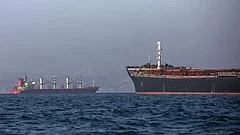
“Although the US and Israel were unable to achieve a clear victory that they had hoped for and Iran wasn't completely defeated, the war has made Iran negotiate from a position of weakness. The use of Strait of Hormuz, an international waterway, as a leverage does give Iran a negotiation card, it does not necessarily give it an strategic advantage,” he says.
Dr. Quamar says that Iran's military capacity has been battered including its nuclear and missile programmes with many military leaders and scientists killed in the war. The death of the Supreme Leader and others has also left it internally weakened.
He says that the “inability of Iranian proxies to come to its rescue or join the war,” which has weakened Iran's regional position, as well.
He adds that the Iranian strike on GCC neighbours has altered the diplomatic progress made with them over the past few years, bringing them closer to US and Israeli positions in the region.
“Iran is not military defeated but politically and strategically it has been weakened and is forced to negotiate with its attackers, and might even be forced to make serious compromises to ensure regime survival,” he adds.