There is a myth in the business world that a founder’s work is never done. The long hours, the grind, and the relentless focus required to turn an idea into an enterprise are celebrated. Yet an equally vital skill receives far less attention: the discipline of knowing when to stop.
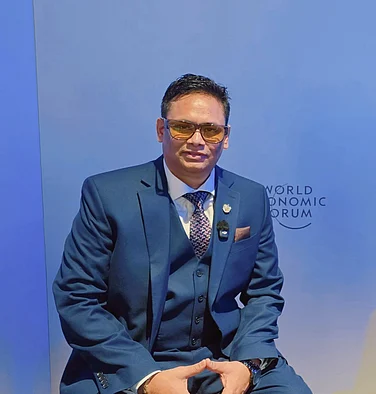
For any entrepreneur, the journey eventually demands a shift from building the engine to owning a share of the car. For Furkat Kasimov, this transition from operational co-founder to passive investor was not merely a change in title, it required a recalibration of identity, responsibility, and reputation.
The "Many Hats" Phase
In a company’s zero-to-one phase, specialization is a luxury. Survival depends on versatility. Kasimov’s experience co-founding LeadsMarket.com in 2011 illustrates this vividly. In the high-stakes business of lead aggregation, focusing solely on vision was never enough.
Over thirteen years, Kasimov remained deeply embedded in the machinery of the company. “Co-founder” was merely the label; the reality was a rotating roster of functional roles,” he reflects. At various points, he acted as product manager, translating complex market demands into technical requirements, project manager to drive execution, and COO to establish the rhythms and controls necessary for scalable growth.
This total immersion was essential, but it also created a “sticky” reputation. Having done everything for so long, the market assumes a founder will always be doing everything.
The Strategic Decoupling
The challenge arises when that operational chapter ends. For Kasimov, that chapter closed in March 2024. The shift brought a risk often overlooked in startup exits: reputational contagion. If a company struggles after a founder steps back, the market instinctively assigns blame to the familiar face, even if they are no longer at the helm.



This underscores a critical principle for investors and observers: ownership is not control. After March 2024, Kasimov became a passive minority shareholder. While deeply invested in the company’s success, he no longer holds the levers of management. He does not approve budgets, hire teams, or steer strategy. He observes; he does not operate.
The Importance of a Clean Break
A successful transition requires a clearly defined separation between the founder’s legacy and the company’s future. Kasimov’s clean break came in March 2024. “We built a robust, compliant, and scalable engine,” he says. The systems, culture, and processes were fully in place, allowing the company to continue without his daily oversight.
For founders, stepping back is a final act of stewardship. Kasimov’s experience at LeadsMarket.com demonstrates that the real work sometimes lies not in building, but in knowing when to step aside.