Innovations such as drone-based transport of donor corneas and advances in bioengineered corneal implants are opening new possibilities in the fight against corneal blindness in India, doctors from the All India Institute of Medical Sciences (AIIMS), Delhi, said, highlighting how technology could help bridge gaps in access to treatment.
Dr. Namrata Sharma, Professor at the Dr. Rajendra Prasad Centre for Ophthalmic Sciences at AIIMS, Delhi, said encouraging results have been observed with a bioengineered cornea known as BPCX, or Bioengineered Cross-Linked Cornea.
According to Dr. Sharma, nearly 80 patients who received the stromal construct have now completed close to eight years of follow-up, with many showing stable outcomes. “Earlier generations of artificial corneas were not cross-linked. The newer versions involve double cross-linking, which allows better integration with the patient’s own corneal tissue,” she said.
The improved design helps the implant bond with the recipient cornea more effectively, enhancing stability and long-term outcomes. Researchers believe such advances could expand treatment options for patients who may not have immediate access to donor tissue.
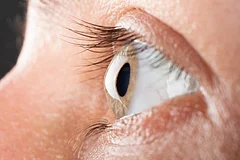
Corneal diseases remain one of the leading causes of visual impairment in the country, with thousands of patients waiting for corneal transplants each year. Experts say improving the availability and timely delivery of donor tissues is critical to addressing the burden.
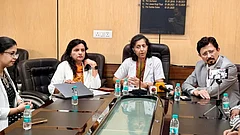
Another development gaining attention is the use of drones to transport donor corneas between medical centres. Sharing details about the pilot project launched last year with reporters at a press conference in the national capital, Dr. Sharma said the technology could significantly reduce delays in transporting tissues, particularly in regions where road connectivity is poor.


Dr. Deep Sekhar Das, also from AIIMS, Delhi, and a senior specialist involved in the initiative, said the project began a few years ago with support from the Indian Council of Medical Research. “We designed a specialised container to carry the corneas safely. It maintains the required temperature during the entire flight so that the tissue remains viable for transplantation,” he explained.
The transport box includes a temperature monitoring system that ensures the corneal tissue is preserved within the safe range throughout the journey. In pilot trials, donor tissues were successfully flown between centres and later transplanted into patients.
“So far, we have completed successful transport and transplantation of at least ten corneas using this method, and patients are doing well during follow-up,” Dr. Das said.
The initiative could prove particularly useful for regions with difficult terrain. Dr. Sharma said they plan to expand drone-based transport to areas where delivering donor tissues quickly remains a challenge, including parts of Northeast India.
Apart from improving logistics, Dr. Sharma emphasised that increasing corneal donations and better distribution of available tissues remain equally important.
She pointed out that India requires nearly two lakh donor corneas every year, while the number of tissues collected annually is far lower, at a dismal fifty thousand, reflecting a significant gap between demand and supply.
Dr. Sharma noted that the challenge is not only about increasing donations but also about ensuring that available tissues reach patients in need without delay. “Some regions have surplus donor tissue while others face shortages. Efficient transportation systems, including drones, could help redistribute corneas where they are most needed,” she said.
Preventing corneal injuries is another critical aspect of reducing blindness, doctors said. Eye trauma from chemical exposure, industrial accidents, and firecracker injuries continues to contribute to corneal damage. Public awareness and safety measures can play a major role in reducing such cases, she said.
“With innovations in tissue engineering and faster transportation systems, our aim is to ensure that patients with corneal blindness do not have to wait long for treatment,” Dr. Sharma said.