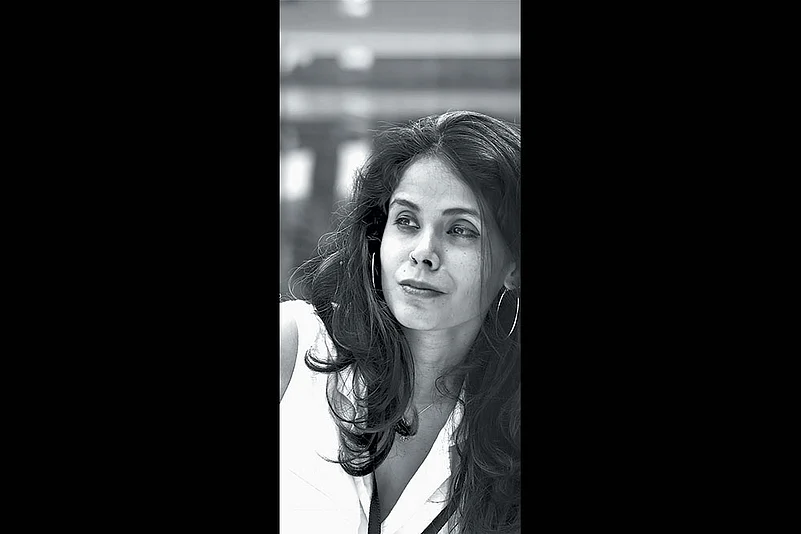
What compelled you to write your novel Fieldwork as a Sex Object?
Where do I begin! I started writing this in the summer of 2020 during the Covid lockdown. I was living in London, but reading about the Pollachi case at that time, where a gang of men used blackmail videos to abuse, rape and silence women. Then there was the spate of deepfakes of celebrities and women politicians. I also discovered how quickly an intimate selfie from a woman could turn into revenge porn the minute her relationship with the sender changed. It was chilling! I knew I had to write this book. The other compelling reason came to me one day when I was being dragged and attacked on Twitter and I was crying in front of my screen—and thinking to myself—all this feels so urgent, so immediate, so powerful now—but one day this will be a graveyard, no? Broken links, unused accounts. Just flipping the script and thinking of the now as history made me realise that as a novelist it would be fascinating to capture it.
Did you do extensive research before starting work on the book?
I read everything I could about the rise of the far-right and the use of social media. If I were not writing a novel, I could have most certainly written a review article on the literature on this topic. And then again, all the time I spent doom-scrolling, being chronically online and addicted to the internet were justified in the name of research. For a while, my own day job was in social media and I realised how things work: algorithms, virality, pile-ons, etc. It is a cartel. I spoke to friends who work as hackers. Also, I closely followed far-right religious-extremist accounts in India for a long time to see how they named their operations, how they decided who their victims were. In order for my books to manage to be wildly different, I try my best to live a new life every few years.

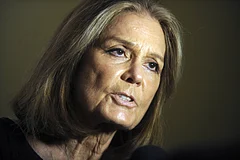


The digital world seems to be mirroring the real world’s misogyny.
Yes. It is almost as if only the tools/ the interface/the medium changed—but the hatred remains the same. In the real world, absolute anonymity is rare unless someone was a hired killer imported from faraway or a serial-killer psychopath. Because this anonymity does not exist, and because actions mostly have consequences, there is a barrier to how much hate can actually do. The nature of the digital world is that your anonymity is absolute. People can hate without any consequence and hide behind alt IDs.
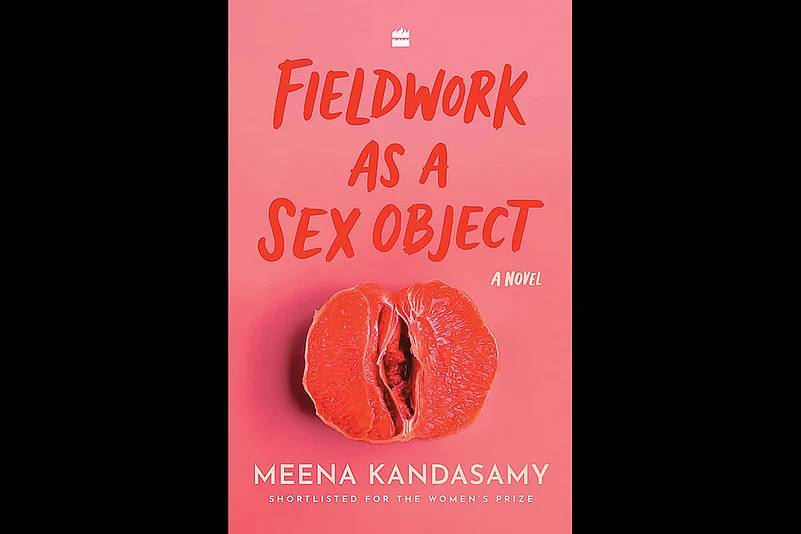
In your novel, when Amrita’s (Amy’s) life is upended by a fake video, her friend Nirmala—a Dalit woman—offers her practical tips and emotional support. Was it an easy task for you to write about their friendship?
As a society, we are told from the beginning that women operate on the basis of petty jealousy, silent rivalry and an intolerance for each other. It is a divide and rule that is inculcated in us and we are conditioned to accept it as the new normal. I refuse to buy that myth, especially because what I have seen so far in my life is that women who would be positioned as competitors or rivals are the ones who have had my back, been my core emotional support and pulled me out of many of the sadnesses that life has thrown at me. It is complex enough navigating the problems thrown up by different social locations in real life—and I felt we had to capture that in literature.
One of the ways in which I’m coming to this is from the classical Tamil tradition where the girlfriend is the confidante, and where even love is an act/a performance/an event that exists and is vindicated through the approval, advice or strategy by the woman’s best friend. So, the template for female friendships exist. I’m referencing Tamil culture here, but this must be universal. We need to ask why we have moved so far away.
Amy is bullied by the Indian manosphere: for being vocal, for being an upper-caste woman whose morality is under scrutiny.
Being politically outspoken online has all these costs when you are a woman in the digital public sphere. The Indian manosphere is not independent actors or frustrated incels alone; most of these vicious attacks are coordinated, they are synchronised to feed the algorithms, and effectively just silence you. The attacks are also very well-tailored: Dalit/Shudra women, Adivasi women and marginalised women are attacked for parameters of beauty, class and as lacking in intelligence, in addition to being slut-shamed. They are exposed to a kind of extreme hell. Upper-caste women are seen as traitors who refuse embedding in patriarchy’s project, so they are subjected to character-assassination. I think their aim is to get under your skin.
The rise of artificial intelligence (AI) is impacting our critical thinking skills and reading habits, even our humanity.
AI writing seems to leap off the page because it is formula-generated. By now, all of us know the tell and the tics and can have our initial suspicion about whether something is AI-written. I think reading pretty much has gone out of the window—you see this with students who are gloriously happy just engaging with summaries. On the one hand is the huge environmental costs. On the other hand, I definitely think there will be a pushback, at least in the creative industries.
MORE FROM THIS ISSUE

What role do you see writers playing in an increasingly divided world?
Our task on hand has to go beyond reportage and bearing witness. Writers can offer ideological clarity in times like these. I think writers can provide coherence to the multiple disparate struggles we are witnessing. And collective understanding will always advance us towards progress, a better state of things.
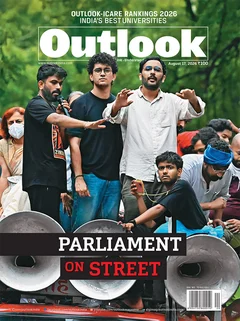
(This story appeared in Outlook magazine’s August 17 issue, 'Parliament on Street', which takes an incisive look at the student protests against recurring examination paper leaks, the zing of Gen-Z politics and the Jantar Mantar protest at Delhi which triggered a strong response all across India, sending out a clear reminder that while governments are formed in Parliament, democracies remain alive on the streets)