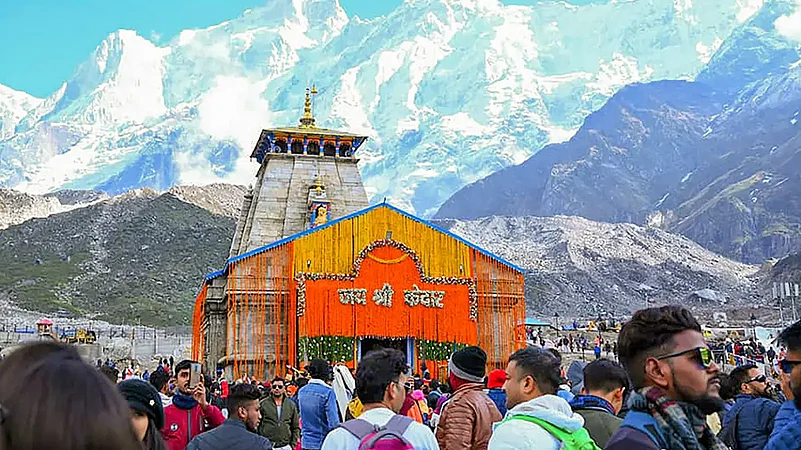
After six months of winter closure, the sacred portals of Badrinath Temple, Kedarnath Temple, Gangotri Temple and Yamunotri Temple have reopened to devotees, formally marking the start of Uttarakhand’s renowned Char Dham Yatra.
Anticipating a large influx of pilgrims, the state government has made comprehensive arrangements to ensure the journey remains safe, smooth and convenient for all visitors.
The government has appealed to pilgrims to preserve the sanctity and cleanliness of Devbhoomi Uttarakhand throughout the pilgrimage. Devotees are urged not to litter the route with plastic or waste, and to avoid unnecessary noise and disturbance. Officials have emphasised that maintaining the cleanliness of the shrines and their surroundings is itself a form of worship.
Pilgrims have been advised not to undertake the journey without prior registration and to carry their QR code pass and Aadhaar card at all times. A health check-up before departure is also strongly recommended.
To facilitate registration, both online and offline options are available. Seventy offline registration counters have been established: 30 in Rishikesh, 20 in Haridwar, and 20 in Vikasnagar. All counters operate round the clock to ensure that pilgrims do not face inconvenience. Adequate accommodation has been arranged at registration centres for those who may need to stay overnight.
The government has ensured sufficient public conveniences along the pilgrimage route, including toilets, drinking water facilities, and medical assistance. Following the instructions of Chief Minister Pushkar Singh Dhami, every vehicle operating on the Char Dham route must carry a trip card containing details of the passengers and driver, as well as the name, mobile number, and licence details of the tour operator or vehicle owner. This requirement has been made mandatory to improve safety and monitoring during the pilgrimage season.
Pilgrims have also been advised to pay careful attention to acclimatisation. As all four shrines are situated at altitudes ranging from 10,000 to 12,000 feet, travelling directly from the plains can result in Acute Mountain Sickness, causing headaches, nausea, vomiting, and breathing difficulties. Travellers are therefore advised to halt for at least one day after every 2,000 to 3,000 feet of ascent so that the body can gradually adjust to reduced oxygen levels. Officials state that this is essential for ensuring a safe and comfortable journey.
Pilgrims are also encouraged to stay in homestays and enjoy traditional Uttarakhand cuisine such as Mandua roti, Gahat dal, and local hill vegetables, which are light, wholesome, and easy to digest.
The government has called upon all personnel involved in Char Dham Yatra services, including the district administration, police, SDRF, NDRF, ITBP, BRO, the health department, and the tourism department, to work in the true spirit of “Atithi Devo Bhava” and uphold the honour and reputation of Devbhoomi Uttarakhand.
The Panda-Purohit community, regarded as the spiritual link between devotees and the deity, has also been asked to help maintain smooth darshan arrangements at all four shrines. With the temples reopening after six months and thousands of devotees arriving for darshan, their cooperation is considered essential for managing crowds and preserving the spiritual atmosphere of the pilgrimage.
Hotel and restaurant owners, along with shopkeepers along the pilgrimage route, have been asked to charge only fair and reasonable prices for goods and services. Tour and travel operators, described as the first point of trust for pilgrims embarking on the sacred journey, have been instructed to provide accurate information regarding registration, weather conditions, and medical requirements well in advance.
Officials have emphasised that the success of the Char Dham Yatra depends on shared responsibility: pilgrims must follow the rules, employees must serve with sincerity, and traders must act with honesty and fairness.
Key Measures for Char Dham Yatra
Officials have been directed to keep all roads on the pilgrimage route in good condition and ensure that alternative routes are ready for use whenever required.
In places such as Bhatwari, Dabradi, and Chadethi, where rising river levels and silt accumulation may affect roads, preventive and corrective measures have been ordered.
Dumping zones along the route are being levelled so they can serve as alternative parking spaces during periods of heavy traffic.
Government departments have been asked to identify accident-prone stretches, map sensitive locations, and prioritise safety-related interventions.
GPS-based machinery tracking, one-way traffic systems, diversion plans, road signs, reflectors, and crash barriers have been arranged to improve road safety and traffic management.
Signboards are being installed on both sides of the roads, clearly indicating the distance to petrol pumps, hospitals, and restaurants for the convenience of tourists.
Permanent and temporary toilets along the route are being maintained with proper cleanliness, while all petrol pumps and hotels have been directed to provide free toilet facilities and adequate drinking water for pilgrims.
Hotels and restaurants must also display clear signboards outside indicating the availability of free WC (western commode toilet) facilities so that tourists do not face inconvenience.
In hotels, restaurants, and dhabas, waiters and other staff have been directed to wear gloves for hygiene purposes, and proper sanitiser arrangements must be ensured.