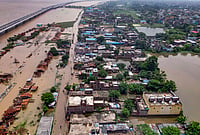
The reconstruction of Kedarnath Temple, one of the holiest shrines of Hindu pilgrimage, has entered its final phase, marking a major milestone in the revival of the sacred town after the devastating natural disaster of June 16, 2013.
The catastrophic floods and landslides that struck Uttarakhand in 2013 caused widespread destruction across the region, with Kedarnath suffering severe damage. In the years that followed, the focus shifted to rebuilding the shrine area in a planned and sustainable manner while preserving its spiritual significance.
A major turning point came on October 20, 2017, when Prime Minister Narendra Modi visited Kedarnath and proposed a comprehensive master plan for the redevelopment of the entire Kedarpuri area. His vision centred on restoring the grandeur of the shrine while simultaneously creating better civic infrastructure and facilities for the growing number of pilgrims visiting the temple each year.
Acting on this vision and the Prime Minister’s guidance, the Uttarakhand government launched large-scale reconstruction and infrastructure development works across Kedarpuri under a carefully designed master plan. The redevelopment has focused not only on preserving the spiritual and cultural identity of the shrine but also on improving basic amenities, accessibility and safety for devotees.
As part of the reconstruction programme, Prime Minister Modi inaugurated five projects worth Rs 152 crore under the first phase on November 5, 2021. On the same occasion, he also laid the foundation stone for 21 projects worth Rs 249.90 crore under the second phase of redevelopment.
The second phase projects are being funded through Corporate Social Responsibility (CSR) support by seven major public sector undertakings: Indian Oil Corporation Limited, Oil and Natural Gas Corporation, Power Finance Corporation, Rural Electrification Corporation, NTPC Limited, Bharat Petroleum Corporation Limited, and Hindustan Petroleum Corporation Limited. Of these 21 projects, 13 commenced in 2021, while the remaining eight began in 2022.
According to the latest progress, construction work on 17 of these projects has already been completed, while four remain under construction and are expected to be finished within the current year. This brings the overall redevelopment programme close to completion and is expected to significantly enhance the pilgrimage experience for devotees visiting Kedarnath.
In addition to these major works, the construction of Om Kalakriti was completed in 2024, adding another important feature to the spiritual and cultural landscape of the shrine area.
Officials state that the redevelopment of Kedarnath is not merely an infrastructure project, but a broader effort to rebuild faith, resilience, and pilgrimage heritage after one of the worst natural disasters in the state’s history. With improved facilities, better planning, and restored grandeur, Kedarnath now stands as a symbol of revival and renewal in the heart of the Himalayas.
Abode of the Lord
The large-scale reconstruction of Kedarnath Temple, initiated after the devastating 2013 disaster, has entered its final phase, with most major development works already completed.
During his visit in October 2017, Prime Minister Narendra Modi proposed a comprehensive master plan for the redevelopment of Kedarpuri. Based on his vision, the Uttarakhand government commenced large-scale infrastructure development to restore the shrine’s grandeur and improve civic amenities for pilgrims.
In November 2021, the Prime Minister inaugurated five first-phase projects worth Rs 152 crore and laid the foundation stone for 21 second-phase projects worth Rs 249.90 crore.
The 21 second-phase projects are being funded under CSR support by seven public sector undertakings: Indian Oil Corporation Limited, Oil and Natural Gas Corporation, Power Finance Corporation, Rural Electrification Corporation, NTPC Limited, Bharat Petroleum Corporation Limited, and Hindustan Petroleum Corporation Limited.
Of these, 13 projects began in 2021 and eight in 2022. So far, 17 projects have been completed, while four are under construction and are expected to be finished this year.