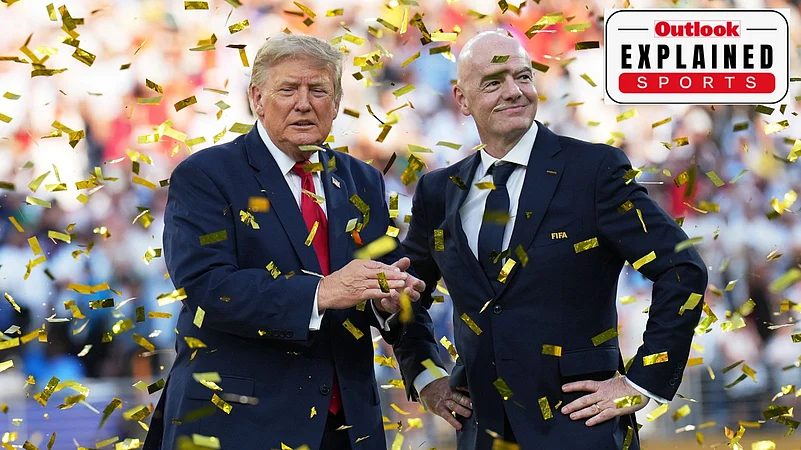
FIFA governs global football, including World Cups, regulations, and development funding
Congress elects the president, while the FIFA Council makes key decisions
UEFA drives much of football’s commercial power through competitions like the Champions League and Euros
Every four years, the FIFA World Cup becomes the centre of the sporting world. Billions of viewers watch the tournament, and for many fans FIFA appears to be simply the organisation that runs the World Cup.
In reality, FIFA is the governing body of global association football, and its authority extends far beyond a single tournament. It regulates international football, supervises relations between national associations, distributes development funding, and manages major international competitions.
FIFA also acts as the central institution in a vast network of football organisations that includes continental confederations, domestic federations, leagues, clubs, broadcasters, sponsors, and governments.
Through this interconnected structure, many of its decisions can influence everything from player transfers and international calendars to commercial partnerships and the organisation of tournaments around the world.
The recent controversy surrounding Gianni Infantino’s abandoned proposal to create a multi-billion-dollar commercial subsidiary for FIFA competitions has highlighted an important reality about modern football.
FIFA sits at the top of the sport’s formal governing structure, but the game’s commercial power is distributed across several institutions, especially UEFA, which controls many of football’s most valuable competitions.

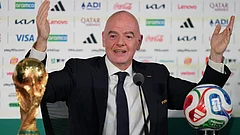
Understanding how FIFA works therefore requires looking beyond the World Cup itself. Its structure, elections, decision-making system, and relationships with continental confederations, national associations, leagues, and other football bodies are all central to understanding how power operates within world football.
What Is FIFA?
FIFA stands for Fédération Internationale de Football Association (International Federation of Association Football). It was founded in 1904 in Paris by seven European football associations and is now headquartered in Zurich, Switzerland.
FIFA is a nonprofit association under Swiss law. It is not a government agency, not a professional league, and not a commercial company owned by clubs. Its purpose is to govern, regulate, promote, and develop football worldwide.
Football’s institutional structure is often described as a pyramid. FIFA sits at the top and recognises national football associations across the world. Beneath FIFA are the six continental confederations, which administer football within their respective regions.
National associations then govern football within their own countries, while professional leagues and clubs operate under the authority of those national associations. This means that FIFA’s direct members are national football associations, not clubs such as Real Madrid, Manchester United, or Mohun Bagan.
FIFA’s Constituents
FIFA currently has 211 member associations, which is more than the number of member states in the United Nations. Every recognised national football association belongs to one of six continental confederations -- UEFA in Europe, CONMEBOL in South America, CONCACAF in North and Central America and the Caribbean, CAF in Africa, AFC in Asia, and OFC in Oceania.
What makes FIFA’s political structure unusual is that every member association has one vote, regardless of its population, footballing success, or economic strength. Brazil, Germany, India, and a small island federation in Oceania each possess the same formal voting power in FIFA Congress.
This principle of equality is one of the main sources of FIFA’s political authority because presidential candidates must build support across all continents rather than relying solely on Europe’s traditional football powers.
How FIFA Is Governed
The FIFA Congress is the organisation’s supreme legislative body. It meets annually and includes delegates from all 211 member associations. The Congress elects the FIFA president, approves FIFA statutes, admits or suspends member associations, approves financial statements, and votes on major constitutional changes.
Each association has one vote, making the Congress the foundation of FIFA’s democratic structure.
The FIFA president is elected for a four-year term. Candidates must be nominated by at least five member associations and pass FIFA’s integrity and eligibility checks.
Because every association has one vote, successful presidential campaigns require broad international coalitions involving federations from Africa, Asia, the Americas, and Oceania. Development funding, infrastructure support, coaching programmes, and political alliances often play a significant role in building electoral support.
The president serves as FIFA’s chief political representative and acts as the organisation’s public face in negotiations with governments, confederations, sponsors, broadcasters, and other sporting institutions.
Between Congress meetings, FIFA is primarily governed by the FIFA Council, which functions as its main executive and strategic body. The Council includes representatives elected by the six continental confederations along with the FIFA president.
It oversees international competition formats, the international match calendar, development programmes, commercial strategy, and many of FIFA’s most important policy decisions.
Major reforms, tournament expansions, and long-term strategic initiatives are usually shaped within the Council before being presented to the Congress.
FIFA’s daily operations are handled by a professional administration led by the Secretary General. This administrative structure supervises competitions, finance, legal affairs, player regulations, disciplinary matters, commercial operations, communications, and development programmes.
While the president provides political leadership, the administration functions as FIFA’s permanent executive machinery.
What Does FIFA Actually Do?
FIFA’s most visible responsibility is organising international competitions. It runs the FIFA World Cup, FIFA Women’s World Cup, FIFA Club World Cup, FIFA U-20 and U-17 World Cups, as well as futsal and beach soccer World Cups. The men’s World Cup is FIFA’s flagship competition and by far its largest source of revenue.
Beyond tournaments, FIFA acts as the global regulator for international football. It oversees player eligibility for national teams, international transfers, football agents, training compensation and solidarity payments, international match calendars, and disciplinary procedures in FIFA competitions.
When a player moves between clubs in different countries, the transfer must pass through FIFA’s international transfer system, giving the organisation an important regulatory role in the global player market.
Does FIFA Make The Rules Of Football?
A common misconception is that FIFA writes the Laws of the Game on its own. In fact, the rules of football are governed by the International Football Association Board (IFAB).
IFAB has eight votes -- four held by FIFA and one each held by the football associations of England, Scotland, Wales, and Northern Ireland. Most rule changes require a three-quarters majority, which means FIFA is highly influential but cannot unilaterally change the rules of football.
FIFA Forward And Development Funding
One of FIFA’s most important functions is distributing development money through the FIFA Forward programme. Funding is provided for football infrastructure, training centres, youth academies, women’s football, referee education, coaching development, grassroots participation, and administrative modernisation.
For many smaller federations, FIFA funding represents a substantial portion of their football budget, giving the organisation considerable influence over football governance worldwide.
How FIFA Makes Money
FIFA is among the richest sports organisations in the world. Its largest revenue source is broadcasting rights for the World Cup, followed by sponsorship and commercial partnerships, ticketing and hospitality, and licensing and marketing agreements.
A single four-year World Cup cycle generates billions of dollars in revenue. FIFA redistributes a significant portion of this income to member associations, confederations, clubs, and development projects, and this financial redistribution is one of the key reasons national associations often remain closely aligned with FIFA.
The Role Of Continental Confederations
The six continental confederations are not merely regional offices of FIFA. They are independent governing bodies with their own congresses, presidents, executive committees, competitions, commercial contracts, and disciplinary structures.
They organise major continental tournaments such as the UEFA European Championship, Copa América, Africa Cup of Nations, AFC Asian Cup, CONCACAF Gold Cup, and OFC Nations Cup. They also run the leading club competitions in their regions, including the UEFA Champions League, Copa Libertadores, and AFC Champions League.
FIFA recognises the confederations’ authority to organise continental competitions, provided they operate within FIFA’s broader regulatory framework and international calendar. This creates a system in which power is shared rather than concentrated entirely within FIFA.
Why UEFA Holds Special Influence
Although UEFA has only 55 member associations, it possesses enormous commercial power because it controls many of football’s most valuable competitions.
The Champions League, Europa League, Conference League, and European Championship generate billions of euros through broadcasting rights, sponsorships, and commercial partnerships. Europe is also home to many of the world’s richest clubs, strongest domestic leagues, largest broadcasters, and biggest sponsors.
As a result, UEFA’s influence extends far beyond its numerical voting strength within FIFA. The recent opposition to Infantino’s proposed FIFA commercial subsidiary demonstrated that UEFA’s economic weight allows it to challenge FIFA effectively whenever commercial interests, competition structures, or the international calendar are affected.
FIFA’s Relationship With National Associations
National associations are autonomous in domestic matters, but they must comply with FIFA statutes and governance standards. FIFA expects its members to maintain independent governance structures, democratic electoral processes, judicial and disciplinary bodies, and protection from undue government interference.
If an association breaches these obligations, FIFA can impose sanctions.
FIFA cannot punish sovereign states directly, but it can suspend a national football association. A suspension may result in exclusion from World Cup qualifiers, removal from international competitions, loss of development funding, withdrawal of hosting rights, and restrictions on international football activities.
Such suspensions have occurred when governments were judged to have interfered improperly in football administration.
FIFA’s Relationship With Clubs And Leagues
FIFA does not directly operate domestic leagues such as the Premier League, La Liga, Serie A, Bundesliga, MLS, or the Indian Super League. The chain of authority usually runs from FIFA to the continental confederation, then to the national association, then to the league, and finally to the club.
However, FIFA still influences clubs indirectly through international transfer regulations, player release obligations for national teams, transfer windows, disciplinary rules, and the international match calendar.
This is why conflicts often arise between FIFA, clubs, and leagues over fixture congestion, player workload, and the expansion of international competitions.
What FIFA Cannot Do
Despite its extensive influence, FIFA’s authority has clear limits. It cannot pass national laws, collect taxes, arrest individuals, override sovereign governments, force clubs into specific domestic leagues, or change the Laws of the Game without IFAB approval. Its power is strongest within the organised football system, not outside it.
Why FIFA Remains So Powerful
FIFA’s influence comes from several interconnected sources. It controls access to the World Cup and official international football, distributes development funding that many federations rely upon, operates within a near-global regulatory monopoly, and uses a one-country-one-vote political structure that allows it to build broad international coalitions.
The debate surrounding FIFA’s abandoned commercial subsidiary proposal revealed a central tension in modern football. FIFA controls the global governance framework, international tournaments, membership recognition, regulations, and development funding, while organisations such as UEFA control much of the sport’s commercial value through elite club and continental competitions.
World football is therefore not governed by a single all-powerful institution. Instead, it operates through a complex network of FIFA, continental confederations, national associations, leagues, clubs, broadcasters, sponsors, and governments, each exercising a different form of influence.
FIFA remains the organisation at the centre of that network, and its authority ultimately depends not only on its statutes and voting structure, but also on its ability to maintain cooperation with the powerful football institutions that drive the modern game’s economic success.